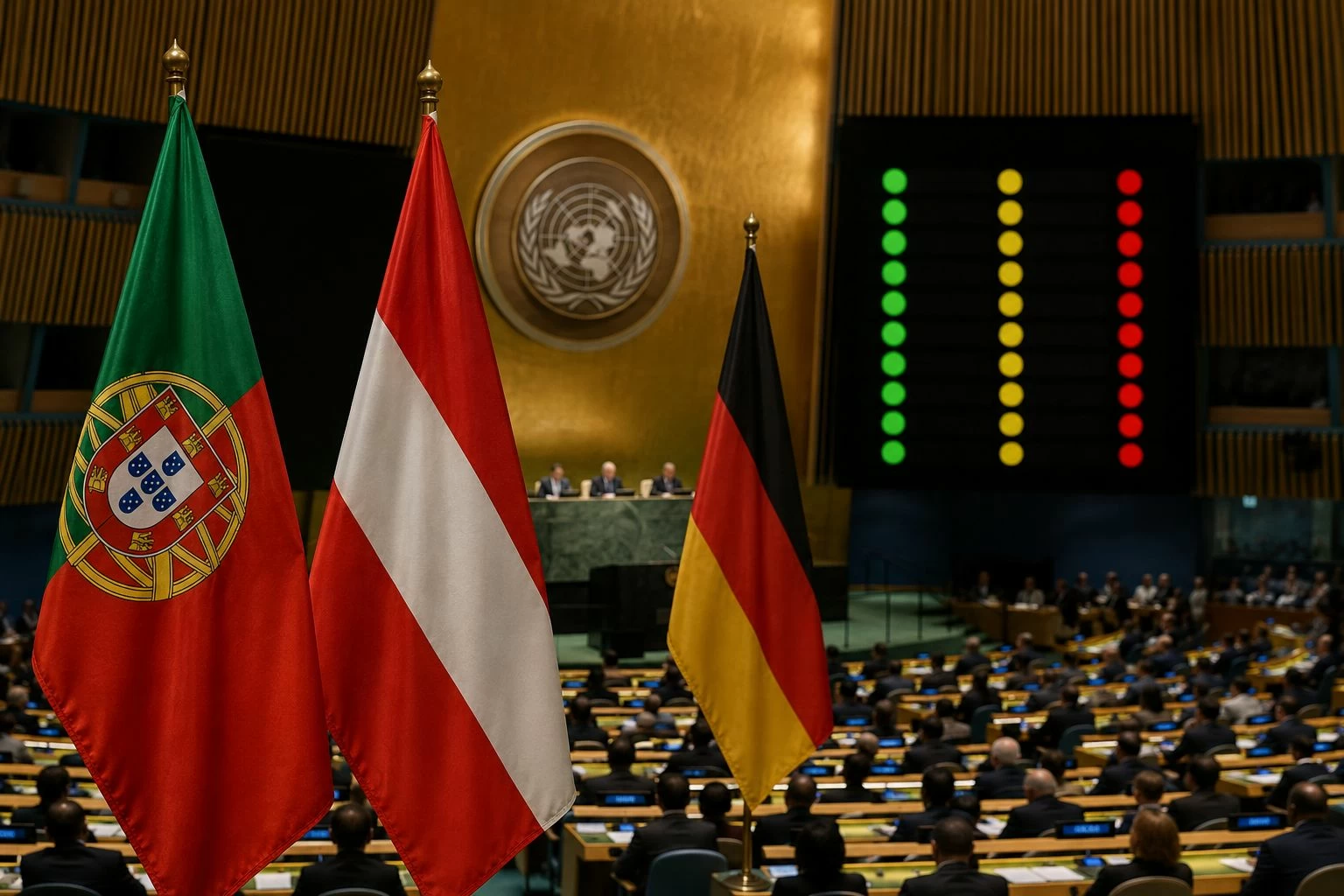
In an unprecedented development, Germany failed for the first time to obtain a non-permanent seat in the UN Security Council, after Portugal and Austria obtained the majority of the necessary votes during the UN General Assembly elections to fill the two seats allocated to Western European countries for the period 2027-2028.
An unprecedented German loss
The elections witnessed three candidates competing for two European seats, as Portugal was able to win 134 votes, while Austria obtained 131 votes, exceeding the threshold of two-thirds of the votes required to win in the first round.
On the other hand, Germany was satisfied with only 104 votes, recording its first failure in the history of its participation in seeking membership in the Council, after it had previously held the seat six times without facing a similar electoral failure.
Security Council: 15 members
The UN Security Council consists of 15 members, including five permanent members with veto power, namely the United States, Russia, China, France, and the United Kingdom, in addition to ten non-permanent members who are elected for a period of two years according to the geographic distribution system adopted by the United Nations.
Zimbabwe and Trinidad and Tobago win
In the rest of the election results, Zimbabwe won the seat allocated to the African Group after obtaining 182 votes, while Trinidad and Tobago received 181 votes to win the seat of the Group of Latin American and Caribbean States.
An additional round of voting took place to decide the Asian seat between the Philippines and Kyrgyzstan, after the competition was not decided in the first round.
New members as of 2027
The five elected countries will begin their duties in the Security Council as of January 1, 2027, replacing Pakistan, Somalia, Greece, Denmark and Panama.
These countries will join the non-permanent members elected for the period 2026-2027, namely Bahrain, the Democratic Republic of the Congo, Liberia, Latvia and Colombia, at a time when international competition continues for one of the most prominent decision-making seats within the United Nations.
In an unprecedented development, Germany has failed for the first time to secure a non-permanent seat on the United Nations Security Council, after Portugal and Austria garnered the majority of votes during the United Nations General Assembly elections for the two seats allocated to Western European countries for the period 2027-2028.
Unprecedented German Loss
The elections saw three candidates competing for two European seats, with Portugal winning 134 votes, while Austria received 131 votes, surpassing the two-thirds majority required to win in the first round.
In contrast, Germany managed only 104 votes, marking its first failure in its history of seeking membership in the council, having previously held the seat six times without facing a similar electoral defeat.
The Security Council.. 15 Members
The United Nations Security Council consists of 15 members, including five permanent members with veto power: the United States, Russia, China, France, and the United Kingdom, along with ten non-permanent members elected for two-year terms based on the geographical distribution system adopted by the United Nations.
Zimbabwe and Trinidad and Tobago Win
In other election results, Zimbabwe won the seat allocated to the African group after receiving 182 votes, while Trinidad and Tobago secured 181 votes to win the seat for the Latin American and Caribbean group.
An additional voting round was held to determine the Asian seat between the Philippines and Kyrgyzstan, after the competition remained unresolved in the first round.
New Members Starting 2027
The five elected countries will begin their duties on the Security Council starting January 1, 2027, replacing Pakistan, Somalia, Greece, Denmark, and Panama.
These countries will join the non-permanent members elected for the 2026-2027 term, which include Bahrain, the Democratic Republic of the Congo, Liberia, Latvia, and Colombia, as international competition continues for one of the most prominent decision-making seats within the United Nations.