Royal Commission in Mecca: Operational and development results that enhanced the experience of the pilgrims
Hajj 1447 AH.. Pilgrims’ satisfaction exceeded 93%
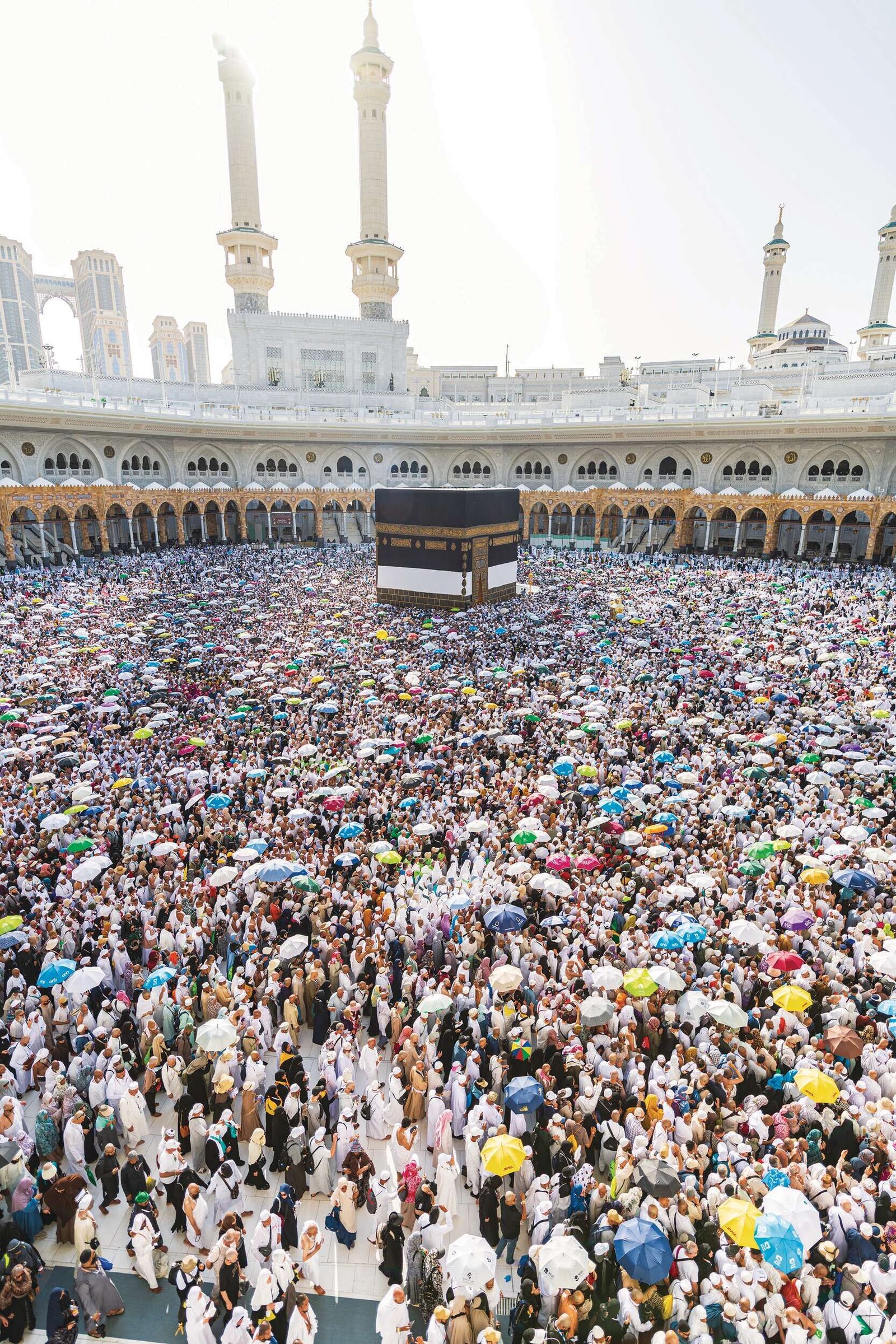
The Royal Commission for the Holy City of Mecca and the Holy Sites concluded its work in the Hajj season 1447 AH, after implementing through its executive arms a number of operational plans, projects and initiatives, which contributed to raising the efficiency of services provided to the guests of God, in partnership and integration with the relevant governmental and operational agencies.
The work of the Royal Commission this year was an extension of the early preparations that began after the end of the Hajj season 1446 AH, through plans and raising the readiness of services in a number of main paths, including transport and transportation, developing the infrastructure in the holy sites, improving the operational environment, activating historical and enrichment sites, raising the efficiency of timings, and enhancing the services of the Kingdom of Saudi Arabia’s project to benefit from sacrifices and sacrifices (sacrificial animals).
The transportation system, led by the General Center for Transport, witnessed the achievement of a number of operational indicators, as more than 1.44 million pilgrims were transported from the ports through more than 45,000 trips, with a commitment rate exceeding 96%, in addition to transporting more than 1.1 million pilgrims between cities through more than 31,000 trips, with a commitment rate exceeding 98%.
In transportation between the holy sites, the duration of transportation from Mecca to Mina decreased by 48% compared to the Hajj season 1446 AH, while the duration of transportation from Muzdalifah to Mina decreased by 19.6% compared to the last season. This reflects the improvement in operating efficiency and movement management at key stages of the pilgrim’s journey.
During the days of Tashreeq, the total number of passengers transported on the routes to and from the Grand Mosque reached more than 4.87 million passengers, an increase of 7% compared to the same period last season, while the number of passengers transported from the West Jamarat station to the Grand Mosque reached more than 1.39 million passengers, an increase of 31.3% compared to the Hajj season 1446 AH, in addition to the transport of (954,431) passengers from the Shuaib Mina station, And 453,933 passengers from Al Jawhara Road station.
Regarding timings, the total number of visitors reached more than (872) thousand visitors, with an average response time for observations reaching 16 minutes. The Royal Commission also activated 14 historical and enrichment sites, the total number of visitors since the first of the month of Dhul-Qi’dah reached (474,179) visitors, as part of the efforts aimed at enriching the experience of the guests and visitors.
The Kingdom of Saudi Arabia’s project to benefit from sacrifices and sacrifices achieved an unprecedented historical number in total contracts for the service of sacrifices and sacrifices, amounting to (1,204,087) contracts, coinciding with a noticeable decrease in random slaughter practices.
In terms of improving the operational environment in the Holy Sites, Kadanah Development and Development Company implemented a number of shading, landscaping and climate-soothing projects, which included replacing (200) mist columns with mist-fan poles in the Western Jamarat Square, serving about 180,000 pilgrims per hour, in addition to implementing the second phase of the project for shading and soothing the vicinity of Mount Al-Rahma, which contributed to raising the benefit five-fold compared to last year, through 21 canopies and more than 200 mist fans covering an area. It exceeds 137 thousand square meters.
The resting areas designated for pilgrims on the paths in the Holy Sites were expanded by 220%, and the pedestrian paths in Mina were shaded over an area of 103,000 square metres, in addition to planting 60,000 trees in the Holy Sites, making the green area three times what it was last year.
The infrastructure projects included the expansion of the emergency hospital in Mina, with a capacity of up to 400 beds, the development of King Abdulaziz Road in Mina, and the implementation of the second phase of modern toilet complexes in Muzdalifah and Arafat, which contributes to reducing waiting time by 75% and raising the efficiency of utilization by four times, in addition to developing emergency centers, escalators, and electricity, fire, and cooling networks. This enhances safety and increases the efficiency of services.
The Royal Commission enhanced the use of smart technologies in season management, through the transport control room, the monitoring and control system (SCADA) in Kadana, and the “Irtiqaa” platform for monitoring observations using artificial intelligence techniques.
Indicators measuring pilgrims’ satisfaction showed an increase in the overall satisfaction rate to 93.1% in the Hajj season 1447 AH, an increase of 2.1 percentage points compared to the Hajj season 1446 AH, at measurement points that included timings, Al-Hol mosques, the central area, transportation services, and the sacrificial project.
The Royal Commission confirmed that what was achieved in the Hajj season 1447 AH reflects the integration of efforts between the agencies working in the Hajj system, and the continued work to develop services in Mecca and the Holy Sites. This contributes to raising the quality of the experience, improving operating efficiency, and enhancing the readiness of services provided to the pilgrims.
It is noteworthy that the Authority published, through its digital platforms, a report it prepared under the name “Efforts in the Crowds,” which highlighted the most prominent numbers achieved this year by selected entities for the comfort of the guests of God.