VALBONA ZENELI
The G7 summit began on Monday in Évian-lesBains, under the French presidency, the same location that in 2003 hosted the G8, when Russia, China, India and Brazil participated in dialogue with developed economies under the banner of economic growth and global integration. The same hall, but a completely different world. Russia has been excluded since 2014, China remains off the table, and the guest list today reflects more geopolitical alignments than economic weight.
US President Donald Trump arrived at the summit with the political weight of announcing a preliminary deal with Iran, putting the Middle East back on the agenda. The Strait of Hormuz crisis reminded how dependent G7 economies remain on oil and gas, while the energy transition is creating new dependencies on green technologies and supply chains dominated by China. Rising energy prices are putting pressure on industrial competitiveness and reindustrialization plans. Meanwhile, with the growing demand for energy from artificial intelligence, data centers and digital infrastructure, energy security and ecological transition are already part of the same geo-economic challenge.
On the trade front, consensus is consolidating within the G7 that China’s manufacturing overcapacity is distorting global markets and undermining Western industrial competitiveness. In 2003, the total trade of the G7 countries with China amounted to 444 billion dollars, with a deficit of 183 billion. In 2025, these figures have reached 1.575 trillion and 566 billion dollars, respectively. If once the trade deficit was a concern, today it is increasingly perceived as a structural weakness, concentrated in strategic sectors of the industrial future. Concerns about trade triangulation through third countries are also growing, fueling the European debate on more effective safeguards against Chinese products.
On the transatlantic front, despite the tensions created by the “Liberation Day” tariffs announced by President Donald Trump in 2025, G7 members finally reached an agreement with Washington, avoiding a real transatlantic trade war and securing lower tariffs than originally envisaged. This showed that, despite economic disputes, the West’s strategic cohesion remains stronger than current trade conflicts suggest.
Artificial intelligence and critical minerals occupy an important place on the agenda of the summit. President Macron also invited Sam Altman of OpenAI to signal European ambition in the field of artificial intelligence. Yet the gap remains: nearly 80 percent of the new AI companies funded in the G7 countries are headquartered in the United States. The summit is unlikely to produce a decisive turning point, but it will undoubtedly promote common standards and cooperation among allies. However, the gap remains deep: about 80 percent of funded AI start-ups in G7 countries are based in the United States, reflecting the American advantage in capital, innovation and market scale. The summit is not expected to produce a decisive turning point, but is likely to strengthen coordination among allies, promote common standards and deepen cooperation on strategic technologies that will define the economic balances of the next decade.
For critical minerals, dependence on China is central to the debate. Europe depends on China for all of its heavy rare earths and for 98% of the magnets essential for the green and digital transition. Recent Chinese restrictions on exports have strengthened G7 efforts to diversify supply chains and increase domestic processing capacity. These include the Critical Minerals Action Plan and the Critical Minerals Manufacturing Alliance, initiatives promoted by Canada’s G7 presidency in 2025. However, reducing dependence on China will be a long and costly process: according to current estimates, building alternative supply chains will require around $60 billion in investment over the next decade.
The presence of Ukrainian President Zelensky reminds that, despite the growing attention to trade, China and the Middle East, Russia’s war against Ukraine remains the main security challenge for the G7. More than a turning point summit, Évian represents a demonstration of political unity on the eve of the upcoming meetings of the Gatshmi Coalition and NATO, where new support commitments to Kiev will be defined.
Despite narratives of declining relevance, the G7 remains a pillar of the global economy. Although the G7’s share of world output has fallen from 66% to about 44% since 2003, the influence of the G7 continues to rest on its control of global financial infrastructures, reserve currencies and sanctioning mechanisms. This weight is also reflected in the financial markets, where the G7 countries represent about 72 percent of the global stock market capitalization. However, this force is increasingly concentrated in the United States of America and large American technology companies, raising questions about Europe’s ability to transform Western economic weight into strategic autonomy and technological capacity.
Same hall, different perspective. If in 2003 the Western order aimed to expand and integrate developing economies, in 2026 it focuses on protecting its strategic advantages. Economic security has become the new grammar of geopolitics, dominating a summit shaped by great power rivalry, wars, technology and the growing fragmentation of the global economy.
The article was published as an editorial in “Il Messaggero”
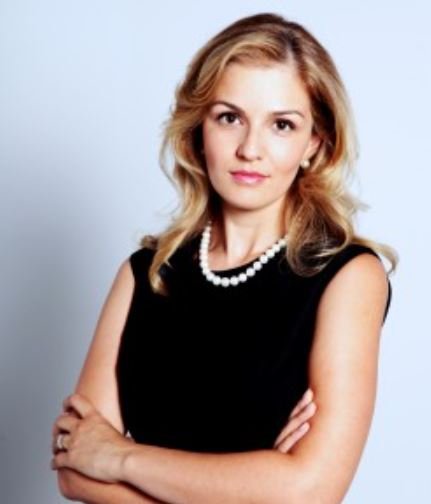
Dr. Valbona Zeneli is a senior expert of the Atlantic Council, as well as a member of the German Council on Foreign Relations (DGAP).
/ Panorama newspaper