Lebanon remains among the biggest unresolved issues.
Israel invaded in March to root out Hezbollah after the militant group fired across the border in solidarity with Tehran following US-Israeli strikes on Iran.
Israeli forces still hold a stretch of southern Lebanon, where more than a million people have fled their homes, while Hezbollah has not been defeated.
Iran says any ceasefire must also halt fighting in Lebanon, and that a permanent agreement must bring an Israeli withdrawal.
Israel, which was not included in the US-Iran peace talks, says it will not withdraw and reserves the right to use military force.
That dispute has widened a split between Israel and the US.
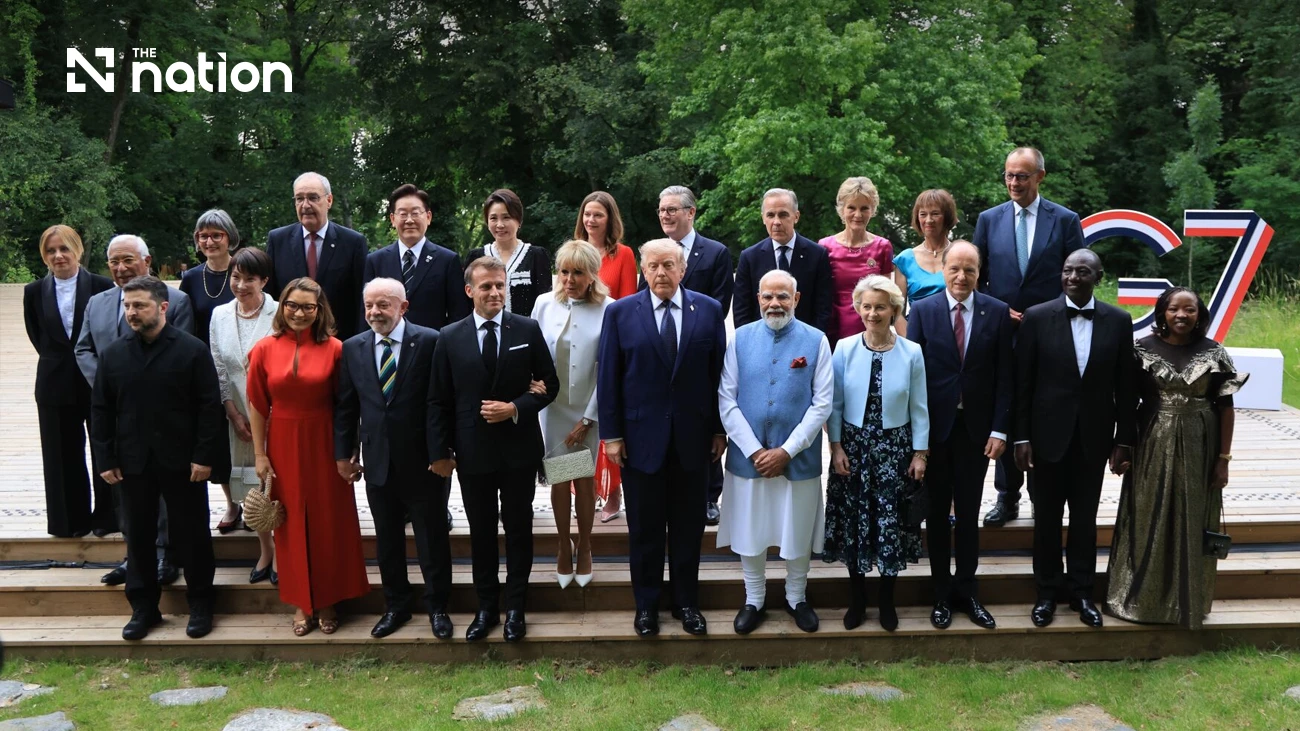
Trump publicly rebuked Israeli Prime Minister Benjamin Netanyahu and told the summit on Tuesday that he was “not happy” with Israel’s conduct.
“Without us, without the United States, there would be no Israel. Without me, there would be no Israel, because no other president was willing to do what I did,” Trump said.
In their statement, the G7 leaders called for an “immediate robust ceasefire” in Lebanon and the disarmament of Hezbollah.
A Hezbollah spokesperson told Reuters the group believed Iran would not accept a permanent truce unless Israel’s occupation ended.
After decades of US and international financial sanctions that pushed Iran’s economy to the brink, a peace deal could bring economic gains.
The memorandum includes a US$300 billion reconstruction fund, financed by neighbouring Gulf states, provided Iran complies with other terms.
Over the next 60 days, negotiators are due to return to difficult questions about Iran’s nuclear programme.
Iran’s regional militia support and missile arsenal, however, do not appear to be on the agenda, a situation that would amount to significant US concessions.
Oil prices fell again on Wednesday as markets priced in the expected reopening of the Strait of Hormuz.
Brent crude futures dropped below US$80, their lowest level since the first strikes of the US-Iran conflict.
A senior US official said Washington would waive sanctions on Iranian oil under the deal, raising the prospect of millions of additional barrels of supply.
Industry officials, however, say Middle East oil and gas output will take months to recover fully.
The G7 leaders said they had committed to “accelerate the diversification of energy supply routes to reduce global vulnerability to the Strait of Hormuz and to increase our energy stocks.”