– 1.557 billion dinars budget allocations for the Ministry of Interior for the year 2027.
– 675.6 billion dinars to support local groups and finance municipal projects.
– Strengthening funding for the police and civil protection and developing their operational capabilities.
– Digitizing the administration, strengthening the new states, and expanding the powers of the governors in managing public investment.
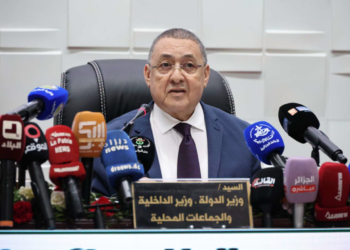
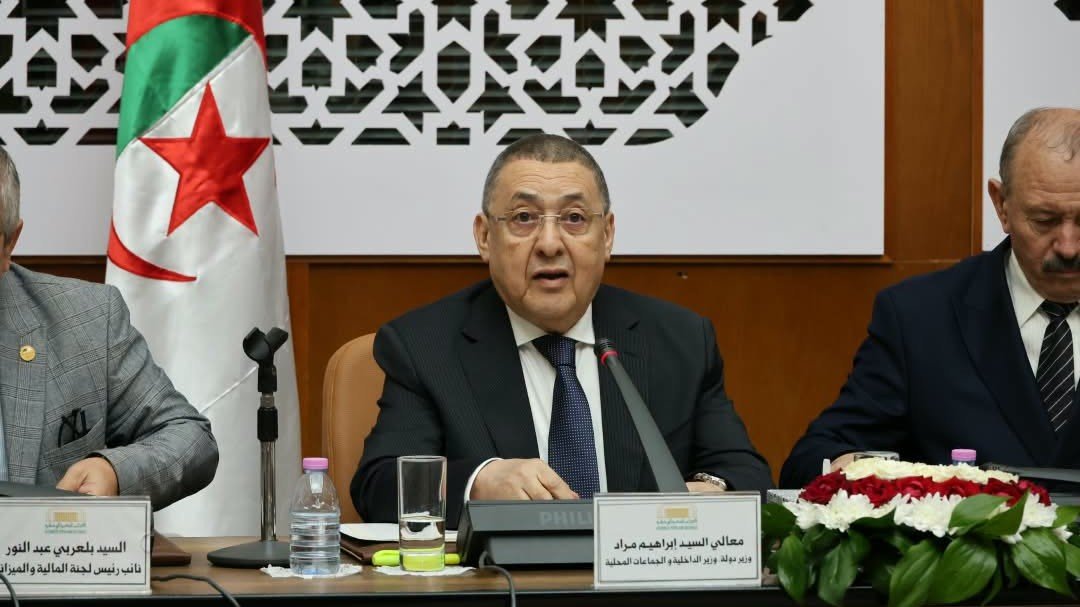
Algeria proposes to allocate payment appropriations amounting to 1.557.4 billion dinars and commitment authorizations amounting to 1.562.5 billion dinars to the budget of the Ministry of Interior and Local Communities for the year 2027, with the largest portion of the funds directed to transfer expenses and support for local communities, in addition to strengthening the capabilities of national security and civil protection, completing the installation of new states, modernizing administration and digitizing public services. According to what was stated by the Minister of the Interior and Local Communities, Ibrahim Murad, today, Saturday, before the Finance and Budget Committee of the National People’s Assembly.
According to the text of the minister’s intervention, a copy of which “Shorouk Online” received, the proposed appropriations for the program to support local communities amount to 675.6 billion dinars, an increase of 16.6 billion dinars, or 2.39% compared to the year 2026, while the payment appropriations directed to national security amount to 623.3 billion dinars, compared to 118.6 billion dinars for civil protection.
The proposed total appropriations are distributed according to the nature of expenditures: 710.7 billion dinars for transfer expenses, 674.9 billion dinars for user expenses, 92.7 billion dinars for managing departments, and 84.2 billion dinars for investment, including 62 billion dinars for new operations and 22 billion dinars for re-evaluating previously registered projects.
Within the framework of supporting municipalities and financing priority projects, an amount of 150 billion dinars was allocated for investment projects of a neighborhood and urgent nature, as part of programs to support the social and economic development of local communities. These projects include supplying potable water, disinfection, connecting to the electricity and gas networks, dismantling isolation, maintaining municipal roads, urban improvement, maintaining primary schools, and creating nearby local facilities, especially sports and health facilities.
It has also allocated 524 billion dinars to handle the tasks assigned to local communities, an increase of 5 billion dinars compared to the year 2026. These allocations include 180 billion dinars to cover increases in the wages of local government employees, 158 billion dinars for vocational integration devices and supported labor contracts that have been converted into permanent contracts, and 40 billion dinars for maintenance and guarding at the level of 21,178 primary schools. And 62 billion dinars to operate 17,348 school canteens.
The appropriations also include 60 billion dinars to compensate local groups for the shortfall in tax revenues resulting from the abolition of the fee on professional activity and the application of lump sum payments, 20 billion dinars to support municipalities within the framework of local solidarity during the month of Ramadan, and four billion dinars to cover the wages of municipal guard agents.
The tax revenues belonging to local communities for the year 2027 are estimated at 646.23 billion dinars, compared to 608.14 billion dinars in 2026, i.e. an increase of 38.09 billion dinars. The draft finance law proposes to strengthen these resources by expanding the residence fee to include hotel establishments and unclassified residences, allowing the inclusion of more than 600 additional establishments, with the fee revenues expected to rise by 20%.
The project also includes improving the collection of the health tax on meat, the revenues of which did not exceed 91 thousand dinars in 2024, equivalent to 0.05% of the total municipal tax revenues, and it was only collected at the level of 66 municipalities.
With regard to local properties, the project proposes to address the situation of some properties belonging to the private properties of municipalities and granted to investors before the issuance of Law No. 23-17 of November 15, 2023, by enabling those concerned, in accordance with legally specified procedures, to convert the concession right into a waiver.
At the national security level, the proposed appropriations amount to 611.6 billion dinars in commitment licenses and 623.3 billion dinars in payment appropriations, with the aim of enhancing security coverage, protecting people and property, developing the capabilities of intervention and crime prevention, and keeping pace with emerging security challenges.
These appropriations are divided into 519.8 billion dinars for user expenses, 54 billion dinars for management expenses, 33.26 billion dinars for investment commitment licenses, and 45 billion dinars for payment appropriations, in addition to 4.45 billion dinars for transfer expenses directed to institutions under guardianship.
The investment program includes registering 70 new transactions worth 19.47 billion dinars in commitment licenses and 5.29 billion dinars in payment credits, re-evaluating 45 transactions worth 13.78 billion dinars in commitment licenses and 3.02 billion dinars in payment credits, in addition to allocating 36.7 billion dinars in payment credits for ongoing operations.
These operations aim to acquire vehicles to strengthen the vehicle base and renew the necessary equipment for the security services. The eleven new states were also allocated 33 investment operations, with commitment licenses amounting to 2.75 billion dinars and payment appropriations amounting to 513 million dinars, for the construction of state security headquarters, job housing, and maintenance residences.
As for civil protection, its proposed appropriations amount to 132.86 billion dinars in commitment licenses and 118.6 billion dinars in payment appropriations, within the framework of implementing the emergency program approved by the President of the Republic during the Cabinet meeting held on September 20, 2026. The program includes reviewing the basic law for civil protection and the compensatory system, preparing an emergency plan for employment, and strengthening the necessary units, means, equipment and equipment.
Within this program, 30.26 billion dinars were allocated for investment in commitment licenses and 16 billion dinars in payment credits, including the registration of 105 new transactions worth 26.12 billion dinars in commitment licenses and 4.15 billion dinars in payment credits, and the revaluation of 33 transactions worth 4.13 billion dinars in commitment licenses and 1.57 billion dinars in payment credits, in addition to 10.28 billion dinars to finance ongoing operations.
Among the most prominent operations is the acquisition of ambulances and intervention vehicles for rescue centers, and strengthening intervention and rescue capabilities, as 15 billion dinars were allocated to strengthen these capabilities. The eleven new states also benefit from 23 investment operations with commitment licenses amounting to 839 million dinars and payment credits amounting to 280 million dinars, mainly related to studying and following up on the completion of the headquarters of the state directorates of civil protection.
Civil protection employee expenditures include 84 billion dinars to cover the wages of agents, including 2,000 assistants of various ranks among the training graduates for the year 2026, as well as professional promotions. Expenses for managing departments amount to 16.4 billion dinars, and are mainly directed to rehabilitating operational units, maintaining intervention mechanisms, enhancing means of combating forest fires, and training pilots to fly helicopters. Transfers for the benefit of the program are also estimated at 2.2 billion dinars, directed to the National School of Civil Protection to support training and raise the professional competence of personnel.
In the field of modernizing administration and digital services, the proposed appropriations for the Public Liberties and Movement of Persons and Property Program amount to 16.32 billion dinars in commitment licenses and 15.69 billion dinars in payment appropriations, an increase of 36.01% and 21.92%, respectively, compared to the year 2026.
The program aims to ensure the good functioning of the identity and civil status services, the continuity of production and issuance of biometric documents, and the modernization of digital systems, equipment and platforms, in addition to supporting the collective movement. It was allocated 12.59 billion dinars for management expenses, 3.28 billion dinars as commitment licenses for investment, and 2.65 billion dinars as payment appropriations.
The program includes registering eight new operations worth 2.38 billion dinars in commitment licenses and 1.29 billion dinars in payment credits, re-evaluating five operations worth 900 million dinars in commitment licenses and 250 million dinars in payment credits, in addition to allocating 1.1 billion dinars in payment credits for ongoing operations.
The operations include enhancing the security of information systems by purchasing security equipment and software and anti-virus solutions, developing a platform for managing and personalizing biometric documents, renewing equipment for personalizing the biometric national ID card, and modernizing the authentication platforms and processing of digital identity documents. An amount of 450 million dinars was also allocated for public financing of associations.
As for the public administration program, the proposed appropriations amount to 112.3 billion dinars in commitment licenses and 109.1 billion dinars in payment appropriations, with the aim of ensuring administrative and logistical management, ensuring human resources, modernizing structures and equipment, and accompanying the completion of the regional organization.
The investment appropriations in this program amounted to 15.23 billion dinars in commitment licenses and 12 billion dinars in payment credits, and include the registration of 42 new transactions worth 11.89 billion dinars in commitment licenses and 4.98 billion dinars in payment credits, and the revaluation of 21 transactions with an amount of 3.35 billion dinars in commitment licenses and 2.58 billion dinars in payment credits, in addition to allocating 4.44 billion dinars to ongoing operations.
These operations aim to renew the automated information equipment for drip driving licenses, construct new seismic monitoring stations, study and follow up on the completion of the new headquarters of the National Road Security Commission, in addition to modernizing administrative means and equipment.
The eleven new states were also allocated 23 investment operations, with commitment licenses amounting to 2.38 billion dinars and payment appropriations amounting to 1.39 billion dinars, including studying and following up on the completion of state headquarters and job residencies. Employee expenses amounted to 62.6 billion dinars, with the creation of 300 financial positions for the benefit of the two administrative districts of Al-Alma and Maghnia, while five billion dinars were allocated for management expenses and 29.46 billion dinars for transfer expenses.
The transfer expenses in the public administration program are directed to the redeployment of municipal guard agents, compensation for unpaid victims of terrorist acts, and victims and rights holders of events related to the movement in order to complete the national identity, in addition to financing the special program for the benefit of the states of the Far South and the appropriations allocated to institutions under guardianship.
As for the National Telecommunications Programme, the proposed appropriations for it amount to 13.9 billion dinars in commitment licenses and 15.1 billion dinars in payment appropriations. User expenses include 8.47 billion dinars, administration expenses are 3.10 billion dinars, while 2.15 billion dinars are allocated for investment as commitment licenses and 3.35 billion dinars as payment appropriations.
This funding allows the registration of four new operations and the financing of ongoing operations, the most prominent of which include the acquisition of administrative vehicles for the state directorates in the new states, the installation of remote meeting systems using Internet Protocol technology, securing the national network for the sector, and renewing operational wireless networks at the central and local levels. An amount of 125 million dinars was also allocated to the National School of National Telecommunications to support training and rehabilitation.
On the legislative side, the draft finance law includes expanding the governor’s jurisdiction in implementing public investment, by enabling him to supervise the implementation of any special program decided by the Council of Ministers, instead of limiting his jurisdiction to complementary programs for the development of the states. The measure aims to improve coordination between central and local interests, accelerate project implementation, address the difficulties they face, and enhance integration between central decision-making and local implementation.
The sector’s priorities also include providing the human resources, material capabilities, and administrative structures necessary for the eleven new states, in addition to the two administrative provinces of Al-Alma and Maghnia, in order to ensure their effective establishment, enable them to perform their tasks, and bring the administration closer to the citizens.
Ibrahim Murad presented the draft budget within the framework of studying the draft finance law for the year 2027, explaining that its preparation is based on continuing to reform the budgetary system based on goals and results, directing public resources towards the actual needs of citizens, and improving the effectiveness of spending and the efficiency of management.
The year 2027 is of special importance, according to the minister’s intervention, in light of the electoral deadline scheduled for November 28, 2026, and the renewal of the state and municipal people’s councils that will result from it. He expressed his aspiration for the elected councils to play an active role in determining local development priorities, expressing citizens’ concerns, contributing to the preparation of development programs and following up on their implementation within the legal powers vested in them.
The Minister stressed that local development is not achieved simply by allocating financial allocations, but rather requires realistic planning, precise setting of priorities, continuous follow-up of projects, and a clear assumption of responsibility in the various stages of completion.
He stressed the commitment of the interior sector and local groups to continue programmed reforms, enhance the efficiency of public management, consolidate transparency and effectiveness in the use of resources, and work with elected officials and actors at the national and local levels to achieve the established goals and respond to the aspirations of citizens.