The desert city of Ligueira is located on a cape about 55 km long, which the Portuguese, who arrived there in the fifteenth century, called Cabo Blanco. In the year 1885 AD, Spain tried to make it under its protection, but France, coming from the south and strong militarily, objected to Spain and forced it to sign an agreement in 1900 AD to draw the borders between the two countries’ colonies. According to this agreement, it was decided to divide Cape Verde with a border line starting from the farthest cape in the sea to its end, so that the western coastal part would be within the borders of the Western Sahara, which belonged to Spain at the time, and the eastern part would be within the borders of Mauritania, which belonged to France at that time. In the part of Western Sahara, the desert city of Luguira was built, and in the part of Mauritania, the Mauritanian city of Nouadhibou was built.
At the beginning of the war in Western Sahara, Mauritania launched its war on the Sahrawis by attacking Leguira on December 19, 1975 AD, destroying it, displacing its population, and occupying it, but according to the Polisario-Mauritania agreement on August 5, 1979 AD, Mauritania left Western Sahara and, of course, Leguira. Morocco occupied the part that was occupied by Mauritania, but did not reach the city of Luguira, and it remains empty to this day.
Why is there a fuss about Leguira now?
The current uproar began on October 1, 2026, when the Secretary-General of the United Nations stated, in paragraph 8 of his report on Western Sahara, No. S/2026/781, that: “During the second round of negotiations (Madrid, February 8 and 9, 2026), and subsequent sessions, Mauritania stressed the necessity of establishing a committee responsible for clarifying the final and permanent international borders of the disputed territory, on the basis of consensus.”
This vague request angered and surprised the Sahrawis, because the borders are drawn, clear, and known, and do not require study or review. The Sahrawis addressed the issue strongly in their media, especially with regard to the phrases that say: “Clarifying the borders… forming a committee… on the basis of consensus.” These statements raised a lot of suspicion: What is the meaning of clarifying borders? Boundaries between who and whom? What does “based on consensus” mean? Who constitutes the committee and from whom does it consist? Compatibility between who and whom? So far, as far as I know, Mauritania remains silent.
The matter became more complicated when the pro-Moroccan French magazine Jeune Afrique published an article on Sunday, October 18, 2026, entitled: “Between the desert and the ocean, a small town, Lagouira, arouses the interest of Mauritania.” According to what was reported in the article, Mauritania is seeking recognition of its sovereignty over the city of Lagouira, in the context of ongoing negotiations regarding the future of Western Sahara. Since the article came from the heart of France, it seems that the matter has become serious, and that Mauritania is accused of plotting something in secret with Morocco. According to what is circulating, Mauritania wants sovereignty over the city of Lagouira if Western Sahara joins Morocco under so-called autonomy, and that Morocco does not mind that if Mauritania recognizes its sovereignty over Western Sahara and withdraws its recognition of the Sahrawi Republic.
If this is true, it seems that Mauritania in 2026 AD thought like Mauritania in 1975 AD. In 1975 AD, Mauritania believed that the issue had been resolved in favor of Morocco, so it agreed to take part of Western Sahara. Now, in the year 2026 AD, history seems to be repeating itself; That is, Mauritania also believes that the issue has been decided in favor of autonomy, and that pressure from Trump and Israel will resolve the issue in favor of Morocco, so it decided to demand part of Western Sahara.
Since Morocco’s public normalization with the Zionist entity in 2020, some news has been circulated that the UAE is part of that normalization, and that it has a plan to build a port in the city of Lagouira, buy the port of Nouadhibou, and build a port in the occupied desert city of Dakhla. This project was further strengthened when Morocco announced the so-called Atlantic Initiative, which aims to connect the Sahel countries to the Atlantic Ocean.
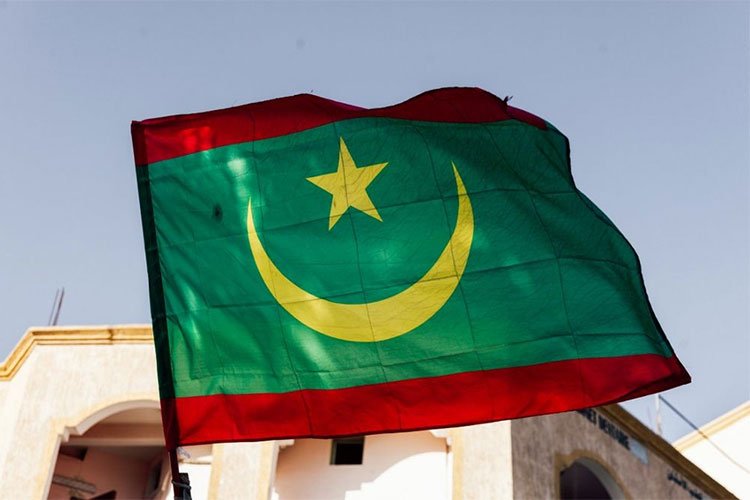
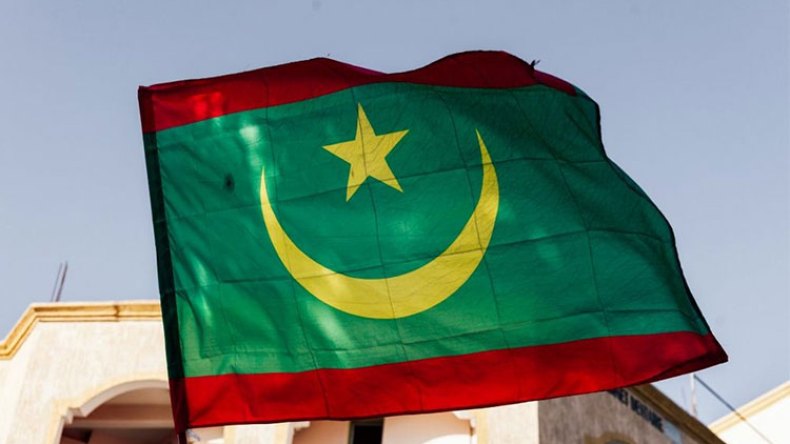
But Mauritania must understand several things: First, before any disagreement erupts between the Sahrawis and Mauritanians on the issue, there is a primary belief among the Sahrawis and reasonable Mauritanians that the one promoting such ideas is the Moroccan lobby in Mauritania, which is strengthening and pressing for Mauritania to align with the Zionist entity, join the Atlantic Initiative and the Nigerian gas pipeline, recognize Moroccan sovereignty over Western Sahara, and withdraw its recognition of the Sahrawi Republic. Secondly, Mauritania must not make a mistake like the mistake of 1975 AD, and covet what does not belong to it, and the consequence will be bad. Third, autonomy has failed, and there is no force that can impose it on the Sahrawis, and it will not be implemented even if Trump and Netanyahu adopt it. Fourth, the Moroccan Atlantic initiative failed, and the evidence for this is that the countries that were going to participate in it, such as Niger and Mali, left it and headed towards Algeria.
Now, Mauritania must look well in its mirror, think carefully, stand on the right side of history, and break its silence regarding all this circulating news that accuses it of working in secret with the region’s historical enemy, which is Morocco.