Since the record-breaking heatwave at the end of May, several local authorities have extended water restrictions due to drought fears, with départements including Dordogne, Charente, Charente-Maritime and Pyrénées-Orientales now under alert.
Just days after France experienced an unusually intense early-summer heatwave, authorities in several départements have introduced water restrictions as concerns grow over drought conditions and declining river levels.
In the southern département of Pyrénées-Orientales, which has endured several consecutive years of drought, officials have placed different areas under varying levels of restriction. The upper Agly basin is on a precautionary alert, the Tech basin is on alert, the Aspres area has been placed in a ‘crisis status’, while the Bordure Côte Nord area is under high alert.
In western France, the Vienne département has placed the River Dive and its tributaries on alert in the areas of Pouançay and Cuhon. Officials have also called for vigilance across the Clain, Creuse, Gartempe and Anglin catchment areas.
In Dordogne, authorities have placed ten waterways under drought surveillance.
Meanwhile, authorities in Saône-et-Loire have reported a worrying decline in river flows across the département and have introduced drought alert measures. Restrictions have also been introduced in Seine-Maritime, which was placed on drought alert on June 3rd.
Some parts of south-west France had introduced restrictions earlier in May – in Charente-Maritime, water-use restrictions are currently in force in parts of the department due to declining water resources.
As of June 2nd, 2026, the Né basin is under vigilance (a call to reduce water consumption), while the Aume-Couture basin is under alert, which imposes mandatory restrictions on certain water withdrawals and uses. Other basins were already placed under vigilance in late May.
In Charente, part of the département is currently subject to drought-management measures and water-use restrictions, particularly in the Charente and neighbouring river basins. Restrictions were introduced in April 2026 following an exceptionally dry spring and mainly affect water taken from natural sources rather than the public drinking-water network.
The restrictions, set out in a prefectural decree, include bans on watering gardens and sports grounds, limits on street cleaning, restrictions on private car washing, controls on filling swimming pools and reductions in agricultural irrigation.
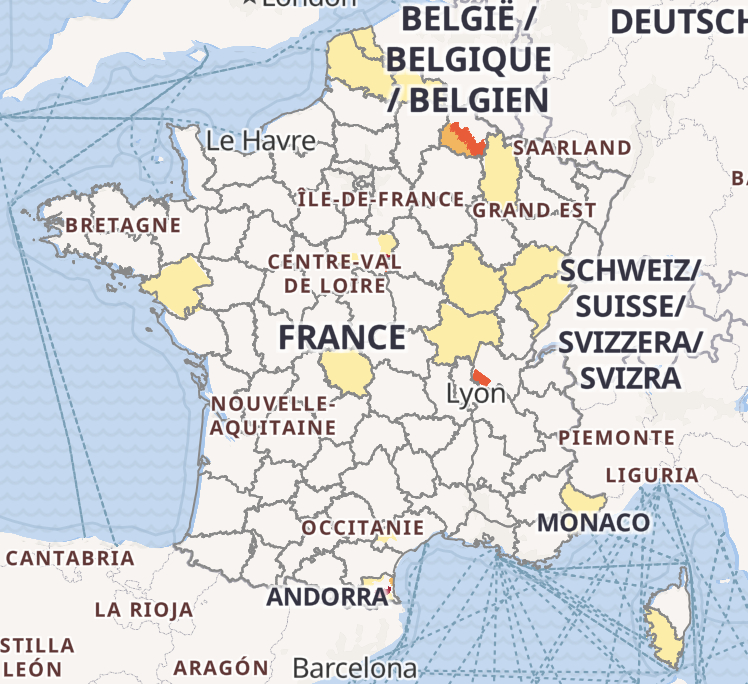 Départements across France placed under water restrictions. (VigiEau)
Local authorities said residents should continue to use water responsibly and warned that additional measures could be introduced in the coming weeks if conditions continue to deteriorate.
Farmers are required to reduce water usage by 50 percent, while fruit growers using localised irrigation systems, such as drip irrigation, may only water crops between 8 pm and 8 am. Individuals are prohibited from drawing water, except for watering vegetable gardens and lawns during overnight hours.
Find further details of the restrictions, and whether they affect your area, here.
READ MORE: EXPLAINED: How to check water restrictions in your area of France