A funny thing happens when men get together. We will spend hours debating sports. We know exactly when the fishing is best. We can tell you who makes the best cracked conch on the island. Some of us can even tell you every strange noise our car has made over the past five years. But ask a group of men when they last had a checkup and suddenly the conversation gets quieter than a church mouse.
For many Bahamian men, health is something we plan to deal with later. The problem is that prostate cancer does not always wait for later. It is one of the most common cancers affecting men. Yet in its early stages, it often causes no symptoms at all — no pain, no warning. No reason to think anything is wrong. Many men feel perfectly healthy while a problem is quietly developing.
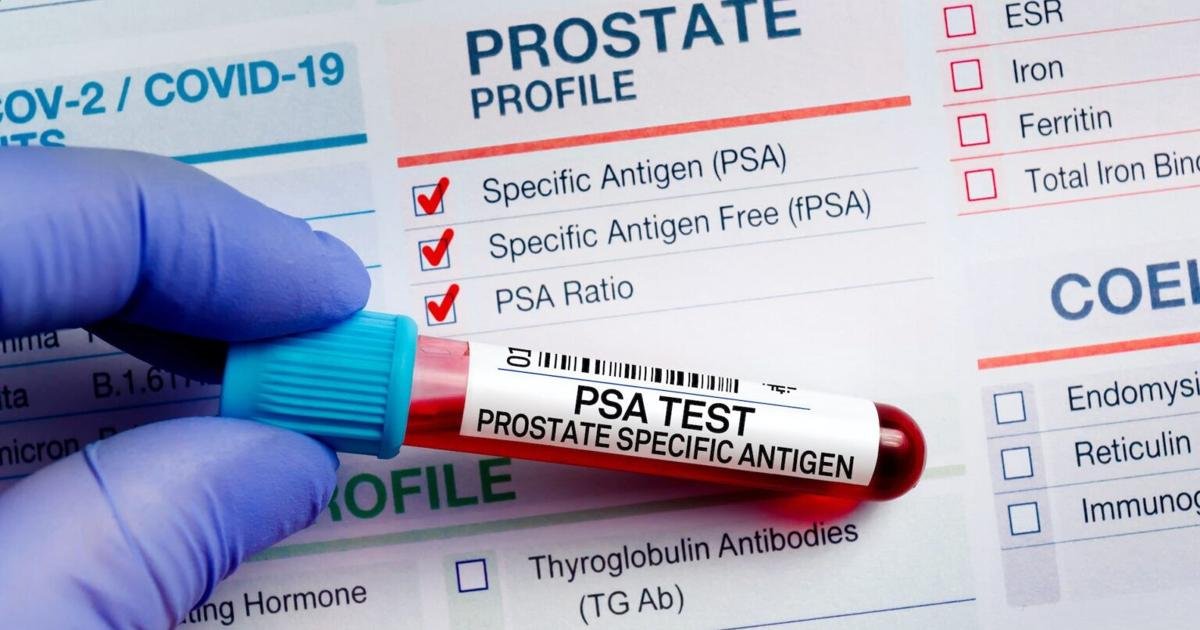
Three letters that have changed men’s health around the world: PSA.
Believe it or not, scientists were not searching for prostate cancer when PSA was first discovered. Researchers studying forensic science identified a protein found in semen. Later, scientists discovered that the same protein was produced by the prostate gland. It eventually became known as Prostate-Specific Antigen (PSA).
What seemed like a small scientific discovery would go on to transform the way we diagnose and monitor prostate cancer. Today, a simple blood test can measure PSA levels and give doctors valuable information about what may be happening inside the prostate. Not bad for something that was never intended to become one of the most famous tests in men’s health.
The prostate naturally produces PSA. A small amount of it enters the bloodstream, and that is perfectly normal. Problems arise when PSA levels become elevated. Many different conditions can cause this. An enlarged prostate can raise PSA. Inflammation can raise it. Infection can raise it. Prostate cancer can raise it too. This is where many people get confused. An elevated PSA does not automatically mean prostate cancer. In fact, many men with an elevated PSA do not have cancer at all. Think of PSA as an early warning signal.
If smoke starts coming from a building, you do not automatically assume the entire structure is on fire. However, you would be wise to investigate. PSA works much the same way. It alerts us that something may be happening in the prostate and that a closer look may be needed.
One of the biggest challenges we face is not a lack of treatment, it is a lack of testing. Every year, men arrive in clinics with advanced prostate cancer having never had a PSA test performed. Many tell the same story: “I felt fine.” That statement is completely understandable. The problem is that early prostate cancer often feels exactly like that — fine. Unfortunately, feeling healthy and being healthy are not always the same thing.
Many serious diseases develop silently for years before symptoms appear. By the time warning signs arrive, the disease may already be much more difficult to treat. That is why regular checkups matter. That is why conversations about prostate health matter. And that is why PSA continues to play such an important role.
The PSA debateIf you have ever read about PSA online, you may have noticed that experts sometimes disagree about it. Some people focus on the lives that have been saved through early detection. Others focus on the fact that PSA is not perfect. Both are correct.
Some men with elevated PSA do not have cancer. Some men with prostate cancer may have relatively modest PSA levels. Sometimes PSA detects cancers that may never have caused problems during a man’s lifetime. These realities have created debate among doctors and researchers.
But here is what often gets lost in the discussion. A test does not need to be perfect to be valuable. A fisherman does not wait until his boat is taking on water before checking for leaks. A homeowner does not wait until the hurricane warning is issued before inspecting the roof. The whole purpose of looking for problems early is to find them while there is still time to do something about them. PSA is not the final answer. It is often the first clue that tells us we should look more closely.
Just when many people thought we had learned everything there was to know about PSA, a major international study published this year reminded us why it remains so important.
Researchers led by Dr. Mahaz Kayani and Professor Gerhardt Attard analysed more than 7,100 men with advanced prostate cancer who participated in the internationally recognized STAMPEDE clinical trials. The findings were published in The Lancet Oncology in May 2026.
The researchers followed these men for nearly a decade and examined how PSA levels changed after treatment began. What they discovered was remarkably important. Men whose PSA levels fell to very low levels after treatment generally lived longer than men whose PSA remained higher. In particular, patients whose PSA dropped to 0.2 ng/mL or lower tended to have the most favorable long-term outcomes.
The study also showed that doctors can begin learning valuable information from PSA changes surprisingly early after treatment starts.
However, the researchers found something equally important. PSA does not tell the whole story. Even among men whose PSA dropped to very low levels, those with more extensive disease still had poorer outcomes than those with less cancer. PSA remained a powerful predictor, but it was only one part of the overall picture. That is exactly how medicine works. Doctors do not treat numbers. They treat people.
If there is one message, I hope Bahamian men take away from this article, it is this: Do not wait for symptoms before you start thinking about your prostate. Have the conversation. Ask the questions. See your doctor.
For some men, PSA testing may be appropriate. For others, the decision may depend on age, family history, overall health, and personal preferences. But doing nothing should not be the default option.
Far too many men are diligent about servicing their boat, maintaining their car, or preparing their home for hurricane season while neglecting the one thing they cannot replace: their health. The next time you are sitting around the domino table, relaxing at the fish fry or catching up with friends after church, ask a simple question: “When was your last checkup?” You may start a conversation that saves a life. And it just might be your own.
- Dr. Greggory Pinto is a board-certified Bahamian urologist and laparoscopic surgeon. He can be contacted at OakTree Medical Center #2 Fifth Terrace and Mount Royal Avenue, or telephone: (242) 322-1145(6)(7). Email: welcome@urologycarebahamas.com or visit the website: www.urologycarebahamas.com.