Faced with the threat of El Niño phenomenonthe former Ministers of Mines and Energy Maria Fernanda Suarez, German Arce and Tomas Gonzalez revealed the strategy they would apply if they were at the head of this entity again to prevent the country from facing electricity rationing in the coming months.
María Fernanda Suárez: real-time control
For the former minister Maria Fernanda Suarezwho led this portfolio from 2018 to 2020 (government of Iván Duque), the initial diagnosis leaves no room for speculation: “The system is operating absolutely at the limitnothing can fail because there is no backup“.
In his analysis, one of the main structural flaws to be corrected in an eventual crisis management is the fragmentation of the sector. Suárez pointed out that markets are currently segmented between electricity, gas and liquids, which hinders a comprehensive response.
READ ALSO

Former Minister of Mines and Energy, María Fernanda Suárez. Photo:Sergio Acero Yate
“When nothing can fail, you need to have logistics in a millimetric way,” he said. For this reason, he proposed as a first measure the creation of a unified control center —similar to that operated by energy companies— that allows you to monitor and supervise in real time all system variables.
Likewise, Suárez emphasized that the public-private articulation and permanent dialogue with generating companies They are essential to evaluate the evolution of the drought.
To this strategy he added the value of “collegiality” and consultation with former ministers who already faced situations of energy stress. “I think that the humility to know that one does not know everything and Working as a team with the sector is essential“, he expressed.
In terms of infrastructure, urged to accelerate transmission and generation projects of energy, because he remembered that the costs of electricity rationing are impossible to assume for the country. Added to this is the fiscal impact, given that nearly 50 percent of Colombians’ energy bills It is covered by the National Government through subsidies.
READ ALSO
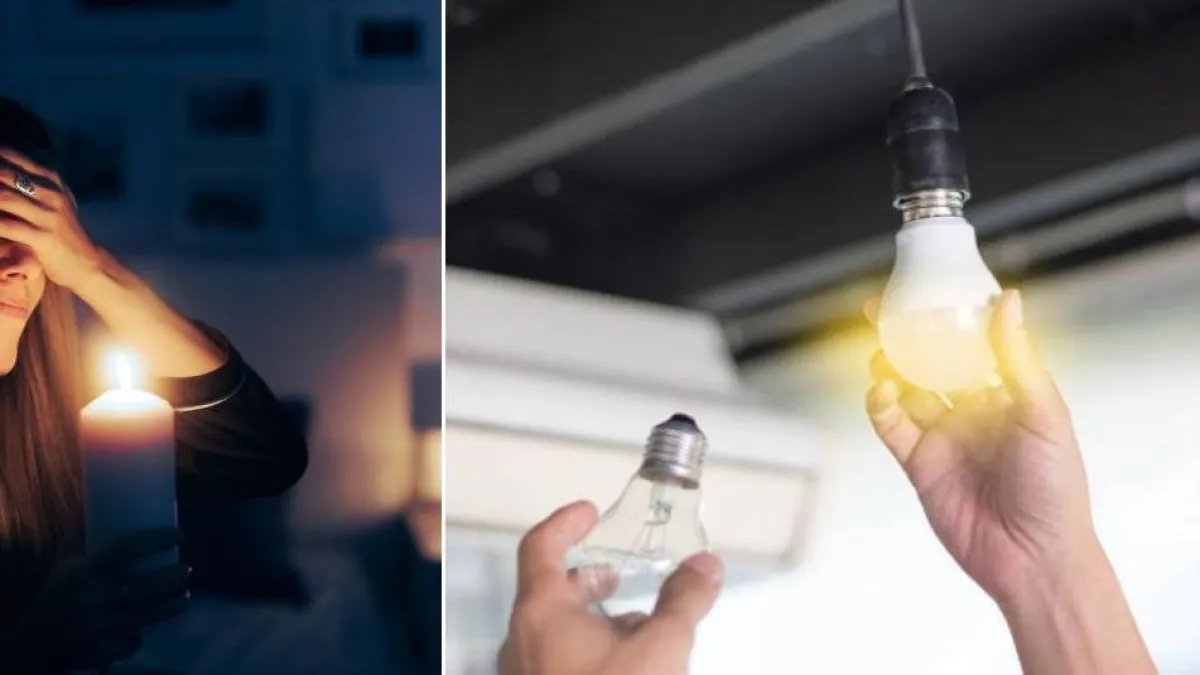
Photo:iStock
Finally, the former minister emphasized communication transparency. He stated that the alert should not be “turned down” about the increase in prices because it is a reality, and he stressed that Hiding behind past administrations does not solve the emergency.
“We all know that we are going to be in this situation because of the previous government, but we are here to solve. I think that in terms of communications and lessons learned there is a field that I do not see so clearly at this moment; Blaming the past government is not enough,” he said.
German Arce: institutional strength and inter-ministerial support
For his part, former Minister Germán Arce, who was in front of this portfolio during the government of Juan Manuel Santos, from 2016 to 2018, defended the resilience of the system and institutional capacity built over the years to overcome severe drought cycles that test the country every four or five years.
“The last four years were a huge test for the system, but the system continues,” he said, warning that it is a mistake to try to “reset and start over” instead of applying gradual changes that send clear long-term signals.
READ ALSO
Former Minister of Mines and Energy, Germán Arce. Photo:Nestor Gomez
Arce highlighted that although the current minister, María Nohemí Arboledahas a deep knowledge of the technical operation of the sector, “solving this problem does not depend exclusively on her“.
According to the former official, overcoming the complications of El Niño requires joint work and coordinated between the Ministry of Mines and Energy and the Treasury, Interior and Environment portfolios. This alliance is key to politically support decisions complex and uncomfortable that must be taken.
The former minister also expressed the urgency of acting in the face of tight deadlines: “It is possible that the country will turn off for the minister because in the three months ahead it will not be possible to make all the decisions at the necessary speed to avoid the impacts of a strong and long El Niño. Citizens cannot be surprised the day that scheduled outages begin“.
Finally, he highlighted the constitutional mandate that obliges to guarantee the continuity of the service. “We must learn from the lessons of the past. The only thing that cannot happen to one is for the light bulb to go off, because the minister’s legal obligation is guarantee service provision. The law says so, It is a constitutional mandate“he recalled.
READ ALSO
Former Minister of Mines and Energy, Tomás González. Photo:VII Oil, Gas and Energy Summit
Tomas Gonzalez: financial sufficiency and savings campaigns
Tomas Gonzalez He was Minister of Mines and Energy during the government of Juan Manuel Santos, from 2014 to 2016, when Colombia faced a strong El Niño phenomenon and was on the brink of a blackout. From their perspective, the economic liquidity of the system is as decisive as the availability of energy.
“There is a very strong learning and that is one also goes out for money. Regarding energy issues, there is little that can be done in the short term; We hardly get the electrons that no longer exist in the two months we have; the same with gas molecules. But we can get the money that is given to the system, yes we have time to do it“he explained.
González recalled that the great lesson left by the El Niño phenomenon of 2015-2016 was the need to guarantee the financial sufficiency of companies marketers and generators. Without that financial muscle, The system lacks the necessary resources to acquire the gas and fuels that thermal plants require to operate at maximum capacity.
For the former minister, too It is urgent to speed up the pace of government decisions to send signals of calm to the market. In addition, highlighted the effectiveness of savings incentives of energy, citing as an example the program ‘Turn off pays’whose impact on consumption was so significant that, even after overcoming the drought, electricity demand took a while to recover.