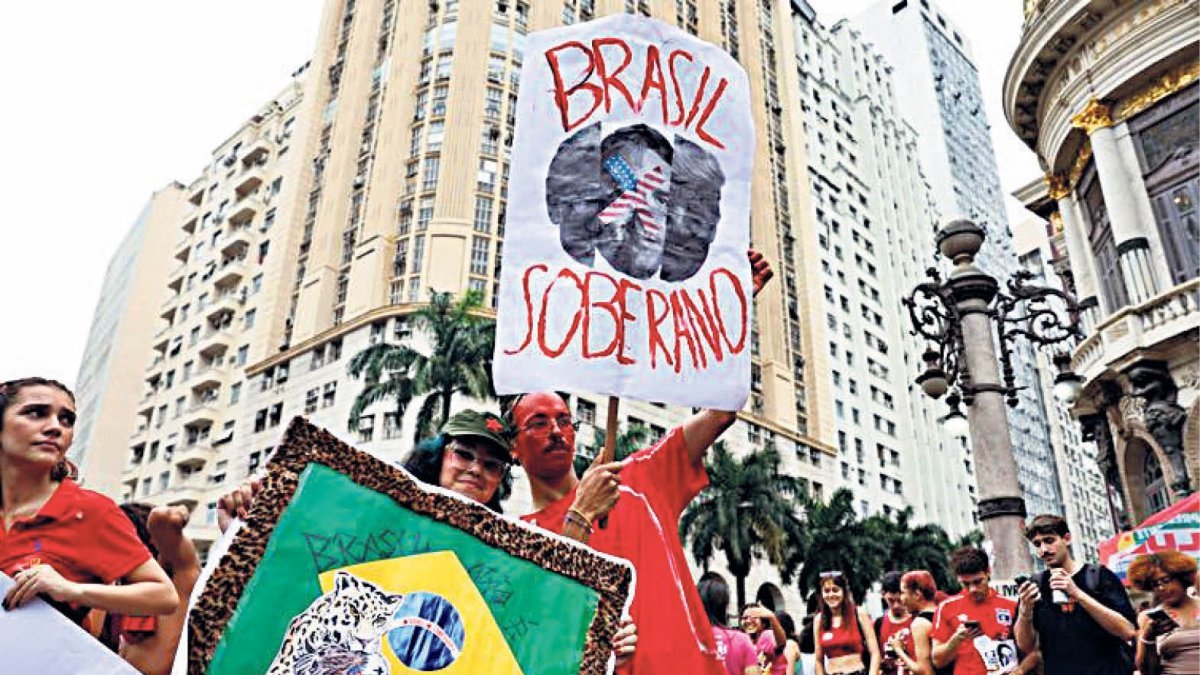

The victory of Lula da Silva has decided who will govern Brazilbut not the division that crosses the country. The candidate of Workers’ Party (PT) was imposed on Flavio Bolsonaroson of the former president Jair Bolsonaro, with 51.79% of the votes against 48.21%, a result that also splits the Brazilians from Andorra. Their opinions paint a polarized country, with the risk that the confrontation will overshadow everyday problems.
For Julia Limathe second round represented having to choose between “the bad and the worst”. Actually, I would have liked another option, though prefers Lula to Bolsonarism, because he assures that, if he lived in Brazil, would feel “much safer” with a government of P.T that with the Bolsonaro familyto which he attributes a speech of hatred and intolerance towards those who think differently. Elton Valentine share preference without hiding reservations: nor does he consider Lula the ideal candidate and he preferred candidates from the third way, but he refuses to entrust the country again to a family that, according to him, has been participating in politics for more than thirty years “without having made any important contribution”.
Valentine remember especially the management of Jair Bolsonaro during the pandemic, marked by a denialism that “hurt a lot”and suspects that the son, in the line of the family, would prioritize his own interests over the common good. Now, the critical support a Lula it is not born only from the rejection of the rival: it also recognizes the effect of the social programs of the P.T in his personal career, as he explains that they facilitated him access to higher studies and the purchase of a flat. Experiences also weigh when deciding.
The problem, according to Miriam Aliceit is precisely that personal sympathies often end up replacing the debate on the proposals. Without identifying himself with any candidate, he states that want “the best for Brazil” and demands to examine the programs before voting. Precisely, the concern for a politics dominated by emotions links to reviews of Valentine on social networks, where he reports that the campaign gave rise to disinformation and exploited the ignorance of voters.
Brazilian residents disagree about which was the best option
When the conversation leaves the parties behind, the economy occupies a large part of the concerns. Alice alert of theindebtedness of families and he wonders how the new government will respond, a concern that Katia Araujo live very close Resident in Andorra for ten yearsexplains that his acquaintances continue to Brazil and that it is increasingly difficult for them to make ends meet. His mother, for example, had to giving up private health insurance because I could no longer afford it andaccording to reports, resorting to the public system can lead to months of waiting. Added to this is the increase in the price of common products such as meat, rice or beans, which he considers a growing burden for many households.
Katia blames the PT for the deterioration that he perceives in the economy, health and security, and would have preferred the victory of Flavio Bolsonaro. Although recognizing that Jair Bolsonaro he had an authoritarian speech, he thinks the son was more prepared and could have improved security and relations with the united states. He even suspects, in the Bolsonarian line, that the electoral result was fraudulent because Lula went back to the second round, an unprecedented fact in Brazil.
The relationship with Washington also appears in the speech ofAlicealthough with more nuances. Consider that a Bolsonaro victory would have favored ties with Donald Trumpbut warns that the American interest also responds to economic objectives, especially to the rare earth resources of the Brazil. with Lula, insteadforesees an orientation linked to the BRICSof which the country is part, and that “we will have to see how they help us with our current situation”.
For Katiahowever, security weighs even more heavily than foreign policy. He assures that the fear of being robbed has spread even to towns that were once considered peaceful and that, when he returns to Brazil every two years, avoid going out at night. That’s why, despite the economic difficulties that a Andorrarules out settling there any more: al principality values being able to access health care and live without that constant feeling of insecurity. Aliceon the other hand, does not link an eventual return to the country to whoever holds the presidency.
The four views do not agree on the political diagnosis or the solution, but they do on the need for the debate to go beyond the surnames Lula and Bolsonaro. Some fear the return of a discourse that they consider exclusionary; others see in the continuity of the P.T an obstacle to improving the country. Meanwhile, the price of food, access to health and safety continue to shape the conversations of those who follow the Brazil from Andorra.