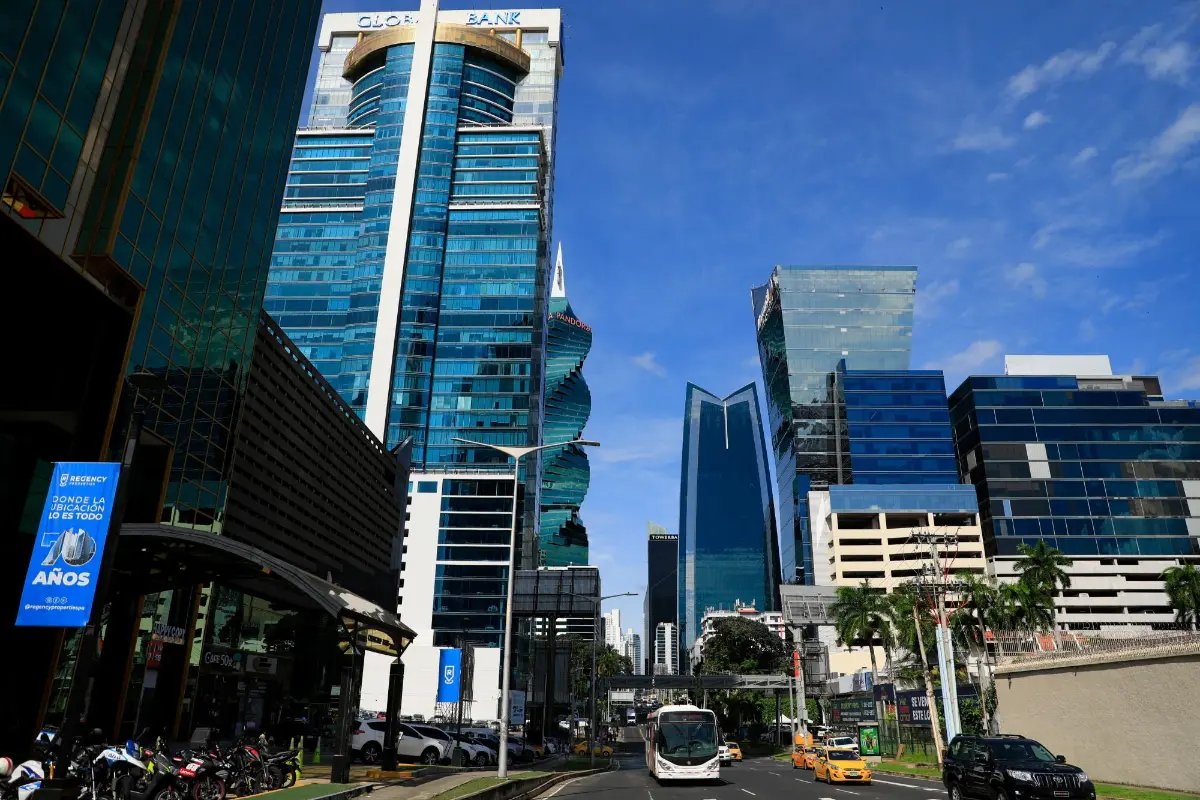
In free fall, this is the country’s foreign direct investment (FDI), according to official figures.
In the last three years 2022, 2023 and 2024 this FDI has exceeded $2 billion annually, according to the National Institute of Statistics and Census (Inec) of the Comptroller General of the Republic.
However, at the end of last year the figure was $905 million.
The data for 2025 represents a decrease of 63% compared to 2024 when it totaled $2,454 million.
Last year, this downward trend can be seen in the latest report of the general account of the National Treasury with a drop of 85% as of the third quarter of 2025, with only $315 million, according to data from the Ministry of Economy and Finance.
What is the reason for the drop in investment in 2025 compared to 2024? That was the question posed by The Star of Panama to the Ministry of Commerce and Industries (MICI) since last Wednesday; however, there was no response
“This drop in foreign investment is a sign that must be taken seriously, but also understood in its context. It does not respond to a single factor, but to the coincidence of several elements at the same time,” commented the president of the Panamanian Association of Business Executives (Apede), Giulia De Sanctis.
In his opinion, slow procedures, high costs, challenges in infrastructure and signals that affect investor confidence would be the cause of the reduction by more than half.
For this reason, “clear and urgent changes and adjustments are required,” such as simplifying procedures, reducing bureaucracy and speeding up processes, added the spokesperson for the business sector.
Among the main factors that influenced this fall is the banking sector, which is usually one of the main drivers of investment in Panama, because some entities chose not to reinvest profits and transferred the capital to their parent companies, in the face of a more attractive international environment and local uncertainty, according to the analysis of the business organization.
The greatest deterioration in FDI was concentrated in internationally licensed banks, with a net outflow of $1,513 million.
While those with a general license dampened the outflow of capital, and the Colón Free Zone and other companies remained in positive data, but with less dynamism compared to 2024, indicates the union’s analysis.
Another factor that adds to the decrease is the closure of the copper mine operated by First Quantum Minerals LTD, in the province of Colón, “which previously contributed an important part of the investment, and whose absence is directly felt,” stated Apede.
In addition to this, there is greater caution among already established companies, which “have paused expansion decisions in the face of uncertainty.”
FDI is a fundamental variable as a source of external financing and has great influence on the balance of payments, long-term economic growth and the country’s productivity, describes the Inec report.
The United States, Colombia, Barbados and Switzerland are the main countries that invest in Panama, according to the Comptroller’s Office.