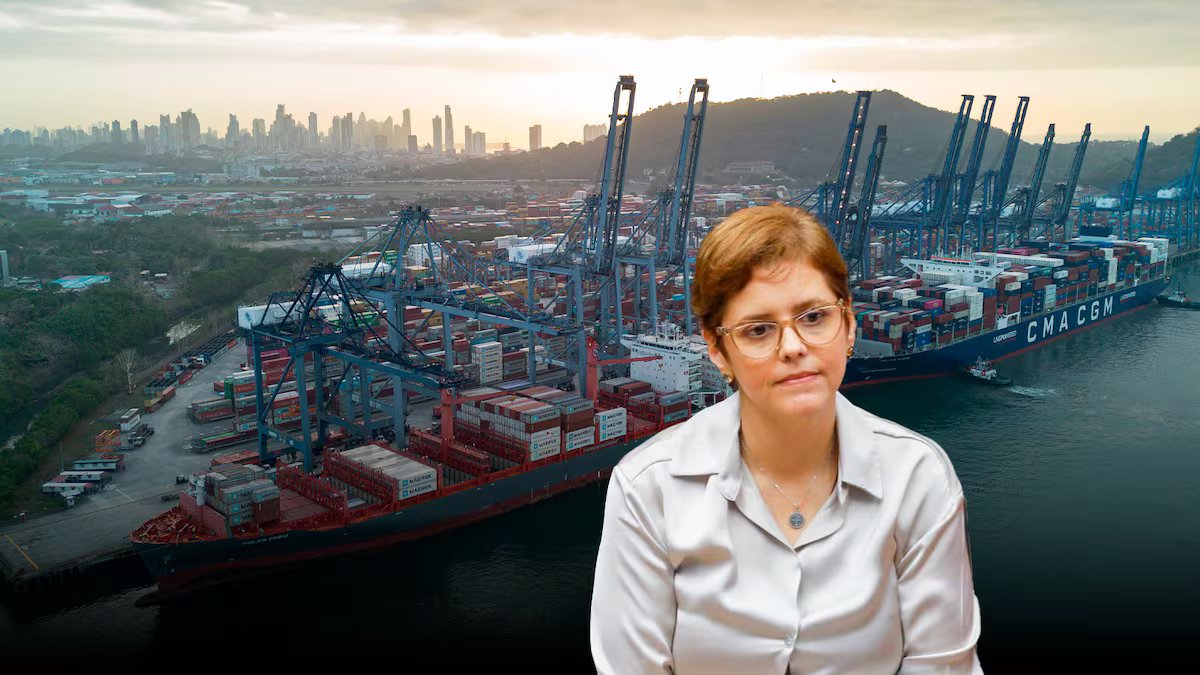
Representative Graciela Hernández, from the Other Path Movement, has unleashed a kind of tsunami in the logistics and maritime sector after presenting a bill that has already passed the second debate in the Assembly.
Bill 491 proposes an increase in the monthly allowance for retirees and pensioners who currently receive less than $600 per month, a measure with high social impact, but also with fiscal and economic implications that have set off alarm bells in different sectors.
It is proposed that, to equalize pensions, an additional contribution of $1.50 be imposed for each TEU that enters the national territory through the ports.
Tensions are already anticipated from the Executive, while representatives of the maritime, business and commercial sectors have reacted to the possible effects of the proposal on the country’s competitiveness.
The plenary session of the National Assembly of Panama approved yesterday, Tuesday, April 28, the project in second debate, which brings the initiative closer to its eventual final approval. It is estimated that the law would benefit 95 thousand pensioners.
Attachments
The Maritime Chamber warned that Panama competes with other logistics centers in the region for the same cargo flows, so an increase in container mobilization costs could translate into lower volume, diversion of merchandise to other destinations and a loss of competitiveness.
The project promotes the creation of a fund administered through a trust for money management, whose trustor would be the Panamanian State, through the Ministry of Economy and Finance.
The trustee would be the National Bank of Panama, in its capacity as a state bank, and the retirees and pensioners would be the beneficiaries.
The Maritime Chamber of Panama (CMP) strongly rejected the project, particularly due to the proposal to establish new economic charges applicable to the movement of containers and services linked to port and logistics activity.
They say they recognize the importance of strengthening social protection, but in a well-structured way. They indicate that the figure of the fund can be a valid mechanism, as long as its financing comes from resources already existing within the State.
According to the union, the proposal is a measure that would not only affect containerized cargo or port operators; would also impact a plethora of small and medium-sized businesses that provide services around the hub Panamanian maritime-logistics.

Rudder turn or legislative shrimp?
The legislative process of project 491 underwent significant transformations from its original conception, as draft 189, until the approval of its single text in first debate.
The fundamental changes focus on the scope of beneficiaries and, mainly, on the source of financing.
The proposal initially proposed allocating 10% of the income from telecommunications concessions for the Disability, Old Age and Death (IVM) program, but it was later determined that the funds should come from a new fee or charge for containers entering the country.
While the initial proposal focused on pensions of less than $450 per month, the document approved in the second debate extends this “complementary income” to all retirees and pensioners whose current payments are less than $600.
According to the text of the norm, this benefit will not constitute salary or pension, it will be unseizable and will be paid biweekly to the beneficiaries.
At the time, Hernandez supported the initiative and the deputies joined it as co-proponents José Pérez Barboni, Ernesto Cedeno and Betserai Richards.
Unanimous rejection
The Panamanian Association of Business Executives agreed with the arguments of the Maritime Chamber of Panama. The union recognized the need to strengthen the pensions of those who receive less than $600, but warned that imposing new charges on containers would affect Panama’s competitiveness.
They rejected the proposal and warned of the effects on the logistics sector, which contributes about 11.8% of Panama’s GDP and generates jobs.
Giulia De Sanctis, president of Apede, requested a comprehensive technical analysis that guarantees the viability of the project without slowing growth, and reiterated the union’s willingness to contribute in the search for sustainable financing.
Along the same lines, the Chamber of Commerce, Industries and Agriculture of Panama expressed its rejection of the project, considering it an “improvised, dangerous and without technical support” measure.
The union warned that the initiative could put economic stability, the country’s competitiveness and legal security at risk.
Although they recognize the intention to support lower-income retirees as valid, they maintain that it is a public policy error when trying to solve a structural problem through isolated decisions that transfer costs to key productive sectors.