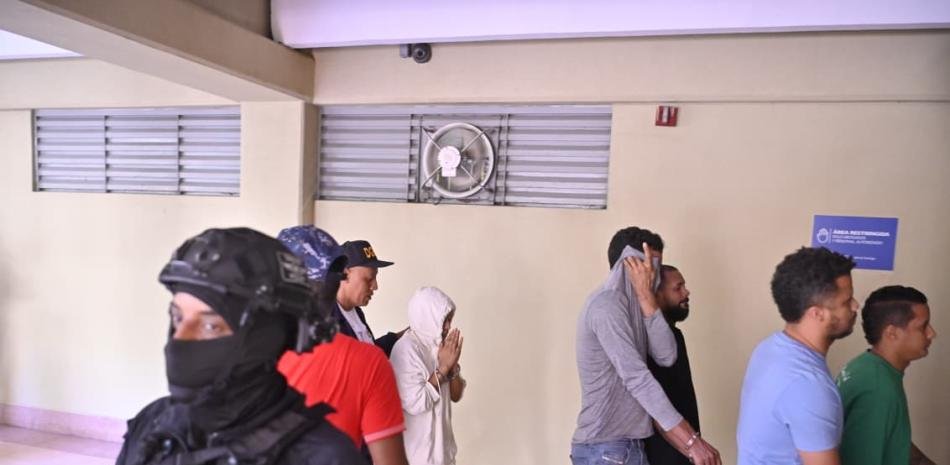
After a long process and having been postponed on at least 3 occasions, the coercive measure against the 10 people in the case was announced this Friday. XL-526an alleged criminal network dedicated to fraud, extortion and money laundering through cybercrime operations.
The judge Yiberty Polanco declared the process a complex case, imposed 18 months of preventive detention on five of the accused, to be served at the Rafey Hombres Correction and Rehabilitation Center, and gave the Public Ministry a period of eight months to conclude the investigation.
The remaining five defendants received financial guarantee, with amounts ranging between RD$200,000 and RD$800,000, in addition to periodic presentation.
During the reading of the decision, the judge established that there was a violation of fundamental rights, specifically to the right of defense, considering that the lawyers were prevented from adequately communicating with their clients during the initial stage of the process.
However, he understood that this situation, although it constitutes a violation of rights, was not sufficient to annul the arrests made or to invalidate the process.
The judge indicated that, if it is proven that certain evidence was obtained as a consequence of this violation of rights, it could be excluded from the process, which could also lead to financial and disciplinary responsibilities for the members of the Public Ministry who prevented the defense’s access to the accused.
Among those accused are Carlos José Parra LantiguaEliardo Peña Almonte, Renso Darío González Almonte, Josiel Pichardo Cabrera, Walinton Ariel Sosa Almonte, Moisés David Pichardo Aracena, Pedro Antonio Pichardo, Yusmery Altagracia Cabrera, Danny Rafael Lantigua and Julio Antonio Peralta del Rosario.
The members of the network designed and published advertisements on dating and intimate encounter portals, offering fictitious sexual services from supposed women.
The Public Ministry’s accusation maintains that the members of the network allegedly contacted people through digital means and then intimidated or deceived them to obtain money, using different forms of fraud and mechanisms to hide the origin of the funds obtained.