Tuesday, June 23, 2026
    The GeoStrategic Consensus
    No Result
    View All Result
    • Login
    • HOME
    • AMERICAS
      • Argentina
      • Brazil
      • Canada
      • Chile
      • Colombia
      • Costa Rica
      • Cuba
      • Dominican Republic
      • Ecuador
      • El Salvador
      • Greenland
      • Guatemala
      • Honduras
      • Mexico
      • Nicaragua
      • Panama
      • Paraguay
      • Peru
      • United States
      • Uruguay
      • Venezuela
    • ASIA-PACIFIC
      • Australia
      • Brunei Darussalam
      • Cambodia
      • China
      • Federated States of Micronesia
      • Fiji
      • Indonesia
      • Japan
      • Kiribati
      • Laos
      • Malaysia
      • Marshall Islands
      • Mongolia
      • Myanmar
      • Nauru
      • New Zealand
      • North Korea
      • Palau
      • Papua New Guinea
      • Philippines
      • Samoa
      • Singapore
      • Solomon Islands
      • South Korea
      • Taiwan
      • Thailand
      • Timor-Leste
      • Tonga
      • Tuvalu
      • Vanuatu
      • Vietnam
    • CARICOM
      • CARICOM – Non-English
        • Haiti
        • Suriname
      • CARICOM Associates
        • Anguilla
        • Bermuda
        • British-Virgin-Islands
        • Cayman-Islands
        • Curacao
        • Turks-and-Caicos
      • CARICOM English
        • Antigua and Barbuda
        • Barbados
        • Belize
        • Dominica
        • Grenada
        • Guyana
        • Jamaica
        • Montserrat
        • Saint Kitts and Nevis
        • Saint Lucia
        • Saint Vincent and the Grenadines
        • The Bahamas
        • Trinidad and Tobago
    • EURASIA
      • Armenia
      • Azerbaijan
      • Balarus
      • Georgia
      • Kazakhstan
      • Kyrgyzstan
      • Moldova
      • Russia
      • Tajikistan
      • Turkmenistan
      • Ukraine
      • Uzbekistan
    • EUROPE
      • Albania
      • Andorra
      • Austria
      • Bosnia and Herzegovina
      • Bulgaria
      • Croatia
      • Cyprus
      • Czech Republic
      • Denmark
      • Estonia
      • Finland
      • France
      • Germany
      • Greece
      • Holy See
      • Hungary
      • Iceland
      • Ireland
      • Italy
      • Kosovo
      • Latvia
      • Liechtenstein
      • Lithuania
      • Luxembourg
      • Malta
      • Monaco
      • Montenegro
      • Netherlands
      • North Macedonia
      • Norway
      • Poland
      • Portugal
      • Romania
      • San Marino
      • Serbia
      • Slovakia
      • Slovenia
      • Spain
      • Sweden
      • Switzerland
      • United Kingdom
    • MIDDLE EAST AND NORTH AFRICA
      • Algeria
      • Bahrain
      • Egypt
      • Iran
      • Iraq
      • Israel
      • Jordan
      • Kuwait
      • Lebanon
      • Lybia
      • Morocco
      • Oman
      • Palestinian Territories
      • Qatar
      • Saudi Arabia
      • Syria
      • Tunisia
      • Turkey
      • United Arab Emirates
      • Western Sahara
      • Yemen
    • SOUTH ASIA
      • Afghanistan
      • Bangladesh
      • Bhutan
      • India
      • Maldives
      • Nepal
      • Pakistan
      • Sri Lanka
    • SUB-SAHARAN AFRICA
      • Angola
      • Benin
      • Botswana
      • Burkina Faso
      • Burundi
      • Cabo Verde
      • Cameroon
      • Central African Republic
      • Chad
      • Comoros
      • Cote d’Ivoire
      • Democratic Republic of the Congo
      • Djibouti
      • Equatorial Guinea
      • Eritrea
      • Eswatini
      • Ethiopia
      • Gabon
      • Gambia
      • Ghana
      • Guinea
      • Guinea Bissau
      • Kenya
      • Lesotho
      • Liberia
      • Madagascar
      • Malawi
      • Mali
      • Mauritania
      • Mauritius
      • Mozambique
      • Namibia
      • Niger
      • Nigeria
      • Republic of the Congo
      • Rwanda
      • Sao Tome and Principe
      • Senegal
      • Seychelles
      • Sierra Leone
      • Somalia
      • South Africa
      • South Sudan
      • Sudan
      • Tanzania
      • Togo
      • Uganda
      • Zambia
      • Zimbabwe
    • HOME
    • AMERICAS
      • Argentina
      • Brazil
      • Canada
      • Chile
      • Colombia
      • Costa Rica
      • Cuba
      • Dominican Republic
      • Ecuador
      • El Salvador
      • Greenland
      • Guatemala
      • Honduras
      • Mexico
      • Nicaragua
      • Panama
      • Paraguay
      • Peru
      • United States
      • Uruguay
      • Venezuela
    • ASIA-PACIFIC
      • Australia
      • Brunei Darussalam
      • Cambodia
      • China
      • Federated States of Micronesia
      • Fiji
      • Indonesia
      • Japan
      • Kiribati
      • Laos
      • Malaysia
      • Marshall Islands
      • Mongolia
      • Myanmar
      • Nauru
      • New Zealand
      • North Korea
      • Palau
      • Papua New Guinea
      • Philippines
      • Samoa
      • Singapore
      • Solomon Islands
      • South Korea
      • Taiwan
      • Thailand
      • Timor-Leste
      • Tonga
      • Tuvalu
      • Vanuatu
      • Vietnam
    • CARICOM
      • CARICOM – Non-English
        • Haiti
        • Suriname
      • CARICOM Associates
        • Anguilla
        • Bermuda
        • British-Virgin-Islands
        • Cayman-Islands
        • Curacao
        • Turks-and-Caicos
      • CARICOM English
        • Antigua and Barbuda
        • Barbados
        • Belize
        • Dominica
        • Grenada
        • Guyana
        • Jamaica
        • Montserrat
        • Saint Kitts and Nevis
        • Saint Lucia
        • Saint Vincent and the Grenadines
        • The Bahamas
        • Trinidad and Tobago
    • EURASIA
      • Armenia
      • Azerbaijan
      • Balarus
      • Georgia
      • Kazakhstan
      • Kyrgyzstan
      • Moldova
      • Russia
      • Tajikistan
      • Turkmenistan
      • Ukraine
      • Uzbekistan
    • EUROPE
      • Albania
      • Andorra
      • Austria
      • Bosnia and Herzegovina
      • Bulgaria
      • Croatia
      • Cyprus
      • Czech Republic
      • Denmark
      • Estonia
      • Finland
      • France
      • Germany
      • Greece
      • Holy See
      • Hungary
      • Iceland
      • Ireland
      • Italy
      • Kosovo
      • Latvia
      • Liechtenstein
      • Lithuania
      • Luxembourg
      • Malta
      • Monaco
      • Montenegro
      • Netherlands
      • North Macedonia
      • Norway
      • Poland
      • Portugal
      • Romania
      • San Marino
      • Serbia
      • Slovakia
      • Slovenia
      • Spain
      • Sweden
      • Switzerland
      • United Kingdom
    • MIDDLE EAST AND NORTH AFRICA
      • Algeria
      • Bahrain
      • Egypt
      • Iran
      • Iraq
      • Israel
      • Jordan
      • Kuwait
      • Lebanon
      • Lybia
      • Morocco
      • Oman
      • Palestinian Territories
      • Qatar
      • Saudi Arabia
      • Syria
      • Tunisia
      • Turkey
      • United Arab Emirates
      • Western Sahara
      • Yemen
    • SOUTH ASIA
      • Afghanistan
      • Bangladesh
      • Bhutan
      • India
      • Maldives
      • Nepal
      • Pakistan
      • Sri Lanka
    • SUB-SAHARAN AFRICA
      • Angola
      • Benin
      • Botswana
      • Burkina Faso
      • Burundi
      • Cabo Verde
      • Cameroon
      • Central African Republic
      • Chad
      • Comoros
      • Cote d’Ivoire
      • Democratic Republic of the Congo
      • Djibouti
      • Equatorial Guinea
      • Eritrea
      • Eswatini
      • Ethiopia
      • Gabon
      • Gambia
      • Ghana
      • Guinea
      • Guinea Bissau
      • Kenya
      • Lesotho
      • Liberia
      • Madagascar
      • Malawi
      • Mali
      • Mauritania
      • Mauritius
      • Mozambique
      • Namibia
      • Niger
      • Nigeria
      • Republic of the Congo
      • Rwanda
      • Sao Tome and Principe
      • Senegal
      • Seychelles
      • Sierra Leone
      • Somalia
      • South Africa
      • South Sudan
      • Sudan
      • Tanzania
      • Togo
      • Uganda
      • Zambia
      • Zimbabwe
    No Result
    View All Result
    Agentially
    No Result
    View All Result
    Home EUROPE Montenegro

    ‘Family-friendly’ Hungary: Bounty for couples with babies, debt-ridden for people without children

    The Analyst by The Analyst
    June 23, 2026
    in Montenegro
    ‘Family-friendly’ Hungary: Bounty for couples with babies, debt-ridden for people without children


    Sitting on a bench in the leafy park of a university campus in the eastern Hungarian city of Debrecen, Barbara Elek nervously checks her emails.

    READ ALSO

    Đeka: Official Belgrade would like to obstruct Montenegro on its way to the EU and to extremize the Serbs, but I think they are not succeeding in this.

    When brother hits brother at the World Cup

    She and her husband Levi are waiting to find out if Barbara is pregnant, after their third round of IVF ten days ago.

    “If it doesn’t work, then obviously I’ll be devastated,” she says.

    Her anxiety doesn’t just stem from sadness over not being able to give birth to a baby.

    Instead, she and Levi could face astronomical bills if she fails to get started.

    Like many other young Hungarian couples, Barbara, a social worker, and Levi, a chef, were eligible for tens of thousands of dollars in interest-free loans and subsidies after promising to have two children.

    But when they realized they couldn’t get pregnant naturally, things got complicated.

    If they fail to prove their child is on the way by November this year, they face having to pay back those loans with late interest – which would eat up half of their income.

    BBC

    For the past 16 years, under former Prime Minister Viktor Orbán, Hungary has embarked on one of the most ambitious and generous pronatalist measures (a policy designed to increase the birth rate) in the world.

    It involved loans with terms that improved according to how many children the couple promised to have.

    After three, their debt would be written off.

    Hungary has dedicated four to five percent of its gross domestic product (GDP) to these measures – nearly $16 billion – the same amount NATO recommends its member states spend on defense.

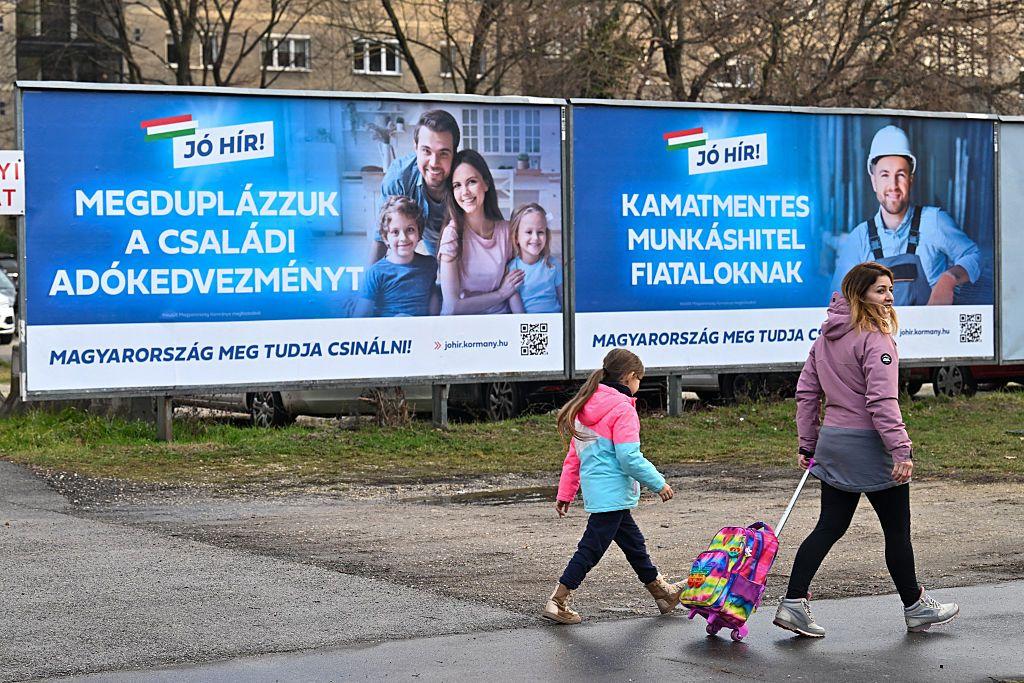
    They were followed by an aggressive marketing campaign promoting “Family Friendly Hungarian”.

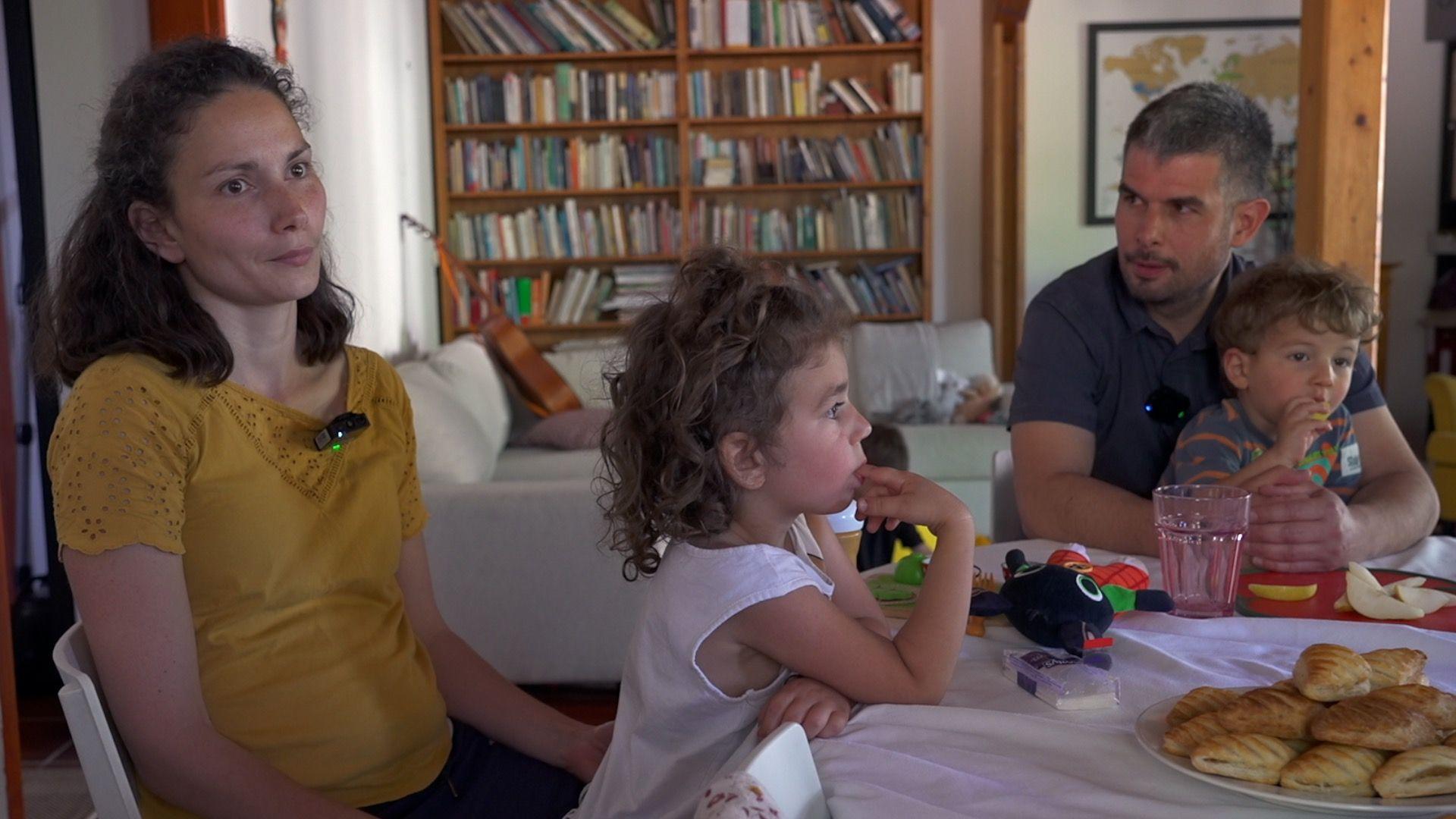
    Mate and Agi Gorondi are parents of five children under the age of 10.

    They used generous maternity pay and subsidies to help themselves renovate their house and buy a bigger car.

    Mate, a self-employed business development consultant, benefits from tax breaks that grow with each additional child they have.

    And as a mother of two, Aggie won’t pay any income tax if she goes back to work.

    “We felt that this policy influenced us to have more children by creating an encouraging attitude towards families,” says Mate.

    He says that in their village, a well-to-do suburb near Budapest, there has been a noticeable increase in the number of families with four and five children.
    BBC

    For a while, the birth rate in Hungary increased: from 1.25 in 2010 to 1.61 in 2020.

    It has been hailed as a huge success by some – particularly some American conservatives – who want governments to be more proactive towards families.

    But in the past three years, the birth rate has fallen back to 1.31, a level not much higher than when the program was first introduced.

    “This policy seems to have been effective for a while, as many pro-birth policies are,” says Eva Fodor, co-director of the Democratic Institute at Central European University.

    She believes that financial incentives have pushed some people to have children they would have had anyway, just earlier than they planned.

    “And so the birth rate went up for a while, for a year or two, and then it started going down again.”

    According to Timothy P. Carney, a senior fellow at the American Enterprise Institute who has written several books on the declining birthrate, Orbán’s greatest success has been putting the family at the center of the political narrative.

    But he says that “part of the problem is that we overestimate how these funds work.”

    “Orbán achieved a small success, but one that showed the cost and risks of family policy.”

    Hungary is not the only country that has tried to boost the birth rate through financial and social policies.

    South Korea’s birth rate was 1.19 in 2008 – one of the lowest in the world.

    Since then, the country has spent about $290 billion trying to get the population to have more babies.

    Parents receive an upfront “baby bonus” of $27,000 to $40,000 when their child is born, as well as generous child benefits each month.

    They also receive vouchers that help them with private kindergartens.

    But South Korea’s total birth rate has declined during that time, reaching 0.8 percent in 2025.

    Some argue that the rise and fall of the Hungarian birth rate had almost nothing to do with politics and simply reflected broader trends throughout Eastern Europe.

    The Czech Republic, for example, did not introduce such expensive pro-natal measures, and yet experienced a similar jump and a similar decline.
    BBC

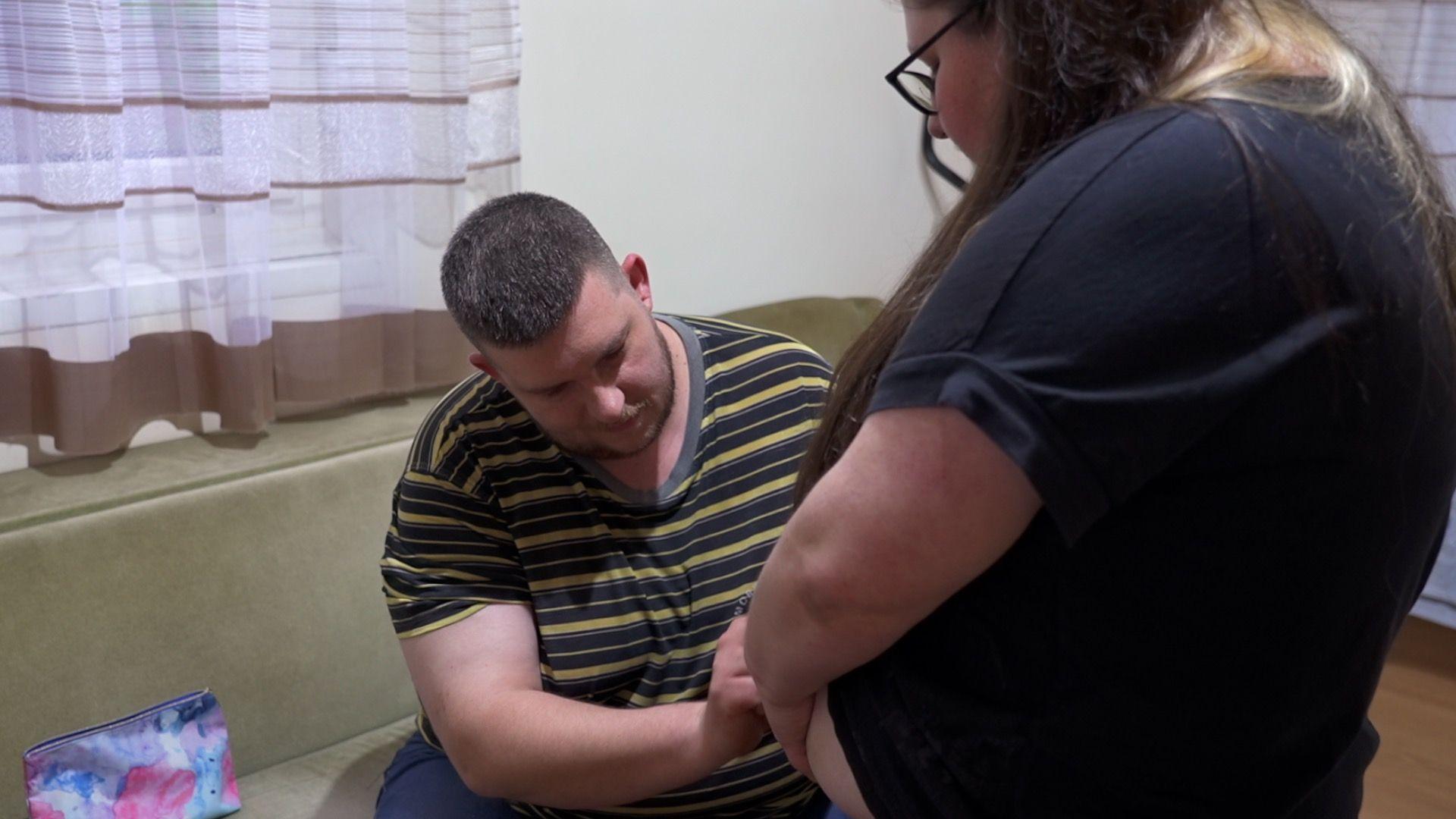
    Barbara and Levi met online nine years ago, in their early twenties, and married a year later.

    They knew they wanted to have two children and took out a 10 million forint ($33,000) ‘baby loan’ in 2020.

    When they started having trouble conceiving naturally, they were referred to a government-subsidized IVF clinic an hour and a half’s drive from where they lived.

    In order to be exempt from the penalty if she does not become pregnant, Barbara must prove that she did everything she could to conceive.

    She was supposed to have completed four rounds of IVF by now, but she has only gone through the process three times so far.

    And so, the night before the appointment, she put together all the collected documentation – several binders full of medical and financial documents – all the evidence of her efforts to have a baby.

    “They took control of everything,” she says.

    This is her way of “trying to regain some of that control.”

    BBC

    Another woman who took out the offered loans is Antonija Miskolci.

    Despite this, she thinks the family-friendly policy was a “badly calculated redistribution of money” and claims the loans did not encourage her to have more children.

    She says that an important condition for her to take out the loan “was that she didn’t have to decide in advance how many children she would have.”

    The 29-year-old mother of one from Budapest thinks healthcare has been in a “terrible state” under Orbán’s government and would prefer government funds to be used to improve public services.

    She describes scrolling through ‘what to pack in my hospital bag’ videos of expectant mothers on social media, horrified to be told to bring their own toilet paper and disinfectant.

    “I don’t think big promises are needed,” she says, “just fix the basics and the willingness to have children will only increase.”

    She eventually decided to deliver the baby in a private hospital.
    AFP via Getty Images

    After a stressful morning at the clinic, Barbara and Levi received devastating news: their embryo transfer had failed.

    This not only means that they will not have a child, but their monthly expenses could also quadruple.

    They are far from alone in this: the Hungarian National Bank estimates that there are 25,000 couples – one in five of those who took out a loan – who have not had children and will have to pay default interest this year.

    The new Hungarian government, which came to power in April, recently announced that it will extend the deadlines for couples who want to have babies.

    It has been announced and work is being done to find a solution for those who did not have the planned children.

    A difficult decision for the government will be whether to continue with these incentives.

    The policy proved popular.

    Its abolition could cause “huge public dissatisfaction”, according to Antonia, who says that “people have already based their life plans on it”.

    Hungary’s family-friendly politics, a pillar of Orbán’s government, faces an uncertain future.

    Peter Magyar – a month in the prime minister’s chair:

    BBC is in Serbian from now on and on YouTube, follow us HERE.

    Follow us on Facebook, Twitter, Instagram, YouTube and Viber. If you have a topic suggestion for us, please contact bbcnasrpskom@bbc.co.uk

    Download the application and follow the news


    Get it on Google Play


    Download on the App Store

    FOLLOW US ON


    News


    Source link

    Related Posts

    Đeka: Official Belgrade would like to obstruct Montenegro on its way to the EU and to extremize the Serbs, but I think they are not succeeding in this.
    Montenegro

    Đeka: Official Belgrade would like to obstruct Montenegro on its way to the EU and to extremize the Serbs, but I think they are not succeeding in this.

    June 23, 2026
    When brother hits brother at the World Cup
    Montenegro

    When brother hits brother at the World Cup

    June 23, 2026
    Bojović: Instead of open polemics, Knežević always attacked below the belt and without human or political restraint
    Montenegro

    Bojović: Instead of open polemics, Knežević always attacked below the belt and without human or political restraint

    June 23, 2026
    Novaković-Đurović to the majority: Say finally whether you are in favor of open lists or not
    Montenegro

    Novaković-Đurović to the majority: Say finally whether you are in favor of open lists or not

    June 23, 2026
    Dukaj: Responsible application of artificial intelligence is key to modern public administration
    Montenegro

    Dukaj: Responsible application of artificial intelligence is key to modern public administration

    June 23, 2026
    Laković spoke with representatives of the European Union: Interesting concept, before the elections the civil block should be strengthened
    Montenegro

    Laković spoke with representatives of the European Union: Interesting concept, before the elections the civil block should be strengthened

    June 23, 2026
    Next Post
    News After leaving PS, ‘Neomalsorja’ ends up in SPAK

    News After leaving PS, 'Neomalsorja' ends up in SPAK

    POPULAR NEWS

    Bhutan Football Steps onto a Bigger Stage with Hummel Partnership

    Bhutan Football Steps onto a Bigger Stage with Hummel Partnership

    June 23, 2026
    “Helping every person.” The first international medical conference was held in Dushanbe

    “Helping every person.” The first international medical conference was held in Dushanbe

    June 22, 2026
    Details of the new monitoring of vehicle import / entry of vehicle was made conditional

    Details of the new monitoring of vehicle import / entry of vehicle was made conditional

    June 23, 2026
    Sagicor webinar explores modern fatherhood, family relationships and financial planning

    Sagicor webinar explores modern fatherhood, family relationships and financial planning

    June 23, 2026
    Announcing Iran’s conditions for ships to pass through the Strait of Hormuz in the next two months

    Announcing Iran’s conditions for ships to pass through the Strait of Hormuz in the next two months

    June 23, 2026

    EDITOR'S PICK

    Short-term pain for long-term gain

    June 22, 2026
    This Day in History: 19 June 1980

    This Day in History: 19 June 1980

    June 22, 2026
    Tim Dowling: Help! I’m being held hostage by a car salesman | Family

    Tim Dowling: Help! I’m being held hostage by a car salesman | Family

    June 23, 2026
    Peace with Iran now revolves around Lebanon

    Peace with Iran now revolves around Lebanon

    June 22, 2026

    Recent Posts

    • Support more targeted. from July 1, the new system of insecurity assessment is fully implemented
    • It is the right time to sign the Comprehensive Trade and Association Agreement with the EU. Aram Sargsyan
    • Kazakhstan, Belgium sign agreements on AI, science and space technologies
    • Belarus urges OSCE states to restore professional dialogue

      © 2026 Agentially - Navigating shifting sovereignties and global risk .

      Welcome Back!

      Login to your account below

      Forgotten Password?

      Retrieve your password

      Please enter your username or email address to reset your password.

      Log In
      No Result
      View All Result

        © 2026 Agentially - Navigating shifting sovereignties and global risk .

        This website uses cookies. By continuing to use this website you are giving consent to cookies being used. Visit our Privacy and Cookie Policy.