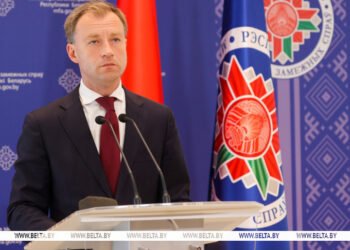
The ASRC is a key platform for discussing regional security issues and strengthening dialogue among the 57 OSCE participating states.
In his remarks, the deputy minister urged OSCE countries “to start talking again as responsible politicians and diplomats, because today there is only one alternative to dialogue – total conflict, after the outbreak of which it will be pointless to sort out the causes.”
“Belarus consistently advocates the restoration of serious, professional dialogue without endless mutual accusations and political grandstanding, without preconditions and attempts to lecture one another,” he stressed. “We are putting forward global initiatives to build a new security architecture, but we are forced to do so outside the OSCE platform, which, unfortunately, has strayed from its mission as a forum for cooperation and dialogue and has turned into an arena for megaphone diplomacy and Twitter outbursts.”
Igor Sekreta recalled that Europe is currently experiencing the largest armed conflict since the Second World War, affecting all countries of the region. In addition, the mechanisms of disarmament and arms control have been dismantled: the Intermediate-Range Nuclear Forces Treaty and the Treaty on Conventional Armed Forces in Europe.
“Trust and predictability have been lost. What is most alarming is that many propose to ‘treat’ these consequences with the same means that led to the crisis: more weapons, more sanctions, more militarization, more walls of silence. Compromise has been sacrificed to pressure, negotiations to ultimatums, and equal dialogue to the dictat of the victors,” the deputy minister said.
In his view, it is clear that the conflict is moving toward its resolution, and it is extremely important what that resolution will be: global escalation or peace. And peace, he stressed, is in the interest of all peoples.
Igor Sekreta emphasized that Belarus does not want war and is not going to fight with its neighbors. “Belarusians reject war like no other nation, because they know the price of peace firsthand. We want cooperation. We want to build roads, enterprises, and logistics routes. We want to see predictable and prosperous neighbors around us,” he said.