An economical solution to secure the flow of trade and energy
A step towards reshaping regional supply chains
Reducing transportation costs and increasing the competitiveness of the Jordanian economy
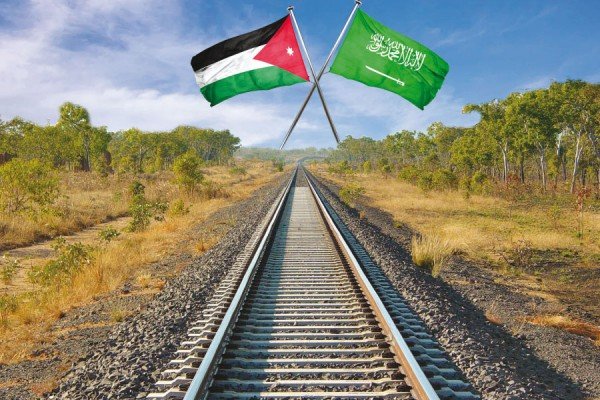
Economic experts unanimously agreed that the Jordanian-Saudi coordination to enhance railway connectivity comes within the framework of accelerated regional efforts to develop transportation infrastructure, especially after the recent regional events and navigation disturbances in the Strait of Hormuz, which also aims to transform Jordan into a regional logistics center and enhance economic integration between the two countries and the region.
Experts pointed out in interviews with Al-Rai that the Jordanian-Saudi coordination to enhance railway connectivity represents a strategic shift that goes beyond being a transportation project, to constitute a practical step to reposition Jordan within regional and global supply chains, in light of the rapid transformations witnessed by the global economy.
On Monday, Secretary General of the Ministry of Transport, Fares Abu Dayyeh, held a coordination meeting with the Undersecretary of the Saudi Ministry of Transport for Railway Transport, Engineer Badr Abdullah Al-Hujailan, via video call, with the participation of two technical delegations from both sides, to discuss ways to enhance cooperation in railway projects and develop regional connectivity between the two countries.
Abu Dayyeh stressed that the meeting comes within the framework of the two sides’ keenness to advance integration paths in the transport sector, pointing out the importance of railway connectivity projects in supporting the movement of trade and facilitating the flow of goods between the two countries and the region.
The Saudi side reviewed its most prominent projects, including the “Eastern Train” and the “Northern Train” linking to the Jordanian border, in addition to the readiness of the Qurayyat region for railway connectivity, while the Jordanian side presented the features of the national railway network project and the priorities for its implementation.
The two parties discussed a number of technical and logistical issues, most notably the unification of technical specifications and the exchange of relevant studies and documents, in a way that enhances the efficiency of implementation and ensures the integration of projects. It was also agreed to continue coordination and exchange of information in support of joint railway connectivity projects, and in a way that enhances regional integration in the transport sector.
Economic expert Wajdi Makhamreh stressed that Jordanian-Saudi coordination to enhance railway connectivity comes within the framework of accelerated regional efforts to develop transportation infrastructure, especially after the recent regional events and navigation disturbances in the Strait of Hormuz, which also aims to transform Jordan into a regional logistics center and enhance economic integration between the two countries and the region.
Makhamra also added that there are major implications for this coordination, namely the promotion of trade and economic integration, as railway connectivity projects facilitate the movement of goods and supply chains between Jordan and Saudi Arabia, and reduce dependence on traditional land transport, which is more expensive and takes a long time. This also supports bilateral and regional trade movement, and connects Saudi Gulf ports, such as the ports of the Eastern Province with Jordan, which opens wider markets towards Europe and the Mediterranean via Syria and Turkey.
He explained that another indication is Jordan’s role as a regional logistical bridge, as Jordan is trying to strengthen its position as a corridor between the Gulf, the Levant, and Europe. Coordination also includes studying links through border crossings such as Al-Ammari (with Saudi Arabia) and Al-Jaber, in addition to internal Jordanian projects such as the Aqaba Railway to connect mining areas with the port.
He pointed out that the most prominent indications are also the revival of the idea of a railway inspired by the Hejaz Railway, but with a modern, commercial nature, as joint Jordanian, Saudi and Syrian studies are expected to be completed before the end of 2026, to connect the Saudi railway network that reaches the Jordanian border with Turkey via Jordan and Syria.
Makhamra also added that in light of the current regional tensions, railways are seen as a way to enhance logistical flexibility and reduce risks to supply chains. The coordination also reflects a strong Saudi-Jordanian rapprochement in the field of transportation, and is in harmony with Saudi Vision 2030 and Jordan’s economic vision to transform into a regional center.
Economist Mounir Dayyeh said that the current events taking place in the region, which imposed a new reality on the transportation and shipping sector, prompted the governments of the region to search for alternatives to the traditional sea lanes and their continued impact on global events, especially after the repercussions of the previous Red Sea crisis and the closure of the Bab al-Mandeb Strait, leading to the Strait of Hormuz crisis and the resulting serious economic repercussions on the countries of the region and the world.
Dayyeh pointed out that, in light of this, Jordan, Saudi Arabia, Syria and Turkey began researching to revive railway lines and reactivate the joint railway connection, because of its great importance in supporting the movement of trade and transport, the sustainability of supply chains, the passage of exports and the transit of goods, and finding alternatives to the sea straits, in a way that ensures the continuity of the flow of energy supplies.
He stated that Jordan today is moving steadily towards achieving economic integration with the countries of the region through the establishment of an integrated transportation system, so that Jordan becomes a logistical center and a link between the East and the West, through the implementation of joint projects in the transportation and railway sectors, which began with the Aqaba Railway Project, the implementation agreement of which was signed with the Emirati side to link the industrial port on the Gulf of Aqaba to the phosphate and potash mines in Al-Shidiya and Ghor Al-Safi, with an investment volume exceeding 2.1 billion dollars, so that this project will be the nucleus of other projects. Railway connectivity between the countries of the region, which also came after Jordan, Syria and Turkey signed the railway connectivity agreement.
He pointed out that the joint Jordanian-Saudi coordination in the field of railway connectivity, which aims to connect the ports of the Arabian Gulf on the Gulf of Oman and the Red Sea with the ports of Aqaba, passing through the ports of Syria on the Mediterranean Sea, all the way to Turkey and from there to Europe and the world, has an important role in implementing railway connectivity projects and their presence on the ground, and moving from vision to implementation.
He pointed out that transportation and railway connectivity projects are of great importance in increasing the economic growth of the countries participating in these strategic projects, as well as increasing the volume of trade exchange and reducing shipping costs, which is reflected in increasing the competitiveness of exports and their access to countries around the world.
Dayyeh stated that the economic challenges imposed by wars and conflicts in the region and the world require us to intensify efforts to implement major projects, especially in the main sectors such as energy, water, and transportation. Jordan has made important strides in implementing these projects, and this will have many positive repercussions on the national economy in terms of foreign investment flows, increased economic growth rates, increased national exports, reduced unemployment rates, and other positive effects. This motivates us to complete these projects, remove all obstacles, overcome difficulties, and enter into regional and international partnerships to implement our major projects, in a way that ensures the achievement of development. Sustainable growth and enhancing Jordan’s position in the region as an oasis of security, a center for attracting investments, and an important location for global trade.
Financial and economic expert Dr. Muhammad Al-Haddab stressed that the Jordanian-Saudi coordination to enhance railway connectivity represents a strategic shift that goes beyond being a transportation project, to constitute a practical step to reposition Jordan within regional and global supply chains, in light of the rapid transformations witnessed by the global economy.
Al-Haddab explained that this project is gaining increasing importance with the move towards completing the railway connection with Turkey through Jordan and Syria, which places the Kingdom in the heart of a regional land corridor linking the Arabian Gulf to European markets, and enhances its role as a logistical hub in the region.
He pointed out that the Kingdom of Saudi Arabia possesses an advanced logistical infrastructure, with the capacity of the Red Sea ports reaching more than 17 million containers annually, in addition to its development of logistics route initiatives, which enhances its ability to be a regional center for redirecting trade, which gives Jordan an opportunity to be the land extension of this role.
Al-Haddab explained that rail connectivity is no longer a development option, but rather an economic necessity in light of the challenges facing the sea lanes, as these projects contribute to reducing transportation costs by 15% to 25%, reducing shipping times, and increasing the efficiency of supply chains.
He added that the direct impact of this project will appear in bilateral trade between Jordan and Saudi Arabia, which amounted to about 4.18 billion dinars in 2025 (equivalent to about 5.9 billion dollars), of which 1.23 billion dinars are Jordanian exports, compared to 2.95 billion dinars imports from Saudi Arabia.
He explained that reducing transportation costs by even 10% to 20% would enhance the competitiveness of Jordanian exports in the Saudi and Gulf markets, and contribute to reducing the trade deficit, in addition to increasing the volume of trade exchange between the two countries.
Al-Haddab stressed that the real importance of the project lies not only in increasing the volume of trade, but in redefining Jordan’s economic role, as it could transform from a traditional transit corridor into a regional center for redistribution, storage and manufacturing, which would raise the added value within the national economy.
He pointed out that this transformation will contribute to increasing transit and logistics revenues, attracting investments in the transportation and storage sector, developing industrial zones linked to the corridor, and creating quality job opportunities.
He also pointed out that Jordan’s geographical location gives it a comparative advantage in this project, especially with the expected connection with Syria and Turkey, which enhances its chances of integration into a wide regional trade network.
Al-Haddab stressed that the political dimension of this coordination is no less important than the economic dimension, as it reflects a high level of integration between Jordan and Saudi Arabia, and enhances regional stability, which reflects positively on investor confidence and the business environment.
He added that this step is consistent with His Majesty the King’s vision of transforming Jordan’s geographical location into a competitive advantage, and linking politics with the economy to achieve sustainable growth.
Al-Haddab concluded by stressing that the Jordanian-Saudi railway connection represents a historic strategic opportunity that requires accelerating implementation and optimal investment, because of its direct impact on increasing exports, reducing costs, raising growth rates, and enhancing Jordan’s position as a regional logistics center.