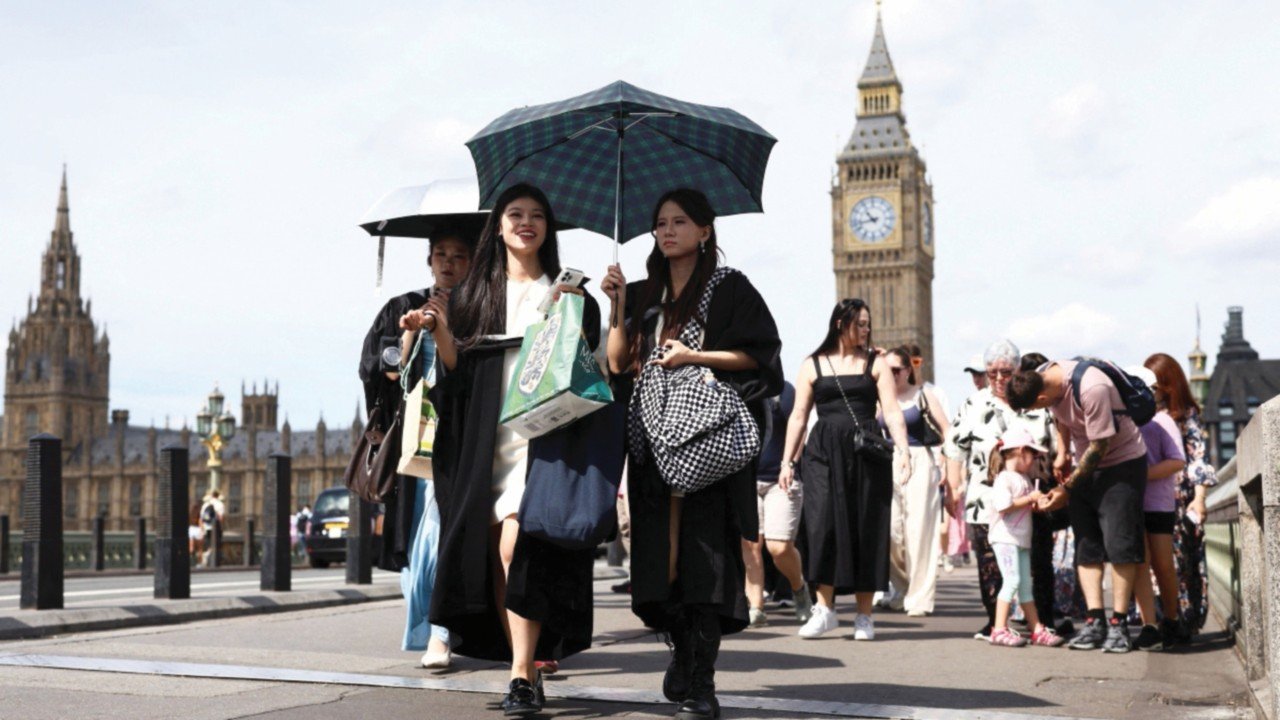
Paris, 27. Much of Europe is facing one of the most violent heat waves in decades. From the Iberian Peninsula to the United Kingdom, passing through France, Italy, Germany and the Balkans, temperatures have reached exceptional levels, with values above 40 degrees in numerous countries and peaks on the ground close to 50 degrees in some areas. Experts speak of an extreme event favored by a persistent anticyclonic block, while the World Health Organization has defined the situation as a true health emergency.
The death toll continues to worsen. In Spain, 327 heat-related deaths were recorded in a few days, according to data from the Carlos III Health Institute, after a sequence of days with record temperatures and tropical nights that left no respite for the most fragile population.
France is also paying a very high price. In addition to deaths directly related to heat stroke, at least 55 people have drowned while seeking relief in rivers, lakes and beaches. Authorities have also reported several children who have died from hyperthermia after being trapped in overheated cars, incidents that have profoundly shaken the country.
The impact of the heat wave extends far beyond the death toll. Hospitals and emergency rooms are under great pressure due to the increase in illness, dehydration and heat stroke, while in many cities extraordinary plans have been activated to assist the elderly, children and people suffering from chronic pathologies. In France and the United Kingdom several healthcare facilities have reached critical saturation levels.
The consequences also affect infrastructure and transport. In Germany some roads suffered deformations due to overheated asphalt, while in Sweden there were train slowdowns. Numerous rail links have been reduced or suspended in various European countries, while schools, tourist sites and public events have been closed or postponed for safety reasons. In Paris, temporary bans on alcohol consumption in public spaces have even been introduced to limit health risks during the hottest days.
In Italy the alert remains high, with numerous cities marked with the red dot and temperatures destined to remain exceptionally high in the coming days. The authorities invite the population to limit travel during the central hours of the day, drink frequently and pay particular attention to the most vulnerable people.
European health authorities warn that the ongoing heat wave is not an isolated event, but a phenomenon destined to repeat itself with greater frequency and intensity. Health systems, already under pressure, are activating emergency plans to deal with what is now defined as “mass thermal stress”. In several countries, public air-conditioned centers have been reopened to accommodate the elderly, homeless and vulnerable people, often the most exposed to the extreme consequences of the heat.
In the Mediterranean basin alone, night temperatures above 28-30 degrees are preventing the natural physiological recovery of the human body, increasing the risk of cardiac and respiratory failure. Doctors report a significant increase in hospital admissions for heat stroke, severe dehydration and acute renal failure, especially among those over 75.
According to scientists, episodes of this intensity are now increasingly closely linked to climate change. Analyzes by the international group World Weather Attribution indicate that events of this type are much more likely today than a few decades ago and could become increasingly frequent in the future, with serious health, economic and social consequences for the entire continent.