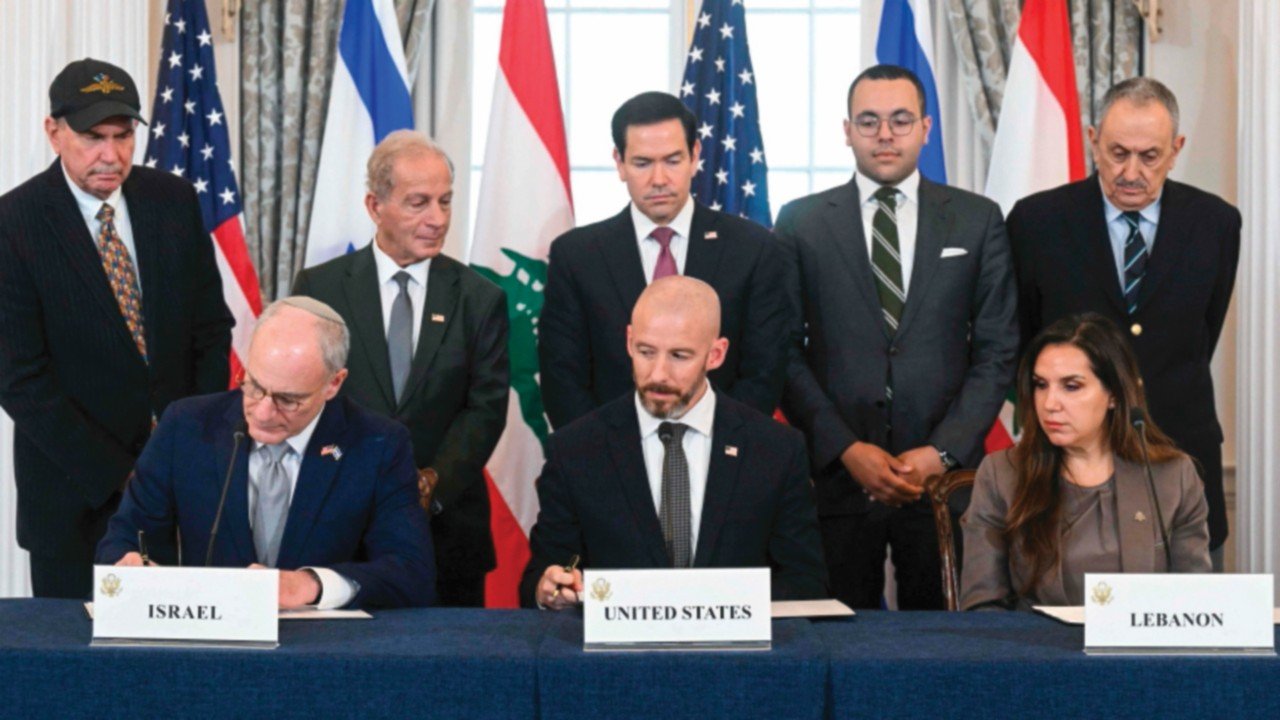
Washington27. Achieve lasting peace and security, with the ambition, through future arrangements, to end the conflict. It is the main objective of the framework agreement, divided into 14 points, signed yesterday evening, Friday 26 June, between Lebanon and Israel under the mediation of the United States. The “trilateral” agreement – which also provides for respect for the sovereignty of both states, to establish peaceful and good neighborly relations – was reached in Washington during the fifth round of diplomatic talks, in the presence of US Secretary of State Marco Rubio, between the heads of the negotiating delegations of the two countries, the ambassadors of Lebanon and Israel to the United States, Nada Hamadeh Mouawad and Yechiel Leiter respectively. The text establishes making “irreversible progress” towards resolving all issues between Israel and Lebanon, through the mediation and support of the United States. The Lebanese Armed Forces (LAF) – we read – “will restore effective sovereignty over the entire Lebanese territory, pending the verified disarmament of non-state armed groups and the dismantling of associated infrastructure”. This will allow the Israeli Armed Forces (IDF) to “progressively withdraw from Lebanese territory”, while the LAF – once the disarmament of non-state armed groups, in particular Hezbollah has been confirmed – “will gradually assume full and effective responsibility for security in the pilot areas”. The first two zones have been agreed, while future ones will be indicated by mutual agreement from time to time.
“Internationally supported reconstruction efforts will then begin and Lebanese civilians will be able to safely return to these areas under the exclusive control of the Lebanese state authorities.”
The Beirut government, in reiterating its commitment to restoring full sovereignty over its territory, has asked for the support of international partners, in particular Arab ones, under the leadership of the United States, to achieve this objective. Israel and Lebanon also agreed to establish “working groups to draft a comprehensive peace and security agreement” between them and establish “immediately complementary paths of continued direct engagement, facilitated by the United States.” Israel, for its part, has stated that it has “no territorial ambitions in Lebanon” and that the disarmament of hostile non-state armed groups, particularly Hezbollah, will eliminate any future need for military actions or presence in Lebanon.
“It’s just the beginning,” Rubio declared after the signing, underlining that “there is still a lot of work to be done,” although the first step, which is the “most difficult” one, has been taken.
According to Israeli Prime Minister Benjamin Netanyahu, «the most important thing is that Israel remains in the security zone in southern Lebanon. This is a great achievement and we will maintain it until Hezbollah disarms, as long as there is a danger for the State of Israel.”
«The signed framework agreement represents the first step to give value to the sacrifices of the Lebanese people – the President of Lebanon Joseph Aoun commented on
However, Hezbollah condemned the agreement reached. According to Hassan Fadlallah, member of the Lebanese Parliament and representative of the organisation, the agreement “risks creating dangerous internal divisions”. A few dozen supporters of Hezbollah and Iran – as reported by the Lebanese Press Agency (NNA) and by AFP journalists present on site – therefore protested during the night in the streets of Beirut, parading on motorcycles, in particular in the central districts near the Parliament and along a road leading to the airport, blocking at least one road with burning tyres.
Shelling by Israeli forces was also recorded overnight in the vicinity of the town of Markaba, located 1.5 km (1 mile) from the border between Israel and Lebanon.