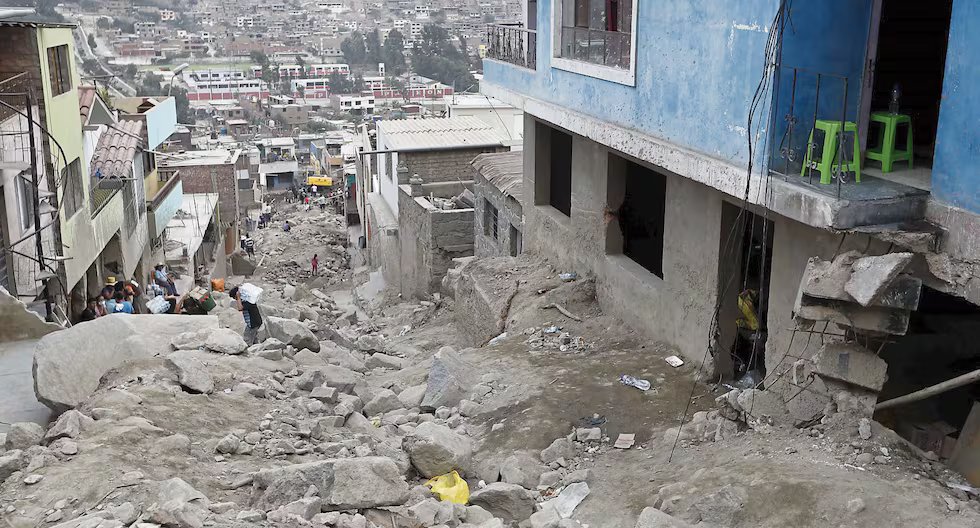

According to the latest figures from the Geophysical Institute of Peru (IGP), so far in 2026, more than 600 have been registered. earthquakes in the country, and the president of the organization, Hernando Tavera, has warned that Lima could face an earthquake of magnitude 8.8 due to the so-called seismic silence on the central coast.
“An earthquake does not distinguish between your own home, an apartment in a building or a rented home, but insurance does. Knowing exactly what your policy covers, what is excluded, and how the coverages interact when it comes to a shared building is essential to avoid surprises when support is most needed. You must also ensure that the insured amount matches the value of your property.“said Andrés Uribe, deputy director of the Life Business Unit of Mapfre Perú.
Therefore, the specialist Mapfre shares the five keys to understanding what is covered and what is not covered by insurance contracted with coverage against natural events, if, for example, a home collapse occurs.
According to Uribe, Home Insurance contracted on the continent covers the reconstruction or repair of walls, ceilings, floors, electrical and sanitary installations, and fixed elements of the home. If the house or apartment collapses partially or completely due to an earthquake, the insurer will compensate according to the insured value declared in the policy, so it is essential that this amount reflects the real cost of reconstruction of the property.
Regarding what the contents insurance covers, he explained that the contents protect furniture, appliances, clothing, electronic equipment and personal objects that are destroyed or damaged by the collapse. This coverage is independent of structure insurance and must be purchased separately. Without it, even if the house is rebuilt, the family bears the loss of everything that was inside.
When the collapse occurs in a building, the collective insurance of the property comes into play, contracted by the board of owners, which covers the common areas and the structure of the building. However, this insurance does not cover the interior of each apartment or personal property. Each owner must have their own home policy to protect their unit and its contents, complementing the group coverage.
Uribe specified that if a house or apartment was purchased under a mortgage loan and the holder of the loan dies or is left with total and permanent disability as a result of the earthquake, the credit relief insurance cancels the outstanding debt of the mortgage loan. This prevents the family from inheriting the financial obligation of the property along with the loss, an aspect that is often overlooked but is decisive in a catastrophic event.
The payment is received by the financial institution, so if the value of your property is higher than the value of the credit, you should seek to take out an additional policy so as not to lose the capital invested in the property. Lien Insurance normally covers only the structure and not the contents of the home. Endorsed Life Insurance normally has pre-established and constant coverage, so when you pay the capital to the bank it begins to cover you.
The specialist stressed that the most important thing is to find insurance that covers both the structure and the contents of the property, and that includes protection against earthquakes, earthquakes and tsunamis. Likewise, validating that the insured amount reflects the real cost of reconstruction and reviewing the General Conditions with the advisor is what guarantees that the protection works as expected at the time of the incident.
“Before a earthquake that destroys a home, the priority is the safety of the family, but immediately afterwards you have to act quickly with the insurance. Documenting the damage with photos and videos, saving receipts for emergency expenses and contacting the insurance company within the first 24 to 48 hours is what allows reconstruction to begin without delays“said Uribe from Mapfre Peru.