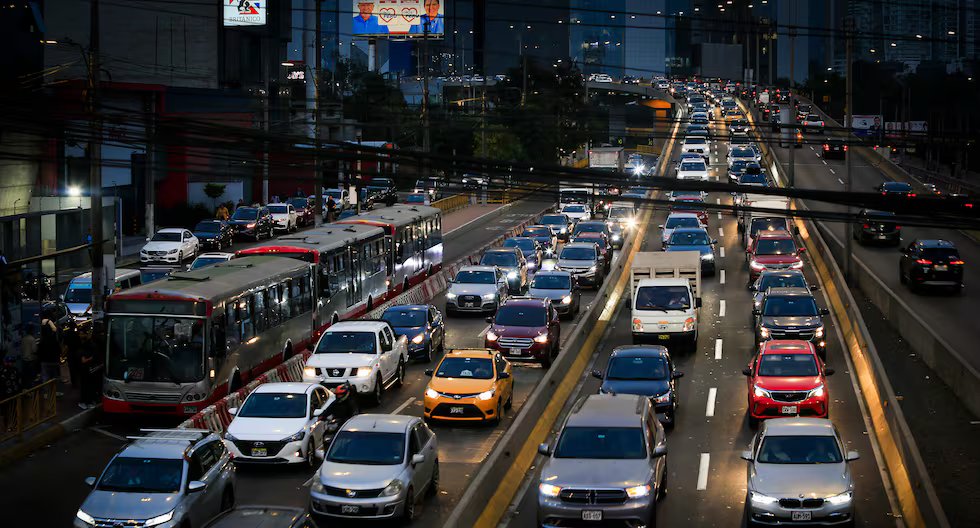
The Metropolitan Municipality of Lima (MML) announced that the avenue will intervene Javier Prado to regulate traffic and supervise informal transportation. These actions include approximately 8 kilometers of the road, from La Molina to La Positiva–Francisco Masías. However, there is one detail that has drawn special attention.
Six entities participate in ordering this stretch of Javier Prado: the MML, the Urban Transportation Authority for Lima and Callao (ATU), the National Police of Peru (PNP), the Urban Mobility Management (GMU), the Tax Administration Service (SAT) and the Municipal Company to Support Strategic Projects SA (Emape).
The presence of all these institutions raises a question: Why are six entities needed to organize a single avenue?
Not all of them fulfill the same function. The Urban Mobility Management (GMU) of the MML has among its responsibilities the regulation of urban mobility and traffic, as well as the use of roads in the province of Lima. The ATU, on the other hand, has powers over public transportation of people and the Integrated Transportation System, which includes its planning, regulation, supervision and inspection.

The Municipality of Lima, ATU, PNP, GMU, SAT and Emape participate in the intervention of eight kilometers of Javier Prado to regulate traffic and supervise informal transportation. Photo: GEC / Cesar Bueno.
/ CBM NUCLEO-PHOTOGRAPHY > CESAR BUENO
The PNP, SAT and Emape also appear in this distribution, although with different functions. The National Police has among its powers to guarantee and control the free movement of vehicles and pedestrians, in addition to exercising the traffic functions established by the regulations. The SAT, for its part, intervenes mainly in the administration and collection of penalties derived from traffic violations and in the procedures linked to them. Emape performs functions related to the road infrastructure under its responsibility, such as maintenance, conservation and incident response.
The point at which these powers can be found is the inspection and regulation of the road. But these are not six entities doing exactly the same thing, but rather different organizations that intervene on problems that occur in the same physical space, each one according to their respective competencies.
He master’s degree in Urban Management from the Technische Universität Berlin, civil engineer from the Pontifical Catholic University of Peru and specialist in sustainable cities Krishan Barr Rosso explained to The Commerce that this situation reveals an atomized governance that makes the consolidation of an Integrated Transportation System difficult.
“The overlap of functions between infrastructure, transit and inspection entities delays the implementation of comprehensive policies that promote intermodality, walkability and clean transportation,” he indicated.

These actions include approximately 8 kilometers of the road, from La Molina to La Positiva–Francisco Masías. Photo: GEC / Cesar Bueno.
/ CBM NUCLEO-PHOTOGRAPHY > CESAR BUENO
Furthermore, he pointed out that if the problems reappear as soon as the operations end, it is because, in reality, a structural change is required that implies a transformation of Javier Prado Avenue. “This avenue must be an efficient multimodal corridor, where mass transportation is prioritized over private transportation, the continuity of pedestrian and bicycle networks is guaranteed, and traffic management is integrated under a Mobility Pyramid approach,” he said.
“The operations are temporary. The permanent solution requires accelerating the fare and physical integration of formal public transportation, combined with electronic inspection and a ‘self-monitoring’ urban design that makes unsafe maneuvers impossible and protects vulnerable users,” he added.
The expert highlighted that the main problem responds to a model focused on the private car and not on mass mobility. “The lack of a high-capacity integrated public system creates the gap that covers informal transportation, while the shortage of safe infrastructure marginalizes active mobility,” he concluded.