The norm approved by Parliament proposes diversifying the modalities to obtain the title of specialist doctor. The initiative introduces two alternative paths to the traditional medical residency: “lato sensu” post-graduation and certification by professional competencies.
The project was presented by legislator Alejandro Aguinaga (Fuerza Popular) in January 2026. The objective of his proposal was “to reduce the serious gap in specialist doctors that affects the country, especially in the departments and provinces.”
Aguinaga supported his legislative proposal by arguing that more than 50% of specialist doctors are concentrated in Lima, while regions such as Loreto, Puno, Huancavelica and Piura face a critical deficit. He stated that Peru has only 42 specialists per 100,000 inhabitants, a figure well below the standards recommended, he said, by the World Health Organization.

The legislator explained that the Lato Sensu modality would allow the recognition of specializations and subspecialties studied abroad through objective mechanisms such as theoretical-practical proficiency exams or the presentation of research projects evaluated by ethical and academic committees, aligning with international treaties and comparative experiences of countries such as Brazil, Chile, Canada and Spain.
He explained that the initiative introduces the specialty modality by competencies, aimed at doctors with at least 10 years of continuous healthcare experience, mainly in areas with a shortage of specialists. This process will include documentary evaluations, objective clinical examinations and ethical validation, in order to guarantee quality standards and transparency.
The gap in specialists is not resolved by lowering training standards, indicated CMP
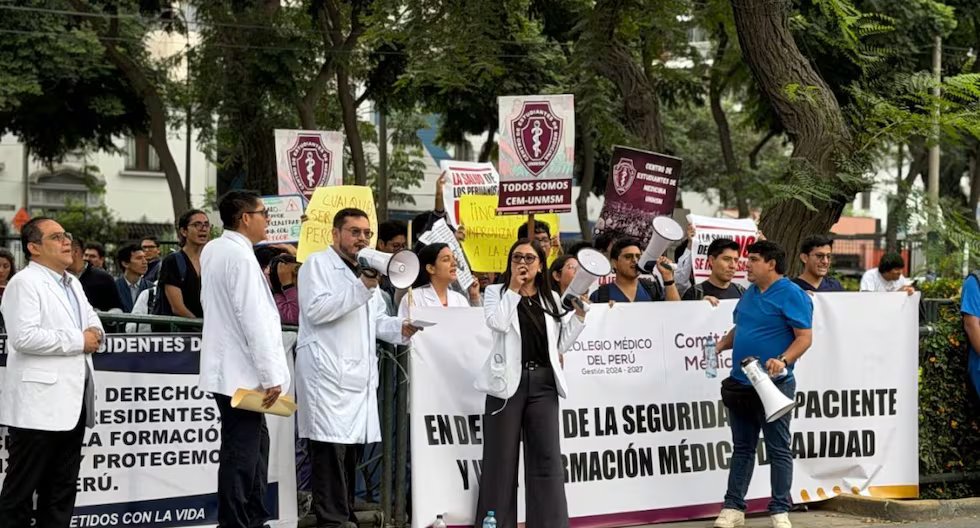
The Medical College of Peru (CMP) rejected the rule approved in Congress on medical residency because it considered that it puts the quality of specialized training of doctors and the safety of patients at risk. For this reason, he emphasized that the gap in specialists is not resolved by lowering training standards, as he recalled that the specialty lasts three to five years, while the subspecialty takes two years. He recalled that the Ministry of Health has opposed the initiative.
“The medical specialization of medical residency with the possibility of granting degrees to doctors who have not completed this rigorous training of three to five years and which does not guarantee competence,” said Pedro Riega, dean of the CMP, to El Comercio.
Riega explained that the alternatives approved by Parliament to obtain the title of medical specialist do not offer guarantees, since he recalled that some programs carried out abroad are not valid, even in the same countries in which they are carried out, as in the case of Brazil.

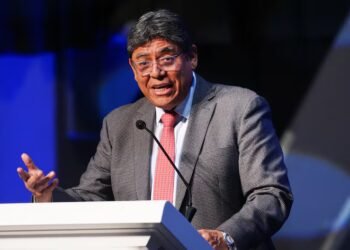
Pedro Riega is dean of the Medical College of Peru.
He stressed that this is not the first time that initiatives of this type have been presented, since in recent years more than 20 projects aimed at modifying the medical residency have been presented. He even recalled that they had to go to the Constitutional Court to annul a rule.
Riega explained that the most appropriate measures are to expand training places, strengthen teaching hospitals, increase clinical fields and promote the employment of specialist doctors in the regions where they are most needed, since there is a “gap” in all specialties depending on the region.
“Every year between 2,500 and 3,000 doctors graduate already trained as specialists, who should be immediately incorporated into the public health system,” he said.
The dean of the CMP asked President José Balcázar to observe the norm. He noted that on Tuesday the 7th he will meet with the Minister of Health, Juan Carlos Velasco Guerrero, to address the issue.
No resident’s place will be taken away, stated the Peruvian Medical Federation
Godogredo Talavera, president of the Peruvian Medical Federation (FMP), was in favor of granting the specialty and subspecialty to a group of doctors due to the gap that exists in the country and many of them have sufficient experience.
In dialogue with El Comercio, Talavera Chávez indicated that at the National Institute of Children’s Health of Breña there are otorhinolaryngologists and neurosurgeons who perform operations that any pediatric otorhinolaryngologist and neurosurgeon perform in the world, since they have more than 30 years of experience in their field. He warned that, if they are not granted the specialty degree, a consequence will be that the clinical field will be closed.
“At the INSN of Breña we have doctors who have 30 or 40 years (of experience) in otorhinolaryngology and they perform the most complex operations anywhere in the world, such as clucking implants, and they are not pediatric otorhinolaryngologists, they are teachers of the residents, but they do not have that title,” said Talavera.
YOU MAY BE INTERESTED: The lessons that the earthquake in Venezuela leaves for a Peru that awaits a megaquake
“We have neurosurgeons with the same number of years, now they do the most complex tumor surgeries, they are teachers, but there are no pediatric neurosurgeons and that closes that clinical field, allowing pediatric neurosurgeons to be trained. They are the teachers, but they do not have that title, which is why the university will no longer send residents this year. The same happens with other subspecialties,” he added.

Godofredo Talavera, president of the Peruvian Medical Federation. (Photo: FMP/Facebook)
/ Roxana Mateo Ugaz
“Here we are not going to take away any resident’s place, since they will continue to be the same as always. Rather, we are going to expand the clinical fields,” he pointed out.
The president of the FMP also pointed out that another case is that of forensic doctors and family and community medicine professionals, since there are a small number of specialists in these fields, despite the fact that a greater number is required.
“In Peru there are more than 150 legal doctors, but only 100 doctors work in the Public Ministry, despite the fact that they have a need of about 2 thousand, counting all the morgues and the places where legal medicine services are provided. The residency only offers 10 places, seven in Lima and three in Arequipa, that is, 10 per year,” he explained.
“To strengthen our first level of care, where there are doctors who do family and community medicine, they are even teachers of the residents who are being trained. 200 are trained a year, but the gap is close to 10 thousand,” he added.
Talavera clarified that the granting of specialization or subspecialization titles to a doctor will be the product of an evaluation by a jury, which will evaluate the applicant in the field, in practice and at a theoretical level. He even pointed out that the doctor must have twice the years of experience required by the specialization to which he is applying. He recalled that the qualification through a competency case was already carried out in 2017.
In the case of the specialization obtained abroad, the leader argued that it should not be a virtual specialty, the specialty time must be a minimum of 3 years, and a subspecialty minimum of two years.
One of the risks is that cases of malpractice may arise, indicated former Minister of Health
One of the consequences of the approval of a rule that grants specialization to doctors without having undergone residency training is that in the future cases of malpractice could arise in health centers, former Health Minister Óscar Ugarte told El Comercio.
“Let’s assume that the specialty of neurosurgeon is given to a doctor who may be very competent in internal medicine or even general surgery, but who has not gone through the specific training of neurosurgeon and they give him the specialty title because he has worked in a neurosurgery service and does not have the skills to do so. Any problem that comes later, such as malpractice, whose responsibility will it be?”, explained Ugarte.
MORE INFORMATION HERE: The future of the Lima Arena: San Miguel rejects the project, the company insists on viability and MML clarifies that it maintains competence on the issue
He pointed out that the Parliament project seeks to benefit parties with interests in the training of doctors. “What is happening is a push on the part of some of the parties that are interested in the professionals they are training and who have not gone through the specialty to become specialists,” he said.
“It is a measure that does not have the scientific criteria for the training of specialists. It is made to favor professionals who have not had the ability to enter residency training and be able to specialize in accordance with the standards established by the academy, the university and approved by the Ministry of Health,” he stated.

Óscar Ugarte, former Minister of Health. (Photo: Renzo Salazar / GEC)
/ Renzo Salazar
Ugarte stressed that the solution is to expand the number of places for the training of specialists, despite the requests of the Medical College of Peru and the Ministry of Health, which is why it forms a ‘bottleneck’. He considered it essential that the Legislative and Executive powers allocate resources for that objective.
“The number of places has not grown in recent years. About 2,500 specialists continue to graduate each year, but the pressure is very great, since there are professionals from all previous years who have graduated and cannot find the places to train and it is a financing problem,” he stated.