Libre Inmobiliaria, a firm of the Peruvian group LibreCorp specialized in residential developments in Lima Top, is preparing its entry into San Isidro with its first project in that district, as part of its expansion strategy. The company has already acquired land in that area and, in parallel, is negotiating a second project on the border between Miraflores and Barranco, while analyzing a third development alternative that could take place in Lima Top or Lima Moderna.
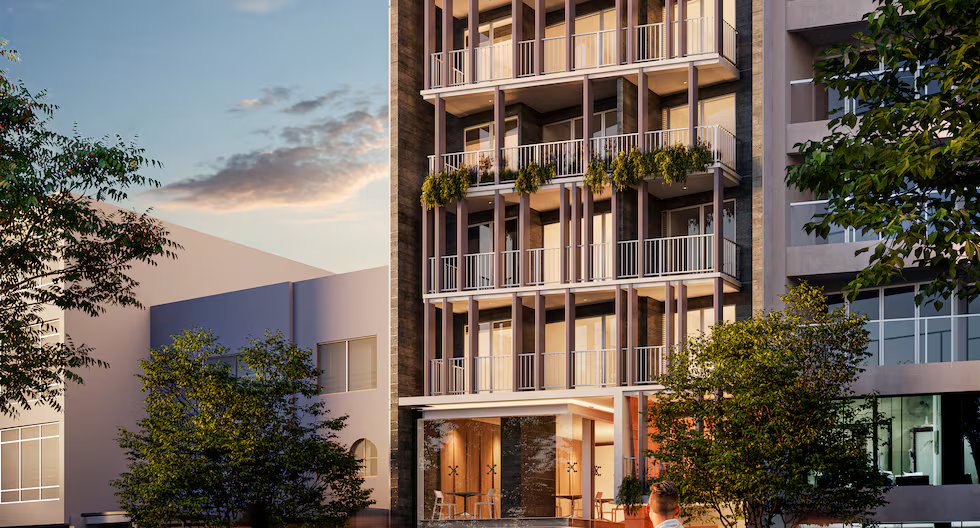
Carlos Perales, founding partner of LibreCorp, explained that in May the company acquired a plot of land of approximately 850 square meters in block 3 of Javier Prado Oeste, near Camino Real. There he plans to develop a 17-story building designed by the Nómena studio. The project is still in the pre-operational stage and aspects such as the distribution of apartments and common areas are being refined.
The location, connectivity and residential environment led the company to opt for San Isidro. “It caught our attention to be able to reach San Isidro with that land,” says Perales.
The project units would have tickets of between US$150,000 and US$220,000, depending on the typology. In addition, the project will maintain the boutique concept that has characterized its developments, although it still defines together with the architecture studio the final characteristics of the building and the common areas that it will incorporate.
The political scenario also influences the company’s investment decisions. According to Perales, a more favorable environment for private investment would give them the possibility of moving forward with two additional projects.

The project will mark the entry of Libre Inmobiliaria to San Isidro and includes a 17-story building with estimated tickets between US$150,000 and US$220,000. (Photo: Libre Inmobiliaria).
Libre Inmobiliaria closed 2025 with sales of US$10 million, 43% more than the previous year. By 2026, the company plans to maintain that level of billing, supported by the continuity of its projects in execution and the advancement of new developments.
According to Perales, the growth responded mainly to progress in the delivery of projects started in previous years and to the continuous replenishment of the development bank.
“The delivery of units is as important as the replacement of stock so that there are never gaps in time,” he said. He explained that revenue recognition depends on the effective delivery of homes, so continuity in launches is key to sustaining growth.
Currently, the Larco 1036 project, in Miraflores, registers a sales advance of 55%. The building will have 45 apartments distributed over 17 floors and units of 60 and 90 square meters, with delivery scheduled for November 2027.
The average ticket for this project amounts to US$213,000, while the price per square meter is between US$2,500 and US$2,600, about US$500 below other developments in the area, according to the company.
In Larco 1036 Atemporal Flats, in Miraflores, approximately half of the buyers purchase the units as an investment and a significant portion corresponds to Peruvians residing abroad.
“Half of the people who have bought from us at Larco are Peruvians who live abroad,” he commented. The location of the project and the demand for temporary and corporate rentals favor this type of investment.
The Group also continues to expand its operation in the United States through Libre Homes, with which it develops residential projects in Florida. It is currently carrying out a second housing development and plans to start a third project between August and September, consisting of a gated community of 11 ‘townhomes’ in the city of Clermont.
According to Perales, the operation also generates synergies with the local business, since Peruvian real estate brokers in Florida refer clients interested in purchasing homes in the projects developed by the company in Lima.

Libre Homes develops residential projects in Florida and plans to start a third development of 11 townhomes in the city of Clermont this year. (Photo: Libre Homes).
Perales affirms that the company accelerated negotiations to acquire one of the lands it is considering developing due to the increase in interest from other investors after the electoral result. “They looked for me quickly to tell me if we were continuing or not, because there were several interested parties,” he notes.
Regarding the El Niño phenomenon, he states that the company is already observing an increase close to 3% in some construction quotes and that it will evaluate how much of that higher cost it can absorb before transferring it to the sales prices.
“We are going to be more conservative in the projections,” he says. The company still has room to face part of that increase thanks to the way it structures the purchase of land and the initial setting of prices. However, he recognizes that, if costs continue to increase, part of that increase could be transferred to the final price of the projects.