The figures leave little room for doubt. On a global scale, the crime and the violence drain more than 20,000 billion dollars per year, or around 13% of global gross domestic product, according to estimates from the Institute for Economics and Peace taken up by the World Economic Forum. Corruption alone represents nearly 5% of global GDP, or more than $2.6 trillion annually, an invisible tax on development, according to the United Nations and the World Economic Forum. But what international research highlights is most striking has less to do with the scale of these sums than with their architecture.

The hidden weight of the criminal burden
The reference studies of British Home Office establish, the intangible costs: suffering of victims, psychological trauma, loss of quality of life, erosion of institutional trust, represent between 40 and 60% of the total cost of violent crimes. In other words, the heaviest part of the bill appears neither in public budgets nor in traditional statistics. A reality which requires public actors, researchers and institutions to go beyond the classical approaches for the benefit of more rigorous and more exhaustive methodologies.
THE Moroccan context is no exception. Between 5 and 7% of national GDP is swallowed up each year by the direct and indirect burden of crime, according to the Global Peace Index. Billions of dirhams which do not support schools, hospitals, youth employment or the development of Morocco are emerging. More than economic data, so many lost opportunities and delayed development.
A penal turning point that requires its piloting tools
In his opening speech during this meeting, Hicham Mellatidirector of criminal affairs, pardons and crime monitoring at the Ministry of Justice, underlined the strategic importance of measuring cost of crime as a central lever for steering the structuring penal reforms undertaken in the Kingdom. The judicial official recalled that Morocco was experiencing a real turning point in its penal policy, driven by several major legislative texts. First and foremost: Law No. 43.22 on alternative penalties, which came into force in August 2025, which opens up new perspectives in terms of diversifying penal responses and rationalizing the use of detention. Added to this cornerstone is the new Code of Criminal Procedure, which establishes the criminal mediation and conciliation mechanisms while rebalancing the repression of the offense and the protection of rights, as well as the creation of the National Child Protection Agency.
“How can we measure the real impact of these transformations? How can we verify that alternative sentences are more effective economically and socially? How to estimate the return on investment in prevention, rehabilitation and reintegration programs? How can we direct public resources, which are by nature limited, towards the most effective interventions? Mr. Mellati asked. So many questions, he stressed, which will remain unanswered in the absence of a rigorous scientific measurement of the cost of crime. Four analytical angles for a complex phenomenon This ambition is precisely that which carries the National Crime Observatory (ONC), created under article 51-3 of the new Code of Criminal Procedure, as an institutional body responsible for providing decision-makers with the data, analyzes and indicators necessary for a criminal policy based on evidence and data. The institution has included measuring the economic and social cost of crime among its structuring strategic projects, following a progressive and integrated programmatic approach.
Four complementary angles guide the approach. The macroeconomic angle first, which examines the impact of crime on growthe, investment and the attractiveness of the regions. Then the angle by type of offense, which aims to estimate the unit cost of each category. The flow angle of the judicial system, which translates the chain and procedures into economic and social costs. Finally, the angle of the cost borne by the victims, which places human suffering at the heart of the evaluation.
For this first stage devoted to judicial flows, the Observatory requested Ms. Nora E. Sydowexpert at NCSC, who led the development of the Short Backlog Reduction Simulator (CBRS). This data-driven modeling model translates judicial flows into economic and social costs and allows decision-makers to measure the impact of interventions even before they are deployed. However, Mr. Mellati warns, it is not a question of transposing a turnkey tool, each context having its specificities, but of assimilating its analytical logic and capitalizing on international scientific accumulation in this field.
From asset recovery to financing justice
In addition to this first approach, Mr. Mellati insists on a second, complementary one: the valorization of the proceeds of crime through effective management of seized and confiscated property. An approach that is booming on the international scene, particularly in the European area and the field of the fight against cross-border organized crime.
Several States have already put in place specialized institutional structures. France has acquired the Agency for the Management and Recovery of Seized and Confiscated Assets (Agrasc), a public administrative establishment placed under the dual supervision of the Ministries of Justice and the Budget. Spain created in 2015 the Asset Recovery and Management Office (Orga), specialized administrative structure reporting to Justice. In 2010, Italy installed its National agency for the administration and allocation of property confiscated to organized crime (Anbsc), considered a pioneering model worldwide due to its organic link with the fight against mafia and the corresponding Italian code. Belgium is counting on the Central Body for Seizure and Confiscation (Ocsc), created in 2003 within the federal prosecutor’s office. The United Kingdom has opted for a mixed system backed by the National Crime Agency (NCA), established in 2013, with possible recourse to private operators. On a continental scale, the European directive 2024/1260recently adopted, strengthens the obligations of Member States in terms of tracing, freezing, management and confiscation, within the framework of the ARO network.
Beyond their diversity, these devices open up concrete possibilities: compensation for victims from confiscated products, equipping investigation services with technical means, allocation to the public utility of seized real estate for the benefit of civil society organizations or social projects, and reinjection of part of the revenue into the capacity development of the justice system himself. Morocco is today working to establish a specialized institutional framework, in line with a modern economic logic for managing the proceeds of crime, said the director.
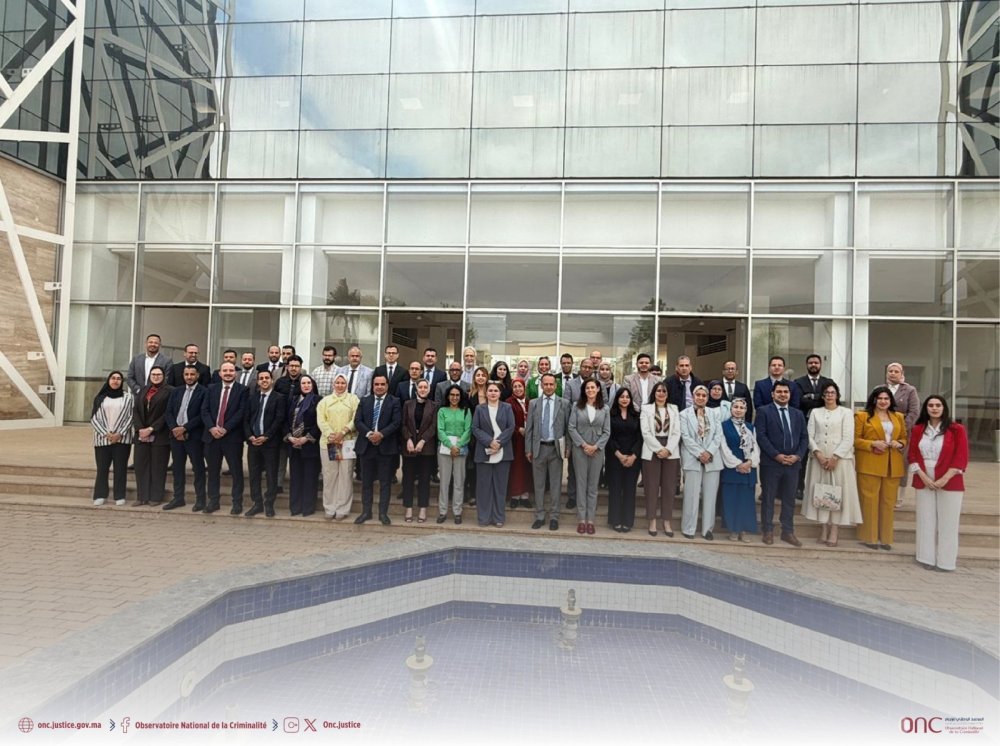
The Salé meeting was only a starting point. Other sessions will bring together international and national experts to prepare a comprehensive national study on the economic and social cost of crime in Morocco. The rigorous evaluations carried out in particular by the Washington State Institute for Public Policy prove it: each dirham invested, on the basis of scientific evidence, in prevention, rehabilitation and reintegration generates economic and social benefits several times greater than the initial investment. Beyond the figures, it is the citizen’s confidence in the justice system of their country that is at stake.