BAIT AND SWITCH:
Allowing KMT-run counties to sell to China while the threat of abrupt cancelations hangs overhead is another form of coercion, officials said
-
By Chen Yu-fu and William Hetherington / Staff reporter, with staff writer
Beijing is using agricultural purchase offers announced during the Straits Forum to deepen Taiwan’s dependence on the Chinese market, a Taiwanese official said yesterday as they criticized the Taitung County commissioner’s participation in the initiative.
During the Straits Forum held in Xiamen on Saturday, Chinese officials announced a sales and purchase agreement for agricultural products from some counties led by the Chinese Nationalist Party (KMT).
Taitung County Commissioner Yao Ching-ling (饒慶鈴), who was barred from attending the event in person by the Mainland Affairs Council, participated via video. Under the agreement, China would purchase atemoyas, pomeloes, tea and grouper harvested in Taitung, Yunlin and Nantou counties.
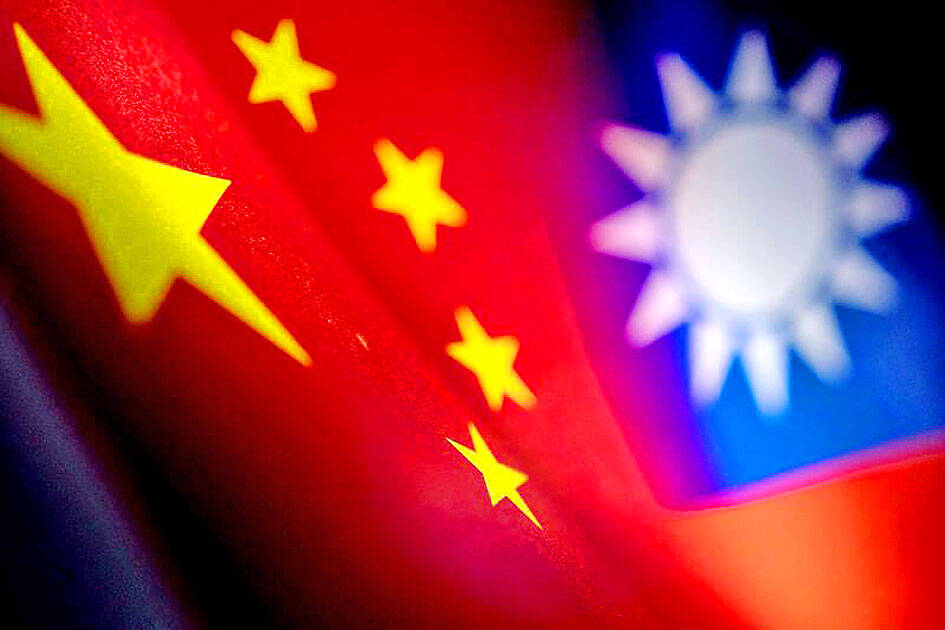
Photo: Reuters
A government official familiar with China’s “united front” operations criticized the move, saying the Chinese market remains highly risky and accused some members of the KMT of encouraging Taiwan’s agricultural sector to become dependent on China. Such efforts could return Taiwan to a pattern in which Beijing would cultivate economic dependence and then use it as leverage, making those involved “accomplices” to Chinese Communist Party strategy, said the official, who spoke on condition of anonymity.
In March 2021, China abruptly suspended imports of Taiwanese pineapples. In September of the same year, it expanded the restrictions to wax apples and atemoya. In June 2022, China halted imports of Taiwanese grouper, and in August that year added a ban on Taiwanese citrus.
According to sources, only a limited range of Taiwanese agricultural products, including pomeloes and atemoya from approved orchards, would be permitted to enter the Chinese market.
During this year’s Straits Forum, Beijing again signaled interest in purchasing agricultural goods from KMT-governed counties, including Taitung, Yunlin and Nantou counties, although many market participants remain cautious.
The official said China often presents such initiatives as goodwill toward Taiwan, while maintaining significant restrictions behind the scenes.
For example, Beijing uses food registration requirements to selectively determine which companies and farms are allowed to export to China, the official said. As a result, Taiwanese farmers and fishers continue to face considerable uncertainty and political risk, because China can impose new restrictions at any time.
The official said local governments should carefully consider the consequences of increasing dependence on the Chinese market, saying that producers would bear substantial political and economic risks if Beijing were to suddenly halt imports again.
“If farmers invest heavily in expanding production and China cuts off imports, they could lose everything,” the official said, adding that restrictions imposed on pineapples, wax apples and citrus fruit remain in place.
The official said that China uses political considerations to regulate imports. In some cases, exporters were reportedly asked to alter product descriptions that refer to the Republic of China or remove references to awards received in Taiwan if they do not conform to Beijing’s narrative.
The official said that Chinese authorities have at times questioned exporters about their support for the so-called “1992 consensus” and opposition to Taiwan independence.
“The Chinese Communist Party is using political criteria to determine which Taiwanese agricultural products can enter its market,” the official said. “Those who seek to make Taiwan’s agricultural sector highly dependent on China again are helping return it to a model that has previously left producers vulnerable to political pressure.”