EXPANSIONIST:
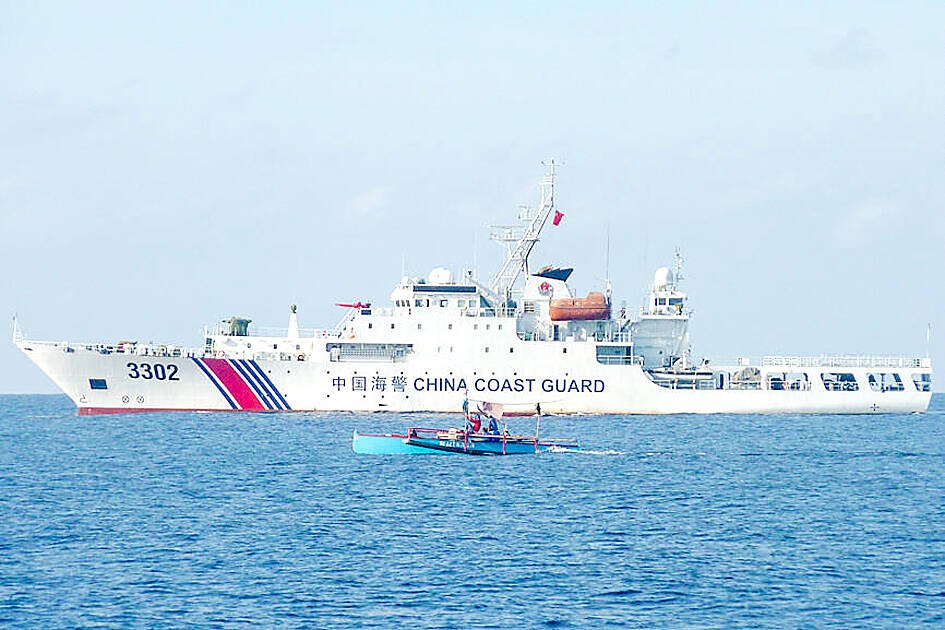
China deploys an average of 40 to 50 warships and coast guard vessels daily in the South China Sea, despite pledges not to militarize the region, an official said
-
By Chen Yun and Sam Garcia / Staff reporter, with staff writer
China is attempting to expand its influence across the First Island Chain and increase pressure on Japan by sending coast guard vessels into waters off of Taiwan under the pretext of maritime negotiations with Japan and the Philippines, a national security official said yesterday.
China’s recent actions in the waters east of Taiwan and Japan and the Philippines’ exclusive economic zones (EEZ) are attempts to establish dominance in First Island Chain waters, said the official who declined to be named, adding that this is “expansion disguised as law enforcement.”
Framing China’s actions solely as a cross-strait issue is a serious misjudgment that is gradually undermining the security and stability in the Indo-Pacific region, they said.
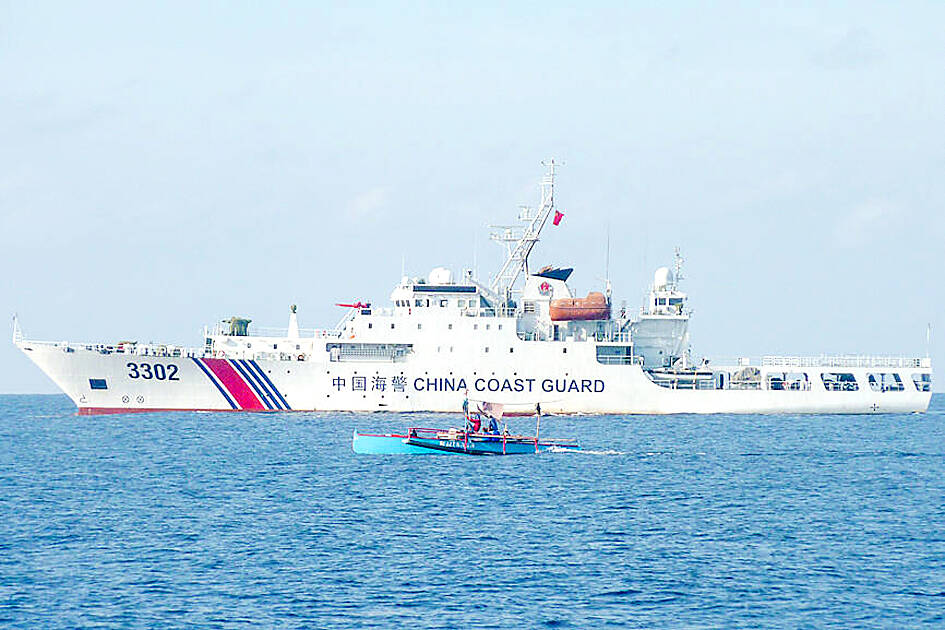
Photo: AFP
China’s military and “gray zone” actions in the Yellow Sea, East China Sea, South China Sea and Taiwan Strait in the past few years have all been attempts to expand influence over these waters, the official said.
When China first placed fixed installations in the Yellow Sea in contravention of the UN Convention on the Law of the Sea, the international community did not respond immediately, and this was followed by increased threats in the East China Sea and South China Sea, they said.
China is taking advantage of the US’ focus on conflicts in the Middle East and Europe’s attention on the war in Ukraine to bolster its alliances with Russia and North Korea, the official said.
Through North Korea’s continued support for Russia and Iran, China is seeking to tie down the EU and the US, they said, adding that while the US raised North Korea’s denuclearization during the meeting between US President Donald Trump and Chinese President Xi Jinping (習近平) last month, China did not mention this when it met with North Korean leader Kim Jong-un.
Xi has been repeatedly emphasizing opposition to fascism and “new militarism” in meeting with Russian President Vladmir Putin and Kim, the official said.
China is using this narrative to justify stronger pressure and military signaling against Japan, which echoes how Moscow accused Kyiv of developing “neo-Nazism” and framed it as a security threat to justify escalation and war, they said.
The official emphasized that regional security is approaching a “point of no return,” and said the international community should take action to prevent the Indo-Pacific defense framework from being breached.
China has pursued a long-term strategy to expand control over the First Island Chain waters, including declaring an air defense identification zone in the East China Sea, establishing new flight routes and increasing patrols around disputed waters, the official said.
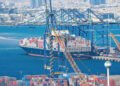
China currently deploys an average of 40 to 50 warships and coast guard vessels daily in the South China Sea, along with a large maritime militia force, despite earlier pledges not to militarize the region, they said.
China has also steadily escalated pressure in the Taiwan Strait by conducting large-scale military drills, expanding legal claims over the region and repeatedly sending military and coast guard vessels close to Taiwan, they added.
China has recently disrupted Taiwanese officials’ international travel and stepped up “gray zone” activities in regional waters and airspace, they said, adding that Beijing would likely continue such actions in the coming months as negotiations over Japan-Philippines EEZ boundaries continue.
The threat of China’s authoritarian expansion is shared across the entire First Island Chain as Beijing uses different narratives to justify its actions against Taiwan, Japan and the Philippines, aiming to weaken regional alliances and break through regional defenses, the officials said.
Taiwan’s opposition parties have previously paid little attention to the concept of the First Island Chain, but have recently begun describing it as “Cold War thinking,” a framing that coincides with Beijing’s narrative, they added.