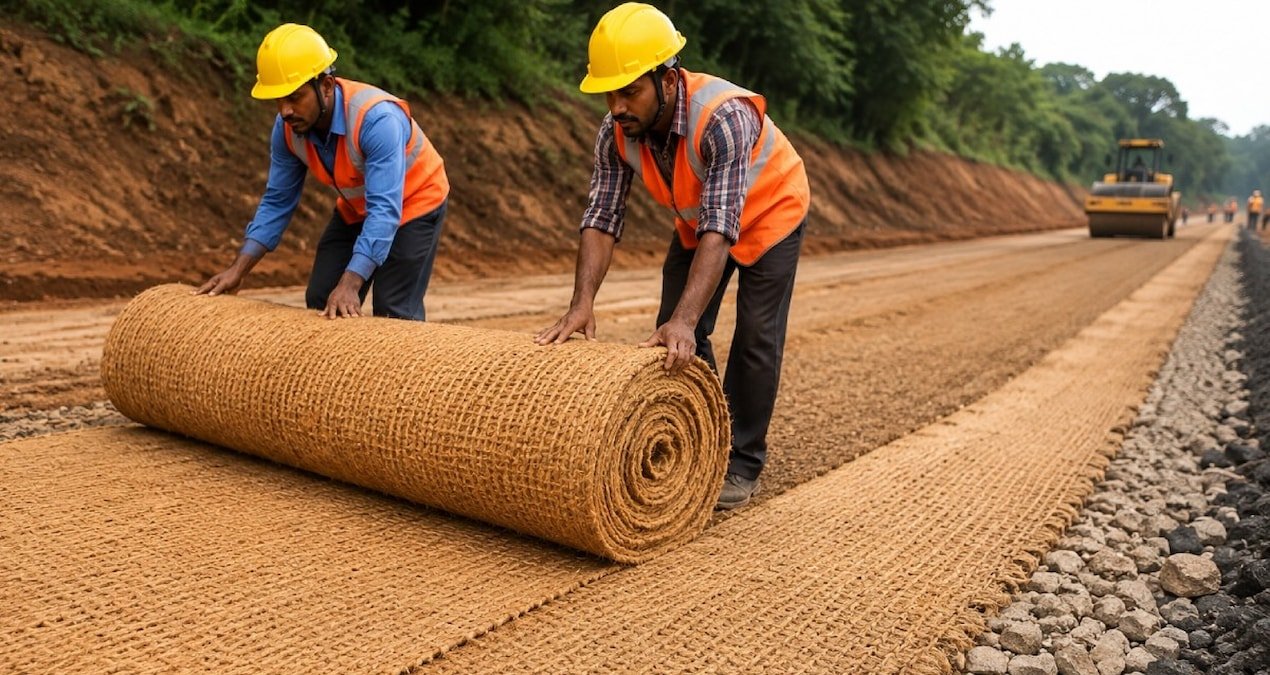
The process, which begins in the southern states of India, begins with the coconut harvest. While it is stated that more than 19 billion coconuts are produced annually in the country, the long and durable fibers found in the outer shell of the fruit turn into an important raw material for the industry. After the shells of the harvested products are removed, they are subjected to drying processes that last for weeks. Then, the fibers are separated by special machines and turned into geotextile fabric on weaving looms.
INVISIBLE SUPPORT UNDER THE ROADS
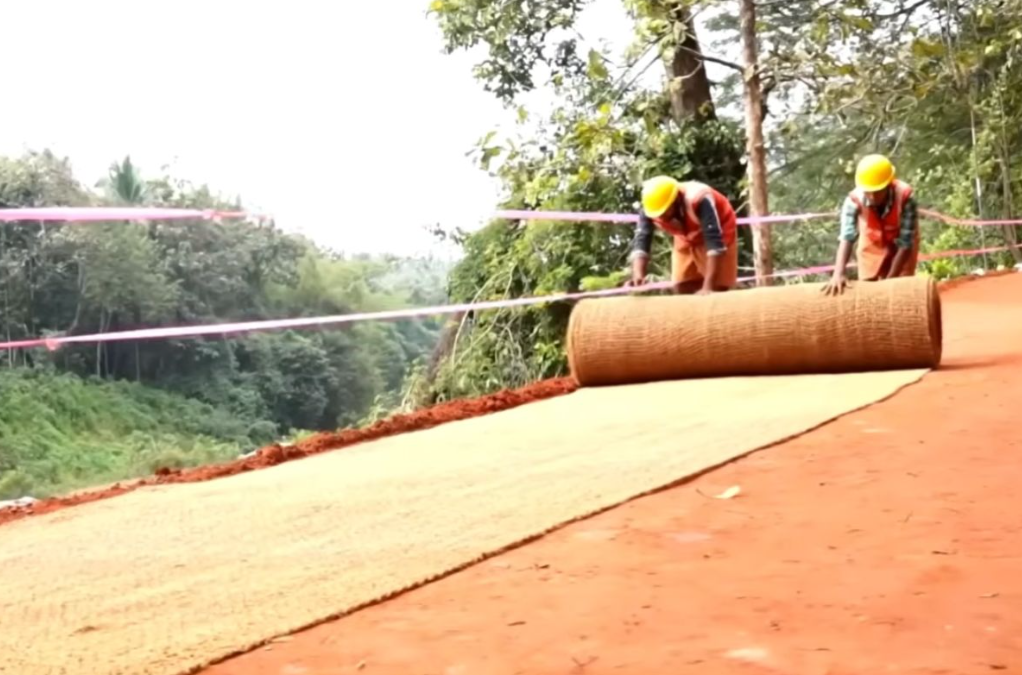
The resulting coconut fiber geotextile fabrics are laid on the ground layers beneath the asphalt. This natural material prevents the soil from disintegrating, while allowing the controlled passage of water and reducing erosion. The system that prevents the road base from collapsing, especially in rural areas where monsoon rains are effective, is seen as an important element that extends the life of the road. Research shows that coconut fiber geotextiles can increase the bearing capacity of road surfaces and allow the use of less filling material.
According to experts, one of the most striking aspects of the method is that it has a lower environmental impact compared to synthetic materials. While biodegradable fibers mix with the soil over time, they continue to provide the support needed in the first years of the journey. It is also stated that due to the success of fibers in water management and erosion control, they are used not only in road projects but also in slope strengthening and coastal protection works.
TRANSFORMS AGRICULTURAL WASTE INTO ECONOMY
The system attracts attention not only from an engineering perspective but also from an economic perspective. While a new industrial chain is formed by utilizing the shells in regions where coconut production is intense, a wide economic network from farmers to processing facilities is supported. Shells, once considered worthless, today turn into engineering materials that serve under roads and contribute to the local economy.

This method, whose use has become widespread, has attracted attention again with the increasing interest in sustainable infrastructure solutions in recent years. Engineers state that by properly evaluating agricultural waste, environmental impact can be reduced and more economical solutions can be developed in infrastructure projects.
All copyrights of the articles, news and photographs published on the website www.sozcu.com.tr belong to Mega Ajans and Rek. Tic. It belongs to A.Ş. It cannot be quoted without permission, even by citing the source.