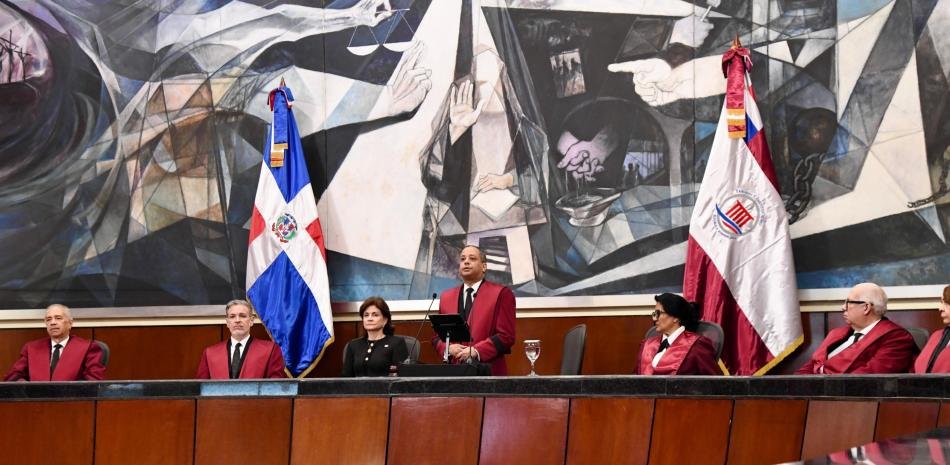
The Constitutional Court (TC) declared the unconstitutionality of the disciplinary courts for each judicial district established in Law 3-19, which creates the Bar Association of the Dominican Republic (CARD).
Through ruling TC/0331/26, ordered the elimination of trial structures local authorities arranged in the provinces, determining that, from that date, only the Disciplinary Court of Honor based in the National District will remain to judge legal professionals.
The ruling responds to a direct action of unconstitutionality filed by the CARD Rescue Movement (MORECA) against multiple articles of the union legislation enacted in January 2019.
The court declared inadmissible the action regarding article 57 of the law, but it was formally admitted regarding the other articles challenged.
The court accepted on the merits the claim against articles 56, 58 and its paragraphs I, II, III, IV and V, declaring its unconstitutionality with immediate and future effects. These texts provided the basis for the sectional or provincial courts.
When judicial district organizations are expelled from the legal system, the National Disciplinary Court of Honor assumes exclusive first-degree jurisdiction to hear complaints of ethical misconduct in the exercise of the profession.
To avoid a legal limbo, the Constitutional Court clarified in its fourth provision that the declaration of unconstitutionality will not affect the continuity or the instruction of the cases that are currently being heard in the judicial district bodies, which may continue until their due completion.
On the other hand, the high court rejected MORECA’s claims aimed at eliminating the central disciplinary body.
In this way, they were declared in accordance with the Constitution articles 11 (letter 4), 21, 22 (paragraphs I and II), 23 (and its only paragraph), 24, 30 and the second transitional provision, which structures the CARD Disciplinary Court of Honor.
Said court will maintain its power to rule on the files within a period of no more than sixty business days (extendable for an additional thirty days). Its rulings will continue to be appealable under the modality of a review appeal before the Supreme Court of Justice, within a period of thirty days after notification.
The ruling, issued on June 5, 2026, was signed by the plenary session of judges headed by its presiding judge, NApoleon Estévez Lavandier.