Editorial observation
These days, within the framework of the International Economic Forum in St. Petersburg, held from June 3 to today, Russian President Vladimir Putin publicly announced that Russia is ready and willing to negotiate with Ukraine for peace, based on the negotiating frameworks discussed at the meeting with US President Donald Trump in Anchorage, Alaska, in August 2025. Putin publicly confirmed at a press conference that US President Donald Trump’s proposals to end the war could “be the basis” for peace agreements, but that they would require a compromise from both countries. And Ukrainian President Volodymyr Zelenskiy called on Russian President Vladimir Putin to end the war, in a public open letter. The statements were made on the same day by both the Russian and Ukrainian presidents, so the two public appearances gave the impression of synchronicity in expressing political goodwill from two sides involved in the military conflict in Ukraine. And the Anchorage platform was put in the foreground.
Why the talks between Trump and Putin in Anchorage have been revitalized
as a framework for a possible end to the war in Ukraine
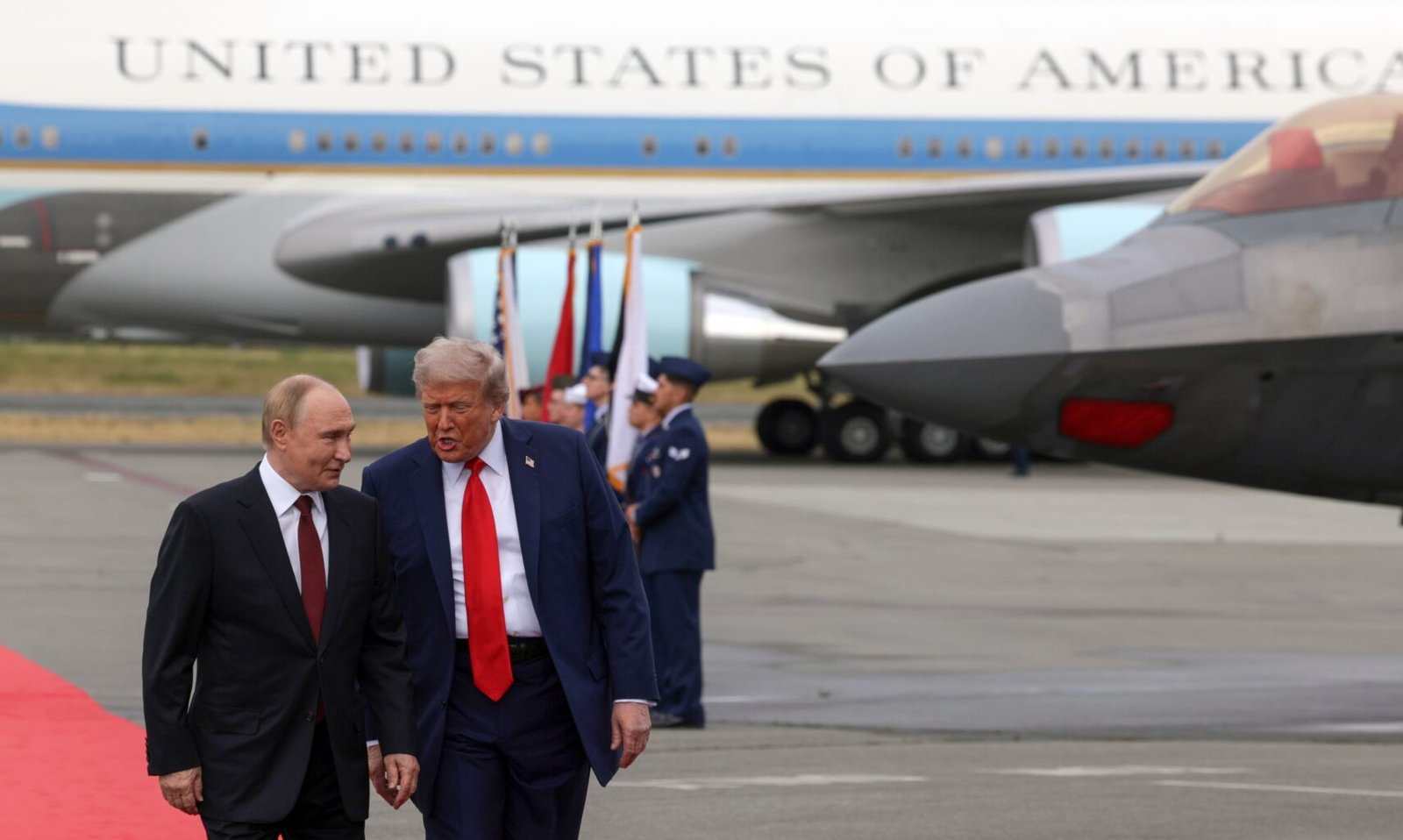
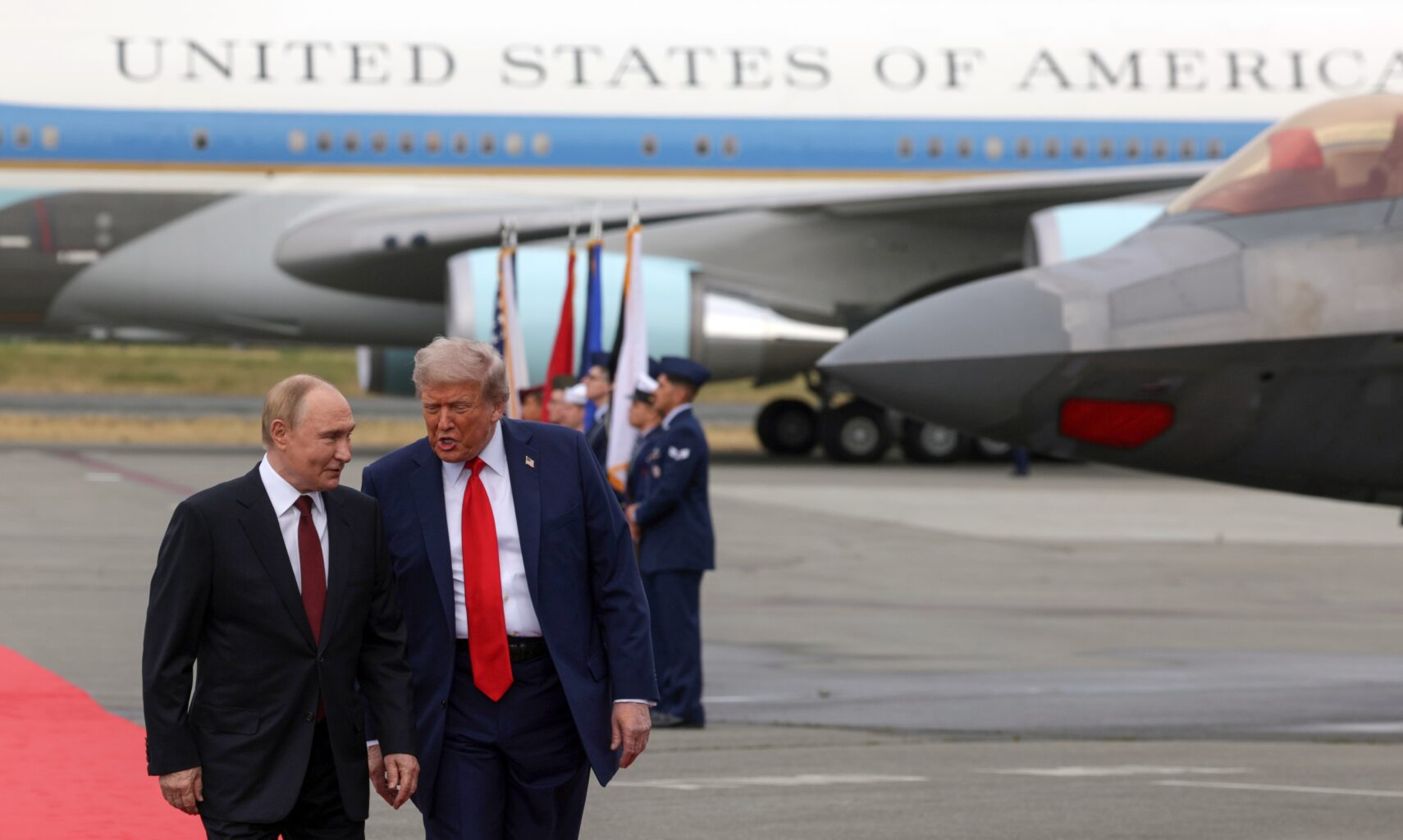
When US President Donald Trump and Russian President Vladimir Putin landed in Anchorage, Alaska, in August 2025, the world expected a historic turn and a breakthrough towards a peaceful resolution of the military conflict. At the time, after more than three years of war in Ukraine, thousands of casualties, destroyed cities and the deepest crisis in European security since the end of the Cold War, many believed that this very meeting could open the way to peace. Expectations were huge. Analysts talked about a possible ceasefire, a new diplomatic initiative, and even the beginning of final peace negotiations. Instead, after several hours of talks, the two leaders left the hall without a signed document, without a joint declaration and without a concrete agreement. At first glance, the meeting looked like a failure. But as the months passed, it became increasingly clear that something important had been agreed upon in Anchorage after all. Not specifically the beginning of peace, but the framework within which future peace might become possible.
Why Alaska?
The choice of Alaska was not accidental. Geographically, it is a US territory located closer to Russia than to most of the United States. Politically, the location sent a message that Washington wanted talks with Moscow on neutral ground, far from European capitals and the militant and liberal symbolism carried by Brussels, Berlin or Paris. For Trump, the meeting was an opportunity to show that he can do what his predecessors failed to do, which is to open a direct channel with the Kremlin and accelerate the path to ending the war. For Putin, on the other hand, the summit was a recognition that Russia remains a global factor with which the United States must talk.
The most sensitive issue of the dispute was put on the table
Of all the issues that were considered, none was as sensitive as territory. By the time of the meeting, the front in Ukraine had been relatively stabilized for several years. Russia controlled large parts of eastern and southern Ukraine, and the Ukrainian counteroffensive failed to recapture the occupied areas to the extent that Kiev desired. According to the information that later became public, this is exactly where the essence of the conversations was. Russia proposed a peaceful solution based on the reality on the ground. In other words, the front line will gradually become the new political frontier. In Moscow, they believed that any peace agreement that would require a complete Russian withdrawal was politically impossible. On the other hand, Ukraine and its European allies warned that recognizing conquered territories would set a dangerous precedent for future international conflicts. It was here that the two visions of peace collided.
Donbas was the central point of the compromise
If there is one name that best describes the conversations in Anchorage, it is Donbass. The Kremlin considered Donetsk and Luhansk to be an essential part of any future solution. Even after the summit, Putin repeatedly emphasized that Russia does not see an opportunity to give up these areas. According to diplomatic sources, one of the options being considered was for Ukraine to recognize de facto Russian control over most of Donbas, while Moscow would show a willingness to compromise in certain peripheral areas.
For Kyiv, this formula remains extremely problematic. Not only because of the political consequences, but also because of the fact that the Ukrainian constitution does not provide for easy relinquishment of state territory. From there, the question is not only where the border will cross, but whether Ukrainian society would accept such a compromise at all.
NATO – the unresolved security knot
If territory is a stumbling block, then NATO was the second. Since the beginning of the war, Russia has insisted that Ukraine’s membership in the Alliance poses a threat to its national security. In Anchorage the matter was reopened. Moscow demanded that Ukraine stay out of NATO and establish a new security model that would ensure that Western military structures do not move closer to Russia’s borders. The American side did not accept such a request as a ready solution, but according to numerous analyses, this is exactly where the idea of alternative security guarantees appeared. Instead of NATO membership, Ukraine could receive a special system of international guarantees, military aid and long-term security agreements with Western countries. Whether such a model would be sufficient for Kiev, remained an open question, which right now, in the new occasion, could be the subject of an agreement…
Europe feared a ‘grand deal’
One of the biggest fears in European capitals was the possibility of the US and Russia reaching an agreement without the active participation of Europe. In Berlin, Paris, Warsaw, and Brussels, every statement coming from Alaska was carefully followed. European leaders feared that the negotiations could lead to a new version of the policy of spheres of influence – a model in which the great powers decide the global fate, and the EU, or rather the liberal Brussels elites, have no part in it. That is why, immediately after the summit, intensive consultations began between Ukraine, the USA and the European allies in order to prevent the impression that Brussels is excluded, that is, as in the public it was covered up by fears – “Kiev should not be excluded from the process”!
Why was there no ceasefire?
The question many analysts across the media asked was simple. Namely, if the talks were so important, why didn’t they at least bring a ceasefire?
The answer lies in the huge gap between the positions of the two sides. Russia wanted political recognition of the conquered territories. Ukraine wanted security guarantees and the withdrawal of Russian forces. Neither side was willing to take a big enough step to reach an immediate agreement. In that way, Anchorage became the beginning of a diplomatic process, not its end. Although there was no signed document, several principles emerged from the talks that are still mentioned today as a possible basis for a peaceful solution.
• Negotiations must be conducted based on the reality on the ground.
• The issue of Donbass remains central to any solution.
• Ukraine’s security status must be defined by long-term guarantees.
• The final agreement cannot be reached without the direct participation of Kyiv.
• Washington and Moscow remain the main intermediaries in the process.
These points do not constitute a peace agreement. But they represent a political framework around which future talks will likely continue to move. Anchorage is now being revitalized as a landmark. History sometimes remembers meetings not by the documents that were signed, but by the processes that they initiated.
In that sense, Anchorage may be remembered as the place where peace was not achieved, but the map of possible compromises was drawn, now being revived by stakeholders. Whether those compromises will ever be accepted by Ukraine, Russia and the West simultaneously remains the biggest open question, but indicators show the situation is ripe for it. RS