📍 Türkiye’s defense exports have tripled since 2021 to reach $10 billion
📍 Türkiye faces obstacles from the European Union, but it has concluded several bilateral deals
📍 Officials highlight this sector at the NATO summit in Ankara in July
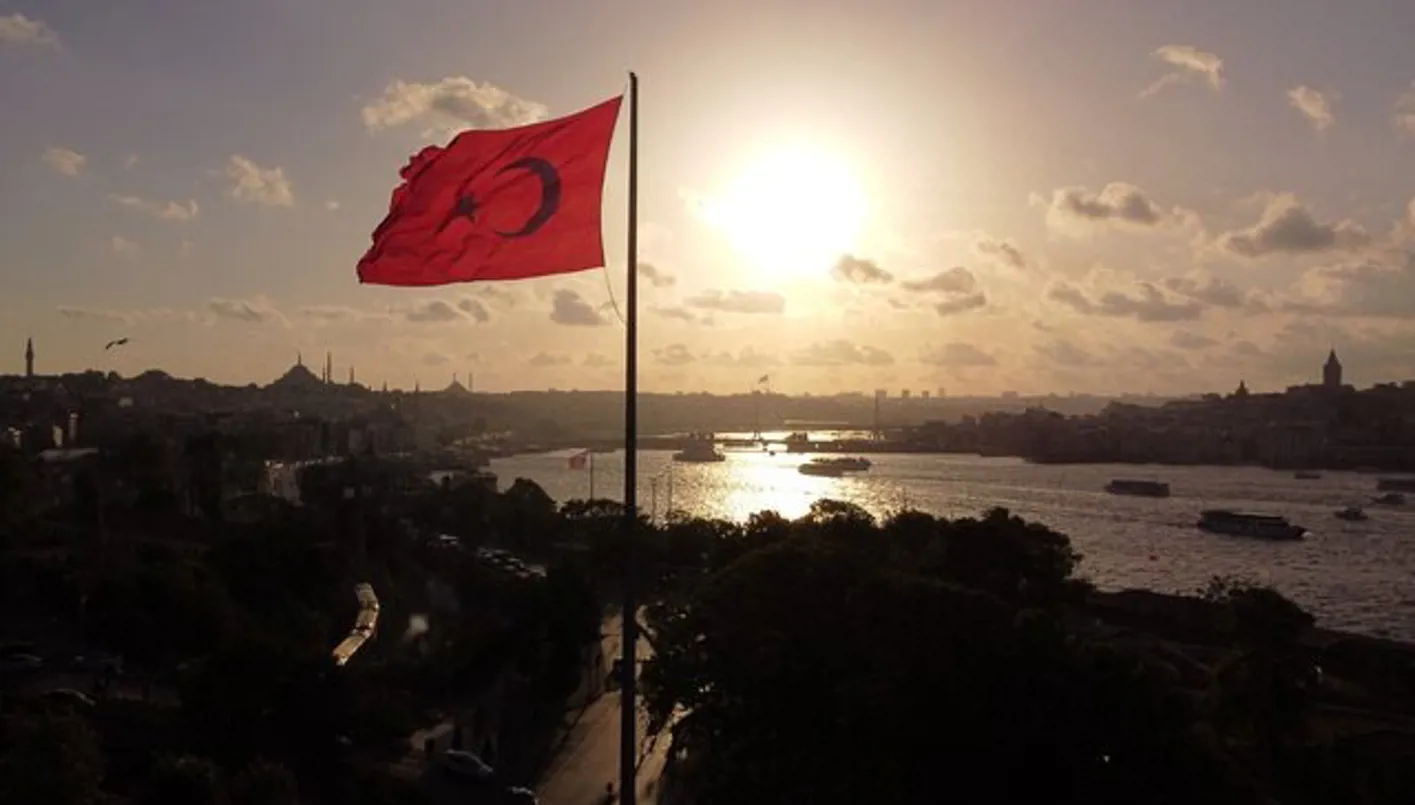
I turned Türkiye To become a major exporter of drones and other military equipment after government investments over two decades, the NATO member state seeks (NATO) Now to build on this momentum, at a time when the West is re-arming and security alliances are being reformulated.
Türkiye, which previously relied heavily on foreign arms manufacturers, now supplies about 40 countries, especially in Gulf andAfrica andAsia And parts of Europewith weapons that many buyers see as cheaper, faster to deliver, and more adaptable than other alternatives.
As European governments reassess their security dependency in the wake of Russia’s invasion of Ukraine and question American assurances, many NATO countries increasingly view Turkey not only as a military bulwark on the alliance’s southeastern flank, but also as a potential industrial partner.
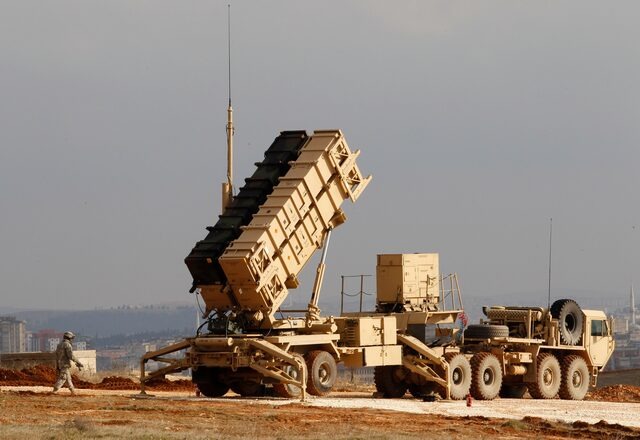
An American Patriot air defense system announced by the Turkish Ministry of Defense to be deployed in the Malatya province in the southeast of the country in March 2026 (Reuters)
And meditate Ankara Hosting the US President would help Donald Trump And other leaders from NATO countries at a summit to be held next month to increase arms sales and joint production in Western markets, in particular European UnionTurkish companies face structural obstacles, including defense initiatives limited to member states and political resistance linked to broader diplomatic disputes.
A Reuters review of trade data showed that Turkish defense exports, including high-level armed drones used by Ukrainian forces, more than tripled since 2021 to $10 billion last year, making up about 3.7% of the major emerging market economy’s total exports.
Exports to Europe and increasedUS Nearly quadrupled during the same period, reaching $5.6 billion.
This growth reflects development in the local defense industry, which includes… Paykar Drone manufacturer and Turkish Aerospace Industries (Turkish Aerospace Industries) as well as smaller companies such as Arca Defense and Kale.
Analysts say that continued government support, flexibility of supply chains, and willingness to adapt regulations to suit buyers’ needs have enabled these companies to break into markets where Western suppliers face constraints in production capacity or long purchasing cycles.
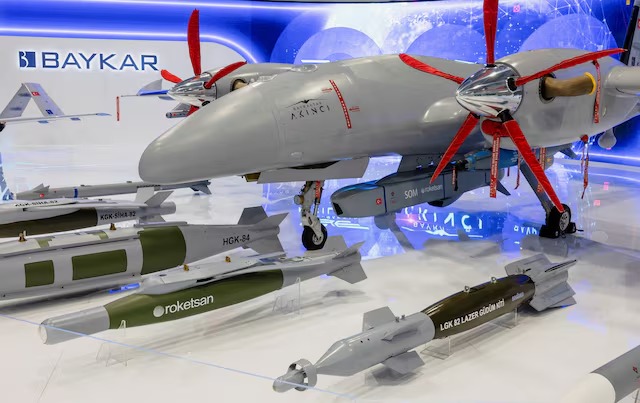
A drone manufactured by Baykar at a defense and space exhibition in Istanbul (Reuters)
Risks and opportunities of war
Turkey’s Defense Industries Agency says the country aims to double its arms exports within two years, which could generate important revenues as it seeks to pay off its debts and finance further development.
Türkiye’s own security is at stake because of its position, which places it between two major conflicts currently taking place: Ukraine To the north andIran To the southeast, given the shortcomings in air defenses, aircraft engines and tanks, which can be addressed through the conclusion of commercial and technical exchange deals.
Can Kasavoglu, a researcher at the Hudson Institute, believes that the Turkish defense industry sector has achieved a “big leap” by exporting advanced systems, especially drones.
He said that the war in Ukraine highlighted that modern wars depend on the strength and continuity of the industrial base and not just on the latest weapons systems, an area in which Türkiye has gained credibility.
NATO summit
Türkiye supplies about 65% of the armed drones used globally and is a major ammunition exporter as well. It also produces or plans to produce frigates, aircraft carriers, air defense systems and armored vehicles.
She said Indonesia Last year, it said it would buy 48 Turkish fighters currently under development.
But Türkiye’s ambitions entail political and reputational risks on the international stage. Last month, Türkiye unveiled a model of a home-made intercontinental ballistic missile at a defense exhibition in Istanbulwhich sparked criticism from some experts about its feasibility and the message it sends after a promotional video depicted a virtual launch of the model that seemed to target North America.
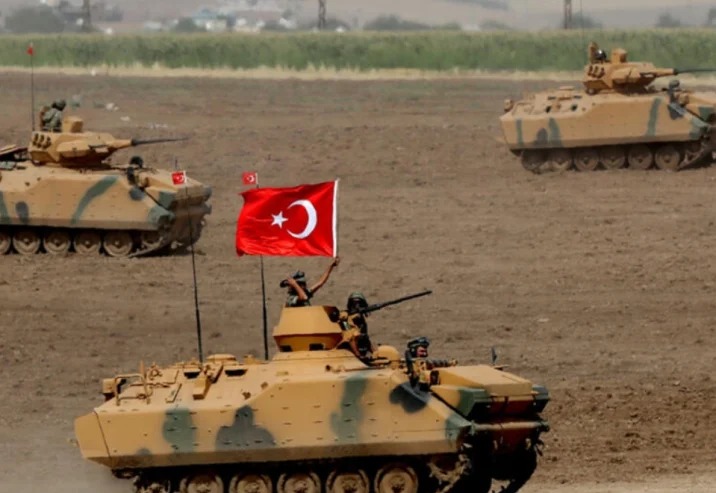
Turkish army armored vehicles in northern Syria (Reuters – Archive)
Turkish officials said that the defense sector will be a major focus at the NATO meeting in Ankara on July 7-8.
The Secretary General of NATO said Mark Rutte The defense industry forum to be held there will be the most comprehensive of its kind to date.
European obstacles
The pressure exerted by the United States on NATO countries to shoulder more defense burdens, including plans to withdraw thousands of soldiers from… GermanyThis presents both opportunities and challenges for Turkey, which has the second largest army in the alliance.
In April, the Turkish Defense Minister urged Yasar Guler European allies to abandon security arrangements that exclude non-EU members of the alliance, such as Turkey, and said that such policies could “harm Europe’s security and resilience more than a US reduction of its forces in Europe.”
Turkey is largely excluded from the European Union’s Security Action for Europe programme, and some governments have chosen to distance themselves from Ankara due to regional political disputes and concerns about its declining democracy, including a widespread legal crackdown on the main opposition party.
However, Turkish companies were able to conclude supply deals for equipment and weapons with… Poland andSpain andPortugal andRomaniaBaykar acquired the Italian company Piaggio Aerospace and entered into a partnership with Leonardo in the field of production.
Increased global spending
Institute data indicate Stockholm The International Peace Research Institute estimated that global military spending increased by 24% to nearly $2.9 trillion over the five years to 2025, including a 75% jump in Europe.
During the same period, the Turkish Defense Industries Agency doubled the number of funded research and development projects to more than 1,400 projects.
Arda Mevlutoglu, a military analyst, said that conditions are favorable for strengthening cooperation with Europe if political obstacles can be overcome.
He added, “Europe needs solutions that can be implemented quickly… but achieving this requires political will at the highest level for this cooperation to proceed smoothly… Turkey is in a phase of repositioning and adjusting its strategy towards both Europe and… NATO.”