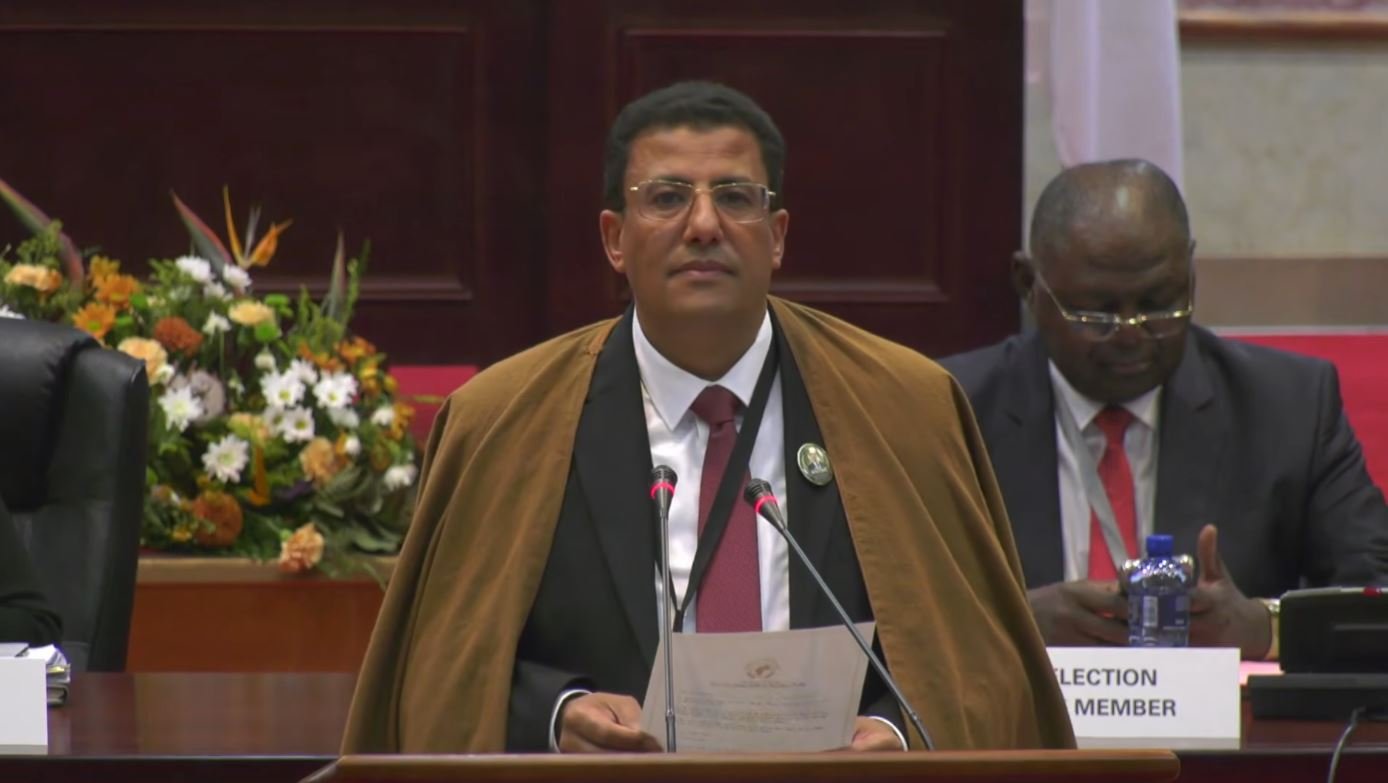
By electing its candidate, Fatih Boutebek, as President of the Pan-African Parliament, with 118 votes
networks
In a resounding diplomatic blow to the Makhzen regime, the African continent elected Algeria’s candidate, Fatih Boutebek, as President of the African Parliament with 118 votes, during the extraordinary session held in Midrand, South Africa, to assume leadership of this continental legislative body until 2029.
This election, which ended in an Algerian sweep, was not just a fleeting electoral victory, but rather came as a stark confirmation of the weight enjoyed by Algerian diplomacy under the leadership of the President of the Republic, Abdelmadjid Tebboune, and its steadfastness in the face of the attempts at confusion and bullying that the Moroccan delegation wanted to impose in the corridors of the continental parliament, which prompted many to describe what happened as a “fight” that restored Morocco to its true size, knowing that the Makhzen pushed its candidate, Hassan Haddad, in a losing confrontation, after it clashed. He calculated the confidence and reputation of the five African regions in Algeria, which refused to submit to the logic of diplomatic “bullying.”
The “thuggish” behavior of the Moroccan delegation was clearly evident during the work of the North African Group, where Lahcen Haddad and his companions tried to disrupt the electoral process through immoral pressure on the secretariat employees, which amounted to the use of obscene words and inappropriate behavior towards the participating delegations, in a desperate attempt to thwart Algeria’s candidacy for the presidency of the African Parliament. This dangerous slip required the intervention of security personnel to impose order inside the hall, after these actions almost got out of control and threatened the safety of the participants. This intervention restored calm to the session, enabling the countries of the region to resume their work in full sovereignty, and to complete their deliberations, which culminated in the election of members of its bureau and representatives in the election follow-up committee, leading to the recommendation of Algeria’s candidate for the presidency of the African Parliament.
Although the Moroccan delegation resorted to its usual methods, including spreading lies and trying to blackmail some officials, led by the Secretary General of Parliament, and even going as far as trying to buy receivables by distributing “financial envelopes” within the plenary session to influence the vote, these maneuvers fell resoundingly against the will of the African majority, which rejected “envelope diplomacy.” The battle ended in a miserable failure for Morocco, which was unable to gain any position, in exchange for a sweeping victory. For Algerian diplomacy, which once again confirmed its superiority and its ability to crush “envelope diplomacy” with the logic of African legitimacy, credibility, and sovereignty.