Saturday, June 6, 2026 3:26 pm –
Jerusalem time
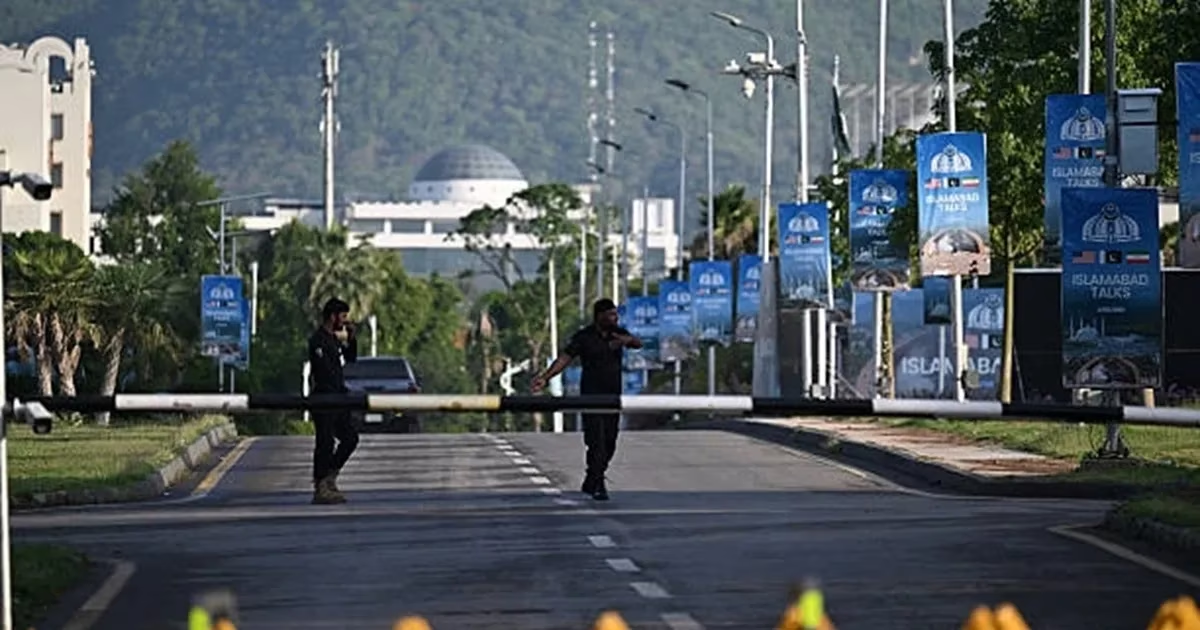
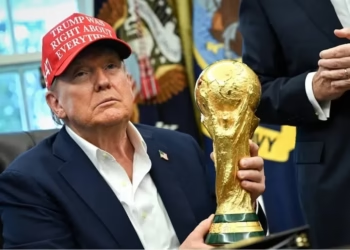
An analytical report published by The New Yorker magazine revealed a radical shift in Pakistani foreign policy, as Islamabad emerged as an unexpected mediator between Washington and Tehran. This new role reflects the utilitarian and personal nature of diplomacy pursued by the administration of US President Donald Trump in his second term, which gave Pakistan an opportunity to reposition itself internationally.
The tense relationship between the two sides began in 2018, when Trump accused Pakistan of providing “lies and deception” despite receiving billions of dollars in aid. That position then led to cutting off military aid, but the scene changed completely with Washington’s need for a way out of its crisis with Iran and to ensure the stability of the global economy.
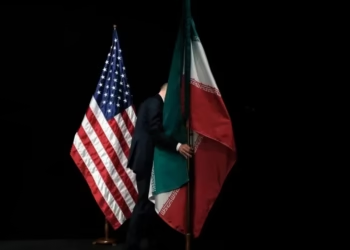
Pakistan succeeded in achieving what major international bodies could not, by hosting the first high-level face-to-face meetings between Iranian and American officials in more than a decade. This diplomatic breakthrough gave Islamabad new credibility as a security partner and peace broker, overcoming years of isolation and accusations of supporting terrorism.
Observers believe that Pakistan was in dire need of this transformation to improve its image, which was damaged by internal political and economic instability. These efforts are led by Field Marshal Asim Munir, commander of the Pakistani army, who was able to build a close relationship with Trump, which diplomatic sources described as being based on a deep understanding of how to please the American president.
Historically, US-Pakistani relations have been characterized by tension and mutual suspicion, especially after Washington withdrew from Afghanistan at the end of the 1980s, leaving Pakistan to face the repercussions of the war alone. This pattern was repeated after the events of September 11, when Washington accused Islamabad of playing a ‘double game’ by secretly supporting the Taliban.
Relations reached their lowest levels in 2011 following the assassination of Osama bin Laden in the city of Abbottabad without the knowledge of the Pakistani authorities. Despite this, the relationship continued out of strategic necessity, as Pakistan remained a vital corridor for NATO supplies and a back door to peace talks with the Afghan Taliban.
With Trump’s return to power, Pakistan offered a ‘token of friendship’ by handing over Muhammad Sharifullah, the mastermind of the Kabul airport bombing, which Trump considered a major victory. This security cooperation paved the way for the resumption of military aid, which amounted to about $400 million, and opened new horizons for economic cooperation.
The Pakistanis have realized how the game is played with Trump and have mastered it brilliantly by presenting the image he likes.
Pakistan played the ‘peacemaker’ card smartly in the border dispute with India, giving Trump an opportunity to take credit for preventing a nuclear war. Islamabad went further by nominating Trump for the Nobel Peace Prize, a move aimed at strengthening personal ties with the US president and ensuring his continued support.
During lengthy meetings at the White House, Field Marshal Asem Mounir discussed complex issues with Trump, including Iranian-Israeli tensions and economic development. Trump described the Pakistani military commander as “my favorite advisor,” stressing that the Pakistanis understand Iranian affairs more than any other party in the region.
The economic gains are already flowing, as the Pakistani army signed a $500 million agreement to extract the minerals with an American company. The cooperation also extended to include the digital currency sector through a partnership with a company that Trump co-founded, which reflects the overlap of political and commercial interests in this relationship.
Pakistan is vitally dependent on ending the Iran war to ensure the flow of oil and fertilizers through the Strait of Hormuz and to protect the remittances of its workers in the Gulf. These transfers, estimated at $38 billion annually, are an essential pillar that prevents the collapse of the Pakistani economy, which is burdened with debt and internal unrest.
Pakistani diplomacy faces a difficult challenge in balancing the demands of Washington, Tehran, and the Gulf states, without siding with one party at the expense of the other. Any excessive rapprochement with Washington may anger the Shiite minority at home, while siding with Tehran may lead to a tightening of the economic stranglehold by the Gulf states.
The issue of normalization with Israel stands out as one of the most sensitive files, as Trump tried to pressure Islamabad to join the Abraham Accords. Experts warn that any step in this direction could lead to an internal political explosion, given the deep popular attachment to the Palestinian issue and rejection of normalization.
Ultimately, the Pakistani military exploits this global prominence to strengthen its hold on power and marginalize internal opposition. Despite the international praise, caution remains the prevailing situation, as historical experiences indicate that Washington may abandon its allies as soon as its strategic need for them ends.