Saturday, April 25, 2026 11:36 pm –
Jerusalem time

On April 25 of each year, the world commemorates World Malaria Day, a date that highlights one of the oldest and most deadly diseases in human history. Despite great scientific leaps, malaria still poses an existential threat to millions of people in tropical and poor regions, where the bite of a small mosquito turns into a harsh battle for survival.
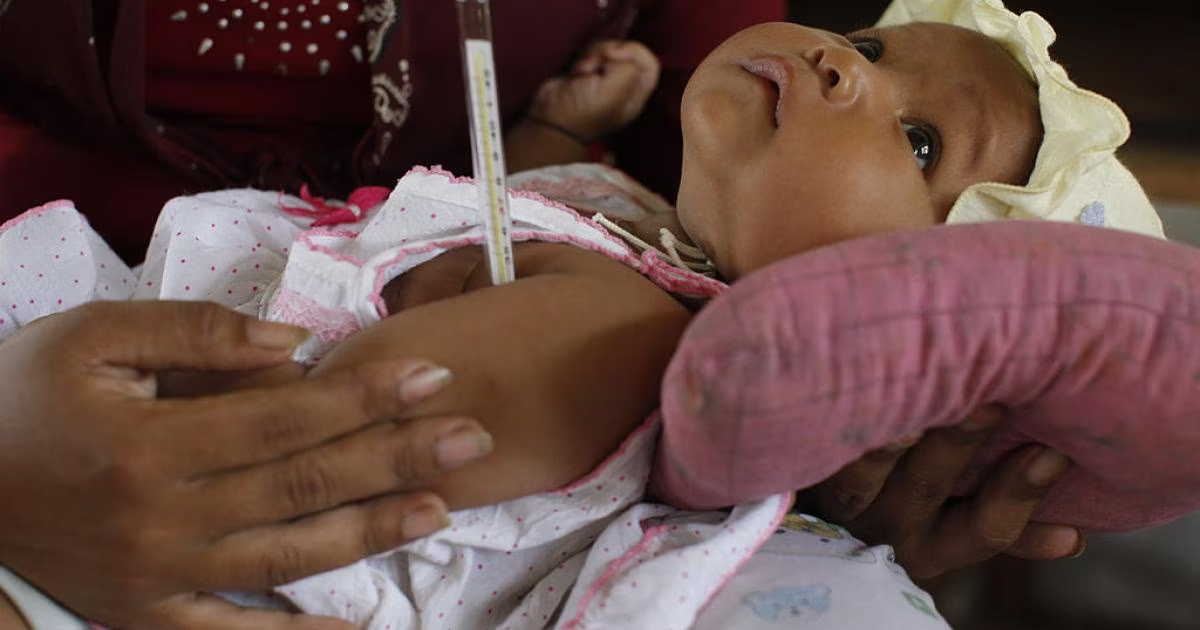
In a remarkable medical development, on April 24, 2026, the World Health Organization announced the adoption of the first anti-malarial treatment designed specifically for newborns and young infants. This decision targets the age group whose weight ranges between two and five kilograms, a group that has been suffering for many years from the absence of precise treatment protocols suitable for their small body sizes.
The importance of this treatment comes from the fact that it ends the era of reliance on drug formulations intended for older children, which raised the risk of dosing errors or severe side effects. According to medical sources, providing medication in precisely specified doses for these weight groups will contribute to reducing death rates among infants who lack natural immunity against the parasite.
Young children are the weakest link in confronting this disease, as their bodies have not yet developed the defenses necessary to resist repeated infections. In endemic environments, a child may contract malaria several times a year, which leads to the exhaustion of his young body very quickly, especially in the absence of early diagnosis or delayed medical intervention.
The new approved treatment is based on the ‘artemether-lumefantrine’ combination, and has undergone rigorous testing to ensure its suitability for the youngest malaria patients. The international organization confirmed that this accreditation means that the medicine meets all international standards related to quality and safety, which opens the door for governments and relief organizations to distribute it on a large scale in the most affected areas.
However, health experts believe that the availability of medicine in laboratories does not necessarily mean the end of the crisis, as the “justice gap” emerges as a major obstacle to saving lives. Access to treatment requires a strong health infrastructure, including nearby clinics and uninterrupted supply chains, which many remote villages on the African continent and parts of Asia lack.
Prevention remains the cornerstone of the global malaria control strategy, relying mainly on the use of insecticide-treated mosquito nets and household spraying. Drying ponds and swamps, which represent a fertile environment for mosquitoes to breed, also plays a crucial role in reducing the chances of transmission of infection among local residents in affected areas.
The real test lies not only in the ability of science to produce a new medicine, but in the ability of the scientist to deliver this medicine to a child in a distant village.
But the field reality indicates that these preventive measures may turn into a kind of ‘luxury’ in light of humanitarian crises and armed conflicts. In displacement camps and areas devastated by wars, obtaining a safe place to sleep away from mosquito bites becomes a daily challenge that exceeds the capacity of poor families struggling to survive.
Moreover, climate change poses new and unprecedented challenges to efforts to combat the disease, as weather fluctuations contribute to expanding the geographic area of mosquitoes’ spread. Rising temperatures and changing rainfall patterns allow malaria-carrying mosquitoes to reach areas previously considered safe or free of the disease.
At its core, malaria is not just a medical issue, but rather a mirror that reflects the reality of poverty and unequal distribution of health resources around the world. While science has the tools to eradicate the disease, economic and political obstacles remain to achieving this ambitious goal in the communities most in need.
This year’s World Malaria Day message focuses on the need to bridge financing and logistical gaps to ensure that scientific innovations reach those who deserve them. The world today has vaccines, rapid diagnostic tests, and advanced treatments, but failure to deliver them to the poor means the continued hemorrhage of human lives without medical justification.
Reports indicate that the collapse of health services in conflict areas is leading to a sharp decline in national control programs, threatening the loss of the gains achieved over the past decade. Therefore, restoring stability and providing sustainable international support remain basic conditions for the success of any plan aimed at completely eradicating malaria.
Ultimately, the real test for the international community is its ability to transform these scientific discoveries into a reality that protects children everywhere. Saving a child from death with the correct dose of medication is the most basic human right that must be available, regardless of profit and loss calculations in the global drug market.
The battle against malaria is a race against time, requiring concerted efforts among scientists, policymakers and field organizations to ensure a future free of this epidemic. Without a just global health system, scientific victories will remain incomplete, and millions of children will remain at risk that can be avoided with simple measures and real political will.