Thursday, June 18, 2026 3:52 pm –
Jerusalem time
The Bürgenstock mountain resort in Switzerland is preparing to host a decisive round of negotiations tomorrow, Friday, bringing together representatives of the United States and the Islamic Republic of Iran. These initial talks come in the wake of the signing of a memorandum of understanding aimed at putting an end to the direct military conflict between the two parties, which broke out in late February.
The Swiss government explained that the meeting will include, in addition to the American and Iranian delegations, mediators from the countries of Qatar and Pakistan, in addition to other international parties concerned with the stability of the region. This meeting aims to establish the executive mechanisms for the concluded agreement, and to ensure compliance with the terms that were agreed upon in principle between Washington and Tehran.
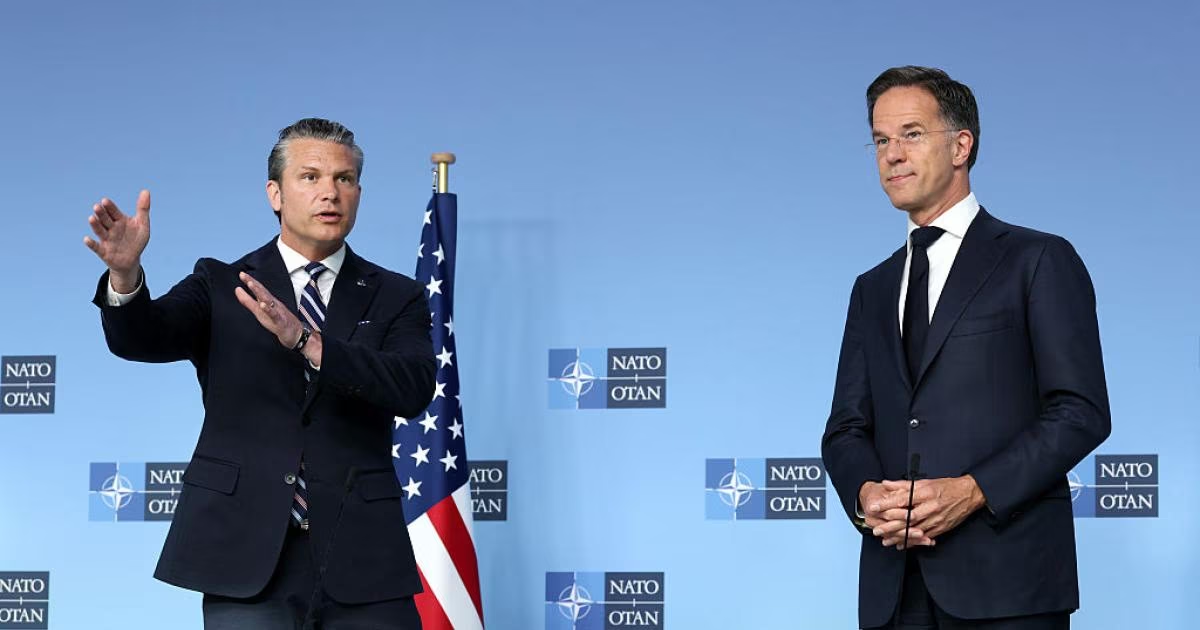
Meanwhile, threatening language dominated the pre-negotiations atmosphere, as US Defense Secretary Pete Hegseth announced that his country was ready to return to the military option at any moment. Hegseth stressed that Washington will not hesitate to impose a tight naval and air blockade on Iran if it senses any hesitation in implementing the pledges made.
The US Secretary indicated during press statements in Brussels, following his meeting with his NATO counterparts, that President Donald Trump had placed US forces on high alert. He stressed that the timetable specified for the talks is binding, and that any violation of it would mean the immediate resumption of combat operations without warning.
On the other hand, Tehran was quick to draw its red lines before sitting at the negotiating table, stressing that its arsenal of ballistic missiles was outside any political discussion. Iranian Foreign Ministry spokesman Ismail Baghaei stated that these capabilities represent the pillar of national defense and cannot be negotiated with any international party.
Iranian missiles are intended for launching only, not for negotiation, and our defensive capabilities will not be subject to discussion in any way.
Baghaei added in an interview with state television that the Iranian missiles were created to deter threats and protect sovereignty, and are not an article for bargaining in political deals. This hardened Iranian position comes in response to previous pressure exerted by parties in the American administration to include the missile file in the draft final agreement.
The upcoming negotiations are based on the memorandum of understanding signed by Presidents Trump and Pezeshkian, which aims to end the war that followed the US-Israeli attacks on February 28. The memorandum stipulates the need to reach a comprehensive agreement within a period of 60 days, focusing primarily on the nuclear file, in exchange for a gradual lifting of economic sanctions.
Despite Secretary of State Marco Rubio’s sharp criticism of the Iranian missile program and considering it a direct threat to American interests and its allies, the White House’s position seemed different. President Trump showed surprising flexibility during the G7 summit, considering that depriving Iran of defensive missiles may be unfair compared to other countries in the region.
The biggest challenge facing Swiss negotiators remains bridging the gap between American security demands and Iranian defense sovereignty in light of a pressing timetable. International circles are awaiting the results of this round, which may determine the path of stability in the Middle East or return the region to the square of comprehensive military confrontation.