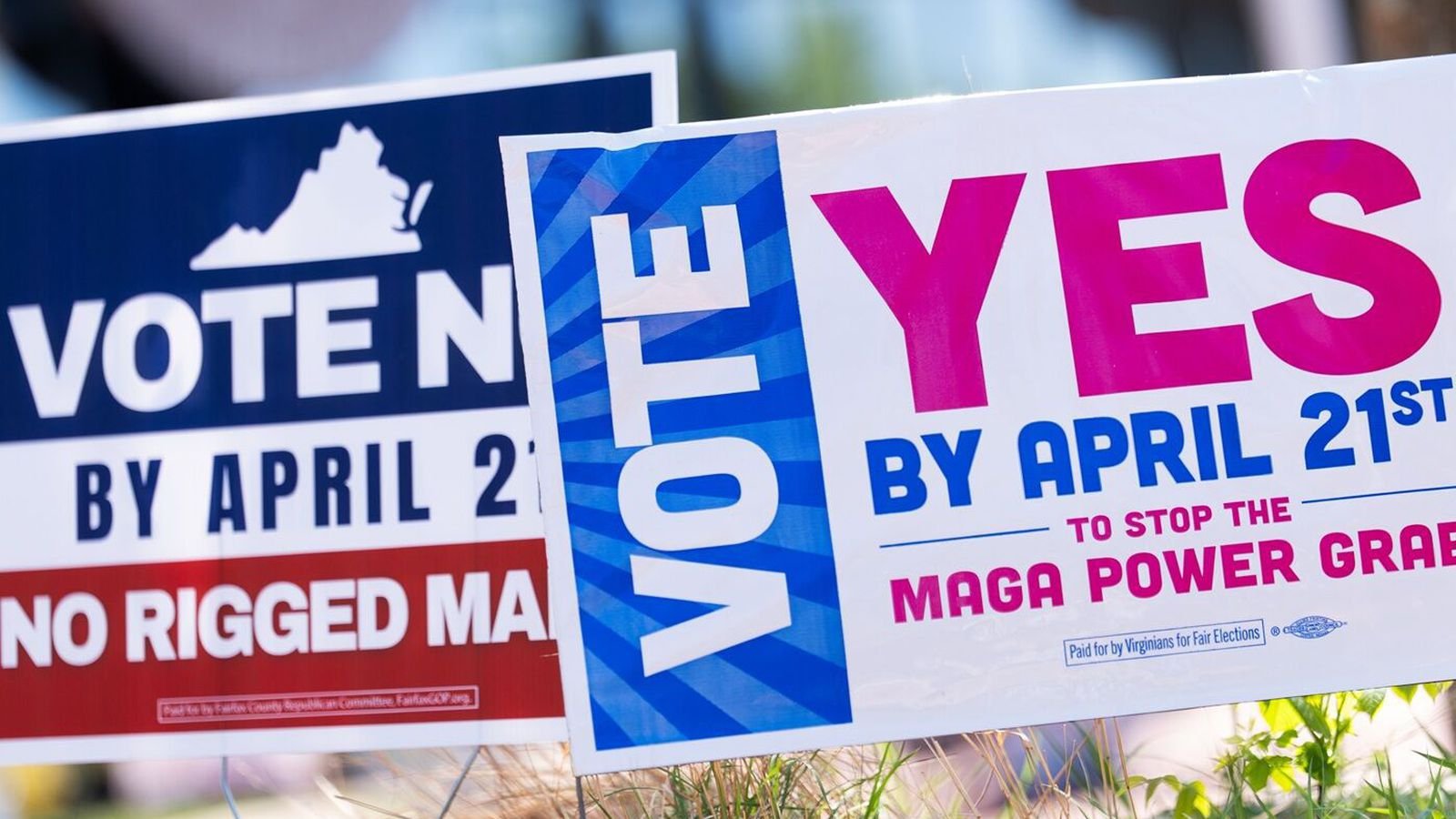
If the changes prove to be legal, it looks like the Democrats will overtake the Republicans in the constituency war in the West, according to the AP news agency. That’s what few people expected when Donald Trump and the Republicans in Texas made extensive changes to the electoral districts there last summer due to fear of being rebuffed in the next election.
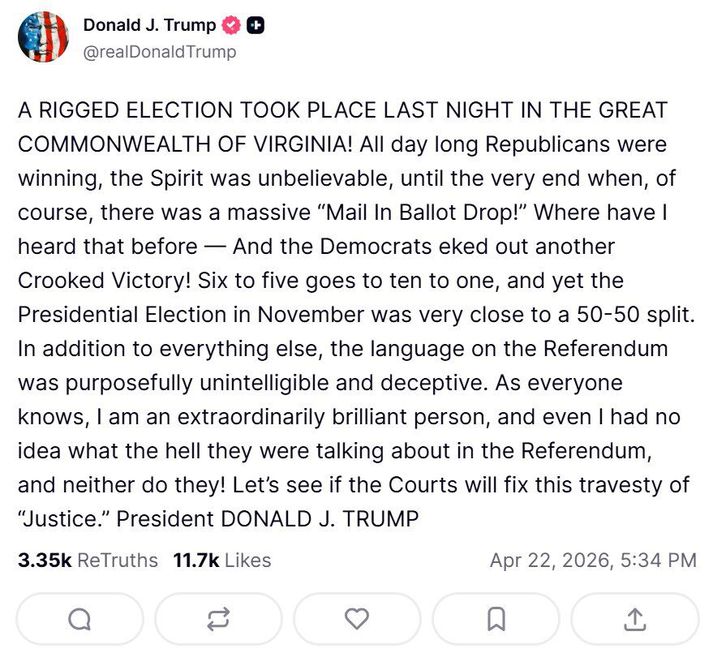
Trump spoke today about the vote and he claims that fraud determined the results. The president has repeatedly lied that his opponents cheated in elections that did not go in his favor.
In post on Truth Social Trump also complains that the question on the ballot was vaguely worded and that it was done on purpose. He, as a unique genius, did not even understand the wording.
“As everyone knows, I’m an extremely intelligent man, and even I had no idea what the hell they were talking about in this vote, and neither do they!”
Then Trump says he hopes the courts will intervene and stop the electoral district changes.
Republicans could once again outpace Democrats as Florida state lawmakers aim to reveal new electoral districts in that state next week.
See also: Heading for a constituency war in the US?
Under normal circumstances, electoral districts are changed about every ten years, following the regular US census. The 435 parliamentary seats in the House of Representatives are divided between states in proportion to population. Changing constituencies in this way, in favor of the second party in the United States, is called “Gerrymandering” in English. In simple terms, this is done by compressing many voters of one party into a few constituencies and diluting the votes of others.
This has long been practiced in the United States, and that is why there are actually relatively few parliamentary seats in that country that are actually contested in elections.
Republicans across the United States began last year, at Trump’s urging, to change electoral districts in states where they are in control with the goal of improving their position before the congressional elections in November.
With that, a certain constituency war began.
So far, Republicans have drawn new electoral districts in Texas, Missouri, North Carolina and Ohio. Democrats have made similar changes in California, Utah and Virginia.
Earlier this year, the US Supreme Court refused to hear a case brought by Republicans and the Trump administration against California over the changes there, which were approved by a large majority of voters.
Willing to campaign for the elections
Republicans and Trump are very worried that the Democrats will gain a majority in the House of Representatives in the November elections. It is less likely that they will also gain a majority in the Senate.
However, having a majority in the House of Representatives would be a major victory for Democrats, who could use Congress to try to put some restraints on Trump. Among other things, they could investigate the work of the president and members of his cabinet, demand various documents and even charge him with official misconduct for the third time.
If the Democrats also gain a majority in the House of Representatives, they could prevent Trump from appointing people to various positions in the second half of his term.
In Politico report Republicans are quoted as saying that they expect Trump to travel around the United States and try to impress the party’s voters and strengthen his position before the election.
Trump’s staff and advisers have also in recent weeks met with many of Trump’s supporters who are unhappy with him and the administration. Many of them have expressed particular displeasure with the war against Iran.
CNN says that Trump’s advisers are going to try to convince voters that, although they are unhappy with the situation as it is today, it will get much worse if the Democrats take control of Congress in November.
This plan is based on polls commissioned by the Republicans, which are said to show that voters trust the party more than the Democrats when it comes to various key issues.