In the first reading it is “Chajtore”. “Gaytore” has also intervened. Inside is a miniature Kosovo. The title of the exhibition is complex: “To whom does the earth belong while the wind is painted?” The story of its origin, as well: When he was preparing for the opera “Syrigana” in Drenica, a container of props was set on fire. The signs of Serbian nationalism were left in it. Petrit Halilaj remained silent until now. He turned the burnt container into a work of art, gave it another life by denouncing the crime, but giving it another meaning. It proved the impotence of nationalism to destroy its paradise – Kosovo. There are also works that his mother buried during the war. But the “Teahouse” in Berlin is not only his story
At the end of June last year, Petrit Halilaj was moving briskly through the hills of “Gjyteti” of Syrigana i Skenderaj. He “flew” like his birds that are inseparable wherever he leaves a mark of art around the world. The opera “Syrigana” was being prepared, a love story where Adam and Eve – based on local superstitions – thousands of years ago had chosen to crown their love in those hills. And one morning a few days before the premiere, he would be shocked. The containers containing all the props for the “Garden of Eden” were found burnt. In addition, the vandals also left a Serbian nationalist sign there. Those signs that were the motto of the teams that killed Albanians in 1998-1999. These signs were also seen on the paved road. Halilaj did not react at all. He did not even make the case public. Without confirming what was seen and documented in the photo, he would state that he would answer sometime later. Now he has chosen to answer. And that in his style: with exhibition.
In the German capital, of which he is a resident, he opened a “Tea Shop” that with a little intervention can also be read as “Gaytore”. Inside is the exhibition “Who does the earth belong to while painting the wind?!” (Who owns the earth while the wind is painted?)
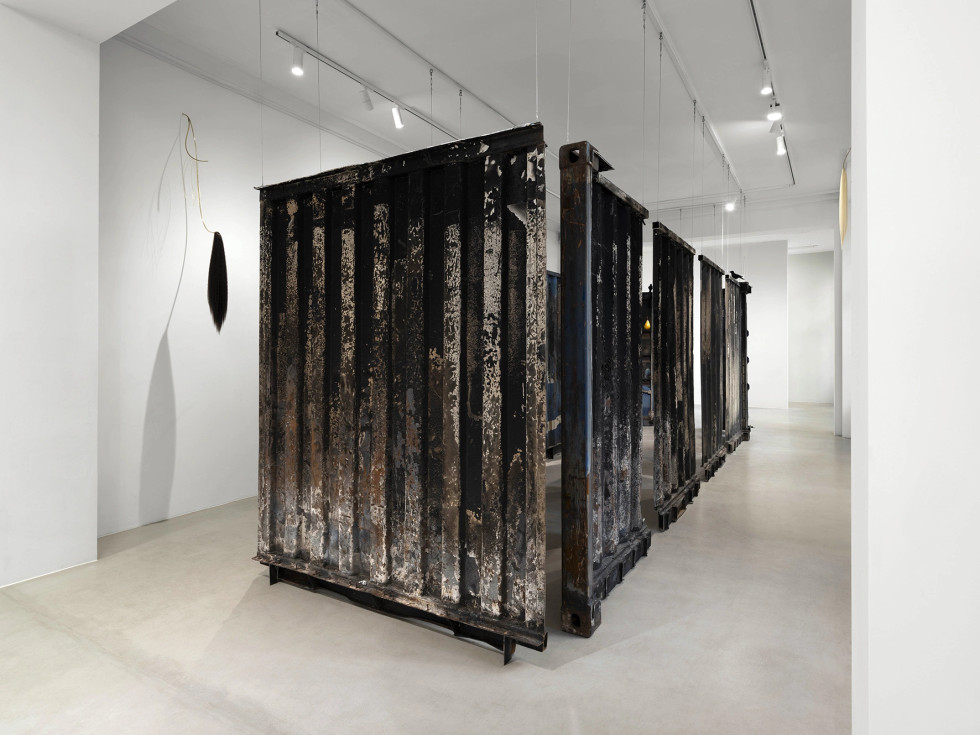
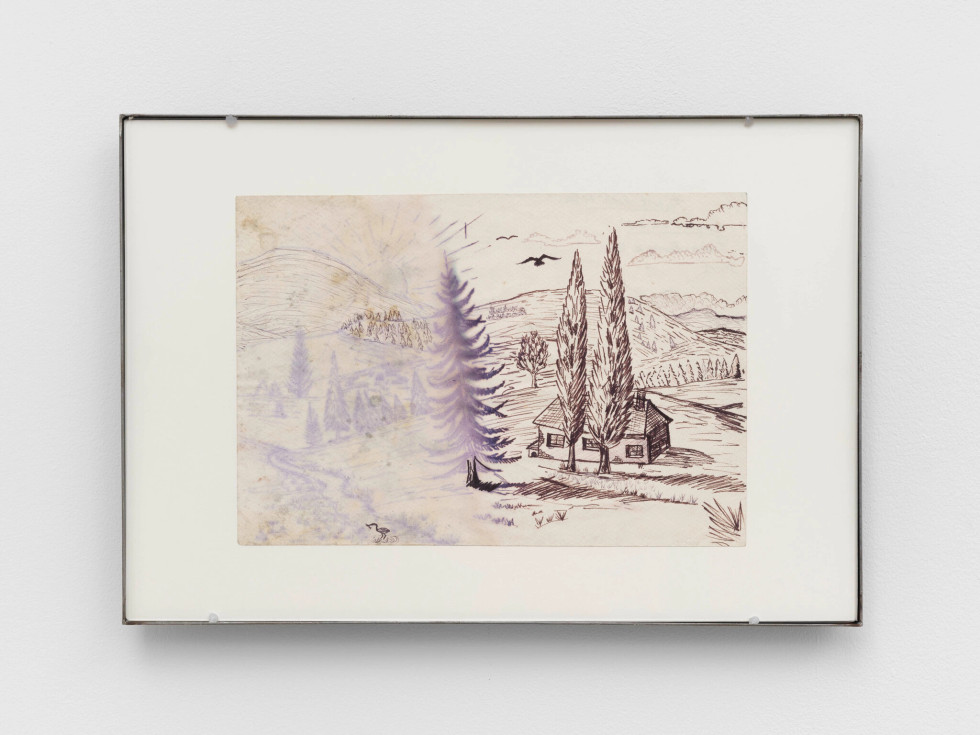
He took one container that stinks of mildew. It is evidence of vandalism and the attack on the “Garden of Eden”. Based on the signs left there, that gesture was made by the mentality that destroyed Kosovo in 1998 and 1999, turning it to a large extent ashes and ashes with over 10 thousand civilian victims and about a million Albanian refugees. Among them was Petrit Halilaj as a teenager who left behind the burnt house. Among the valuables that Halilaj’s mother, Shkurte Halilaj, buried under the surface of the earth, were some of her son’s drawings. Saved them from Serbian forces. And the artist Halilaj has now sent to Berlin one of those who found them after the war when they took out the valuable things from the surface of the earth. In the “ChertLüdde” gallery, it tells about Serbian nationalism almost three decades ago and the old one, where through symbols and inscriptions, that murderous mentality tried to destroy its “Garden of Eden”. From the beginning of this month until June 25, visitors will be introduced to the story of Haliljat. But as an artist of international renown who exhibited at the Metropolitan Museum of Art in New York, Halilaj confesses nothing but violence. Mission has peace. It also tells about the pleasures of “Çajtore”, the songs with drums and the freedom that people should have in what is also read as “Gaytore”. This exhibition in Germany comes after last year with “An Opera Out of Time” it was presented in the prestigious institution of Berlin, in “Hamburger Bahnhof”. The new exhibition is also related to it, but as another horizon of art and narrative.
“As soon as visitors enter the gallery, they enter a space filled with traditional Kosovar carpets, books and tambourines (small drums) placed to create a comfortable environment for gathering, exchange and conversation. The interior is based on the traditions of the ode and the teahouse in Kosovo, both key places of social life,” reads the gallery’s description of the exhibition. His drawing of an untitled landscape dates back to 1997. It also bears the marks of war. The “burial” to highlight it in better days has left its mark. The gallery explains the history of how the Serbian-led Yugoslav army under Slobodan Milosevic carried out a campaign of extermination and ethnic cleansing against the Albanian population of Kosovo.
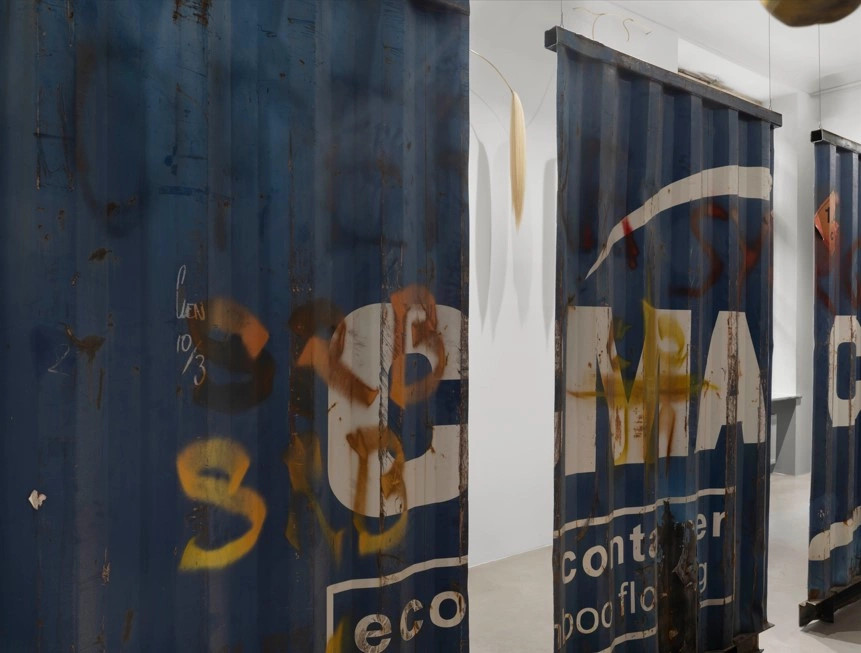
“Keeping the traces of the burial, the drawing proves how deeply rooted in the history of the land is a connection that extends to the other exhibited works”, explains the Gallery. And through the video “Who does the earth belong to while painting the wind?!”, a work of 2012, he parks Kostërci, the hill next to Runik e Skenderaj. It is 24-hour observation of butterflies as a kind of synonym of freedom. Also, the institution clarifies that on June 20, 2025, just a few days before the premiere of the opera “Syrigana”, two containers that stored props for the second act were attacked by unknown perpetrators, who damaged them with hateful inscriptions and Serbian nationalist symbols, before setting them on fire.
“Much of the ‘Garden of Eden’ set was destroyed by fire, from sculptural flowers and pear trees to ocarinas and props such as helicopters and carpets,” the statement read. The pears are now in the exhibition as a link to Dardania, the Kosovo of antiquity. The large pieces of the container scattered for visual effect are also accompanied by black birds with a lot of symbolism. The pear comes as the etymology of Dardania and elaboration of historical narratives, folklore and popular beliefs. The exhibition also contains many other works with dozens of symbols.

“The exhibition is directly related to the opera ‘Syrigana’ and what happened in Kosovo, when the container with the props of the opera was burned in Syrigana, a few days before the premiere”, said Halilaj at the very beginning in response via e-mail to KOċEN, regarding the exhibition opened on the first day of May with songs and tambourines.
“In that container were parts of a paradise we were building: pears, flowers, elements of the stage, traces of a collective dream. After burning, there were also messages of hate written in spray paint, among them ‘kill you’ and the sign related to the four Cs/Serbian cross, which is often interpreted through the phrase ‘Samo sloga Srbina savga’ – ‘Only unity saves the Serbs’. This symbol is part of heraldry and the Serbian national identity, but in the context of the wars of the 1990s and the violence in the areas of former Yugoslavia, it was often used as a nationalist and threatening sign”, said Halilaj. He explained that when such a sign appears on a burning container in Drenica, along with the words “kill you”, it cannot be read as just a decoration or a coincidence. According to him, it becomes part of a longer history of fear, hatred and attempts to stop the culture.
“At first we thought to speak immediately, give an interview, tell the news. But my heart was very broken. At the same time, I knew that we should not make the bad news bigger than the dream. I did not want the burning to become the main event. The main event was and remains the opera, the people, the union, the voice, the song, the work and the love that made it possible for ‘Syrigana’ to happen in Drenica”, he confessed through the answers long. He thanked the institutions, family and friends who supported him and did not leave him alone at that moment. According to him, now that container has been transformed into a work of art and in Berlin, it is not presented simply as evidence of an attack, but as a transformed body: turned upside down, open, fragmented, made porous.
“Inside it is a pear and black birds. For me, the pear is connected to Dardania, to the earth, to memory, to a kind of paradise that cannot be burned. The birds are witnesses, but also beings that continue to fly beyond borders, beyond violence, beyond narrow nationalist narratives”, said Halilaj. He showed that another part of the exhibition was intended as a tea room, but during the process it was also transformed into a “Gaytore”. He said that he still does not know if this came from a mistake in the drawing or from a deeper need to add another line, another opening.
“But for me, error, transformation and transition from one meaning to another are part of life and the artistic process”, he said. For him, “Çajtorja” is a room of hospitality, reading and conversation of “Gaytorja” is even more.
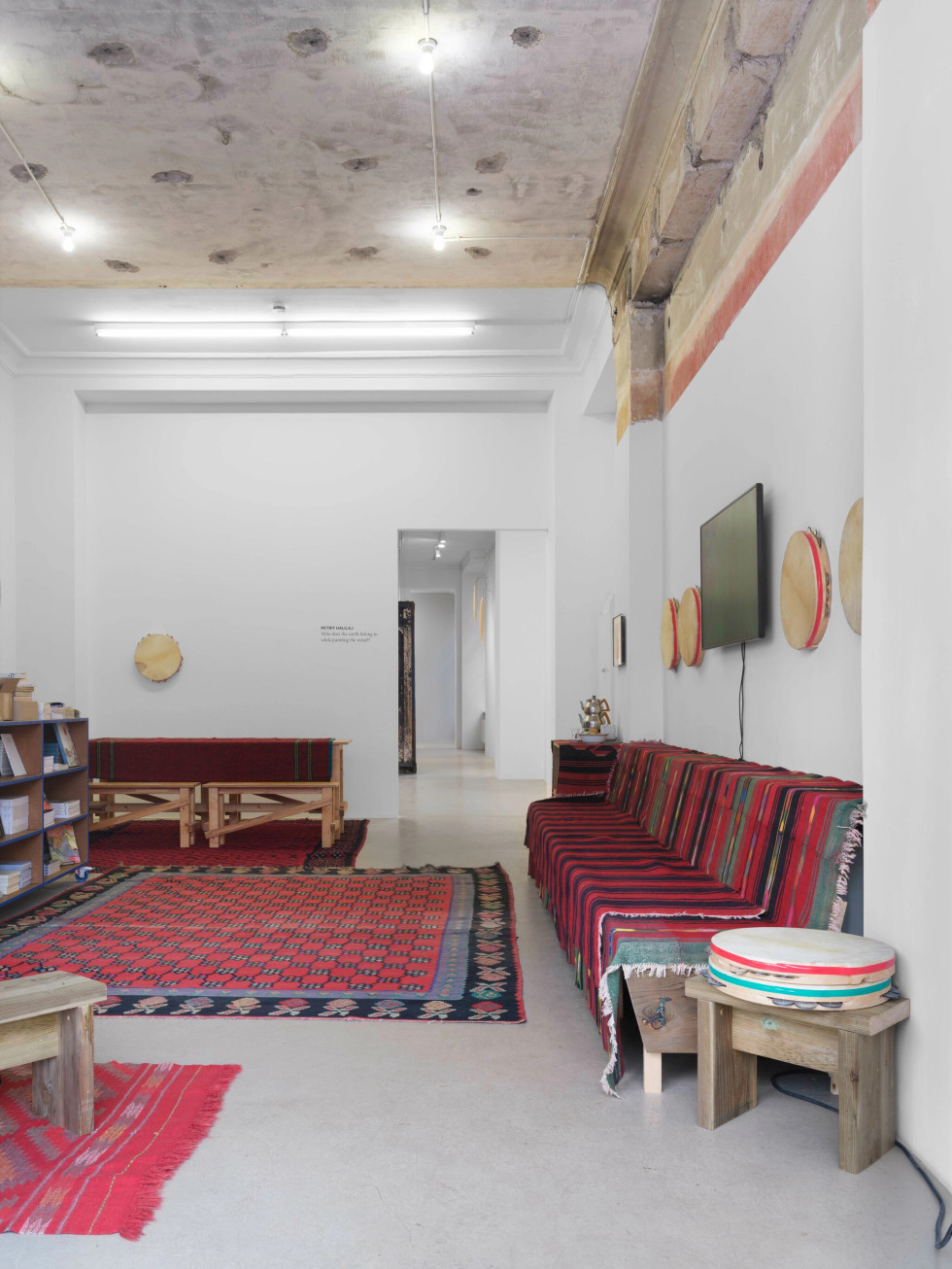
“A space where we don’t have to abandon who we are to feel accepted. It is a space where tradition, the Albanian community, the international community, drums, songs, queer bodies, memory, desire, love and history can enter. For me this is very important, because in our society we are still learning how to build space for everyone and everything. Life is more beautiful when there is room for more forms of being, more languages, more love, more color”, said Halilaj, who is the most famous contemporary Albanian artist in the world. He described that seeing the drums and the Albanian and international community together in front of “Gaytor” was a very beautiful and significant moment. He explained that in this space there are also books, historical documents and materials that are often very heavy, including texts that show old colonial ideas and academic and political obsessions for the expulsion or disappearance of Kosovo Albanians. The book of the Serbian Prime Minister Vladan Gjorgjevic, “The Albanians and the Great Powers”, also takes place there. In this work from 1913, the text presented the Albanians in the most inhuman way, as dangerous animals that even carried tails until the 19th century.
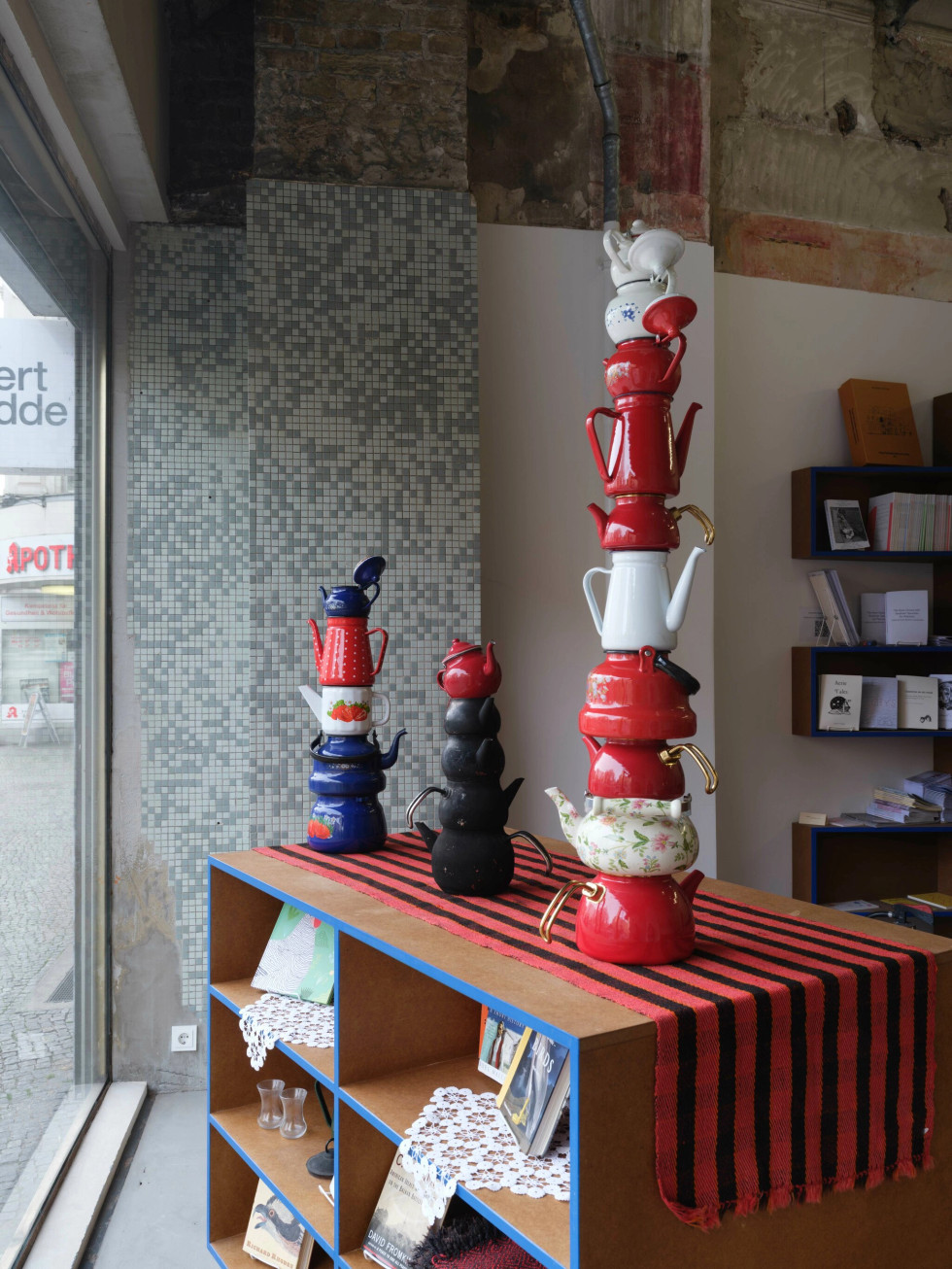
“In front of this burden, I have also placed books about birds, chickens, songs, animals and other forms of life. Sometimes, only the presence of a bird or a chicken can disarm the absurdity of a violent ideology”, said Halilaj. As an artist there are different perspectives. It is open to discussion and does not prejudge.
“I don’t want to narrow the question down to just ‘who did it?’ My question is deeper: why did the container with the props of heaven burn? What mind thinks it can burn a heaven? What justifies such an act? This is the question I want to share with the public in Berlin, in Kosovo and beyond,” he said. He confessed that at the opening of the exhibition there was a night of unity, where tradition has merged with the contemporary and where they not only told a story, but also rejoiced, sang, danced, had fun and flew.
“I know it is a privilege to be able to bring this story to Berlin, analyze it, transform it and share it with the world. But I think this is also a responsibility. Today we must understand these stories, analyze them, share them and transform them. One day, in Kosovo and in the Balkans, I hope we will see these only as stories of the past. But to get there, we must have the courage to look at them, tell them and we turn it into something that opens life, not that closes life”, said Halilaj.
Halilaj opened the exhibition in Berlin two years after he revealed the dreams of Balkan children with “Primary” at the Metropolitan Museum in New York. The sincere dreams, the ones engraved on the school desks. This time in Berlin, Halilaj reveals his dreams again. But also nationalist deeds that try to choke the future. But with Halilaj they have lost the battle. He finds a way, to confess, to dream and to ask “Who does the earth belong to while the wind is painted?”