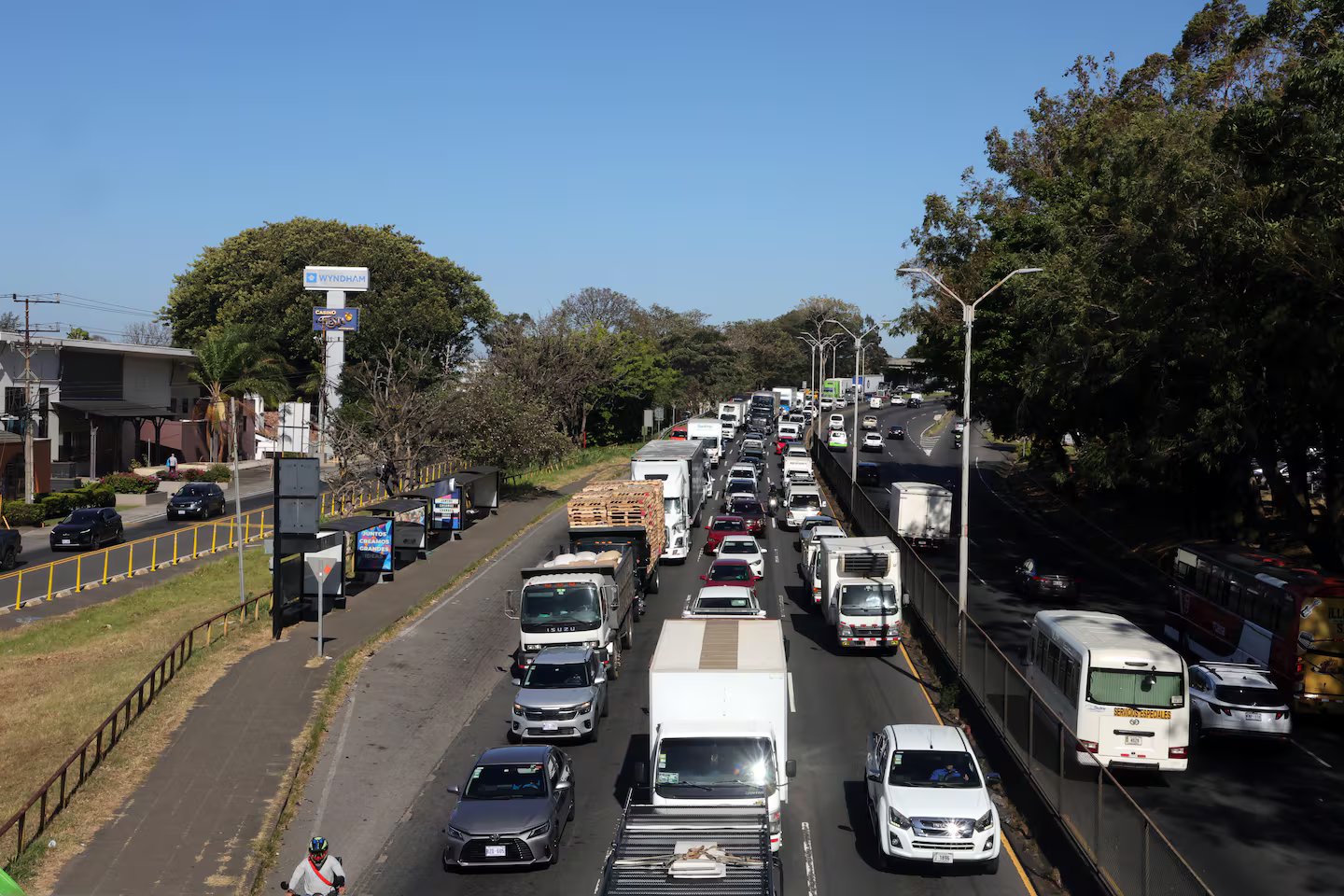
Yeah Costa Rica maintains a growth rate of 9% annually in the number of vehicles, as it was in the 2025the country would have one car per inhabitant in 2036.
The vehicle fleet would equal the population in almost 5.4 million and, unless the State makes a huge investment in roads, overpasses and tunnels, the streets will become parking lotsas is already happening in many places.
The number of vehicles is growing at a much faster rate than the population. Just last year, The fleet grew by 174,000 units, while the population increased by only 27,000 people.
The data comes from the statistics of vehicles with mandatory insurancecompiled by the General Superintendence of Insurance (Sugese), and the population growth projections of the National Institute of Statistics and Censuses (INEC).
It is normal to hear relatives, especially younger ones, talk about their desire to have a car or motorcycle to solve mobility needs.
Your aspiration is legitimate. They urgently need to resolve a need that the State does not resolve: efficient, safe and affordable transportation.
More and more people aspire to have a vehicle because public transport does not cover its routes, or does so slowly and with stops in unsafe places. Many prefer to pay for platform services, even if it is more expensive.
Under these circumstances, there is a cycle of chaos in which the solution that people find feeds the problem.
We don’t even have rush hour anymore, because today every hour is rush hour, At the same time, the routes to rest sites are also blocked.
The only way to change wills is to offer a real alternative and that is where public policy must exist, since taxes are paid for this.
However, the record is not good. Costa Rica is a country that invests very little in roads. Due to economic costs and the low capacity of the State, it is very difficult to invest only in the expansion of road infrastructure, unless all toll roads are filled, which also increases costs.
And the precedents on public transportation are terrible. Rather, today bus lines are being closed and politicians have been very reluctant to mass transportation by train. During the 2018-2022 administration, parties such as the PLN and the PUSC stopped credit to build the electric train, with arguments such as disagreement with rural areas paying for a train in the GAM, as if the taxes that everyone contributes did not have general objectives. Then, it took the current government almost four years to rethink the project.
If the vehicle fleet continues to grow at this rate, will there at least be a public policy that warns of the situation?
eoviedo@nacion.com
Esteban Oviedo is head of Information for ‘La Nación’.







![Pacific Syndromic Surveillance System Weekly Bulletin / Système de Surveillance Syndromic dans le Pacifique – Bulletin Hebdomadaire: W16 2026 (Apr 13-Apr 19) [EN/FR] – World](https://agentially.org/wp-content/uploads/2026/04/67b43f48-14c8-4e2e-a9d9-a2a4843b0838-350x250.png)