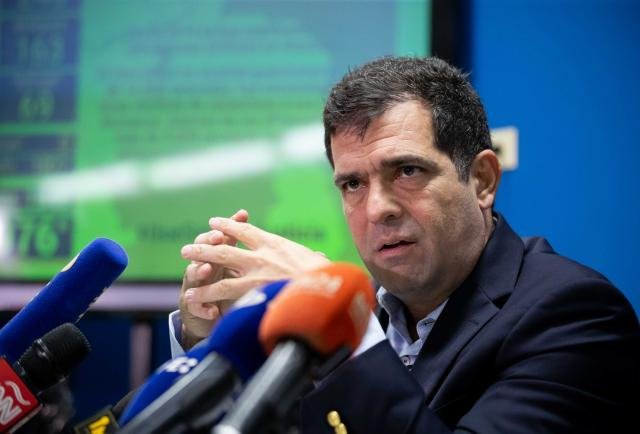
The president of the NGO Foro Penal, Alfredo Romero, stated that The Amnesty Law in Venezuela has not managed to comprehensively resolve the situation of political prisonersdespite the fact that it has allowed restrictions to be lifted in some cases.
During an interview at VenevisionRomero explained that Although the regulations have contributed to releases, their impact is partial. According to their data, of more than 760 people registered as released since January 8, only around 180 have directly benefited from this figure.
He pointed out that the law “has been neither everything nor nothing,” and warned that it is not essential to achieve liberationssince these could be specified without the need to resort to such a legal instrument.
Restrictions and open processes persist despite the Amnesty Law
The lawyer warned that many of those released remain subject to judicial measuressuch as periodic presentations or prohibitions on leaving the country, which implies that it is not full freedom.
He stated that the application of The Amnesty Law has functioned in some cases as a restrictive mechanism rather than as a total openinglimiting the scope of benefits for those affected.
Figures from the Penal Forum record 477 detainees for political reasons, which reflects the persistence of the problem despite recent releases.
Romero insisted that the main problem of the Venezuelan judicial system is the violation of the right to defensewhich he considers “completely restricted,” especially in cases of a political nature.
He stressed that there is limitation in access to private defense and the courts, which compromises due process and the possibility of impartial justice.
In his opinion, any reform must begin by guaranteeing the independence of judges and magistrates, as well as their technical and moral capacity, without external pressures.
Amnesty, exile and return
In relation to Venezuelans in exile, Romero stated that a true amnesty policy should facilitate the return without fear of those who participate in the country’s political life.
He warned that as long as the fear of reprisals persists, we cannot speak of full freedom or effective reconciliation.
The president of the Penal Forum advocated the repeal of laws that in his opinion restrict fundamental rightssuch as the Law against Hate and the Simón Bolívar Organic Law, considering that they limit freedom of expression and political participation.
He urged the authorities to open spaces to civil society, human rights organizations and lawyers, and to strengthen the role of the Public Ministry and the Ombudsman’s Office in the protection of fundamental guarantees.
Regarding the new appointments in these organizations, Romero considered that they represent an opportunity to promote changes, as long as respect for human rights and institutional autonomy are prioritized.