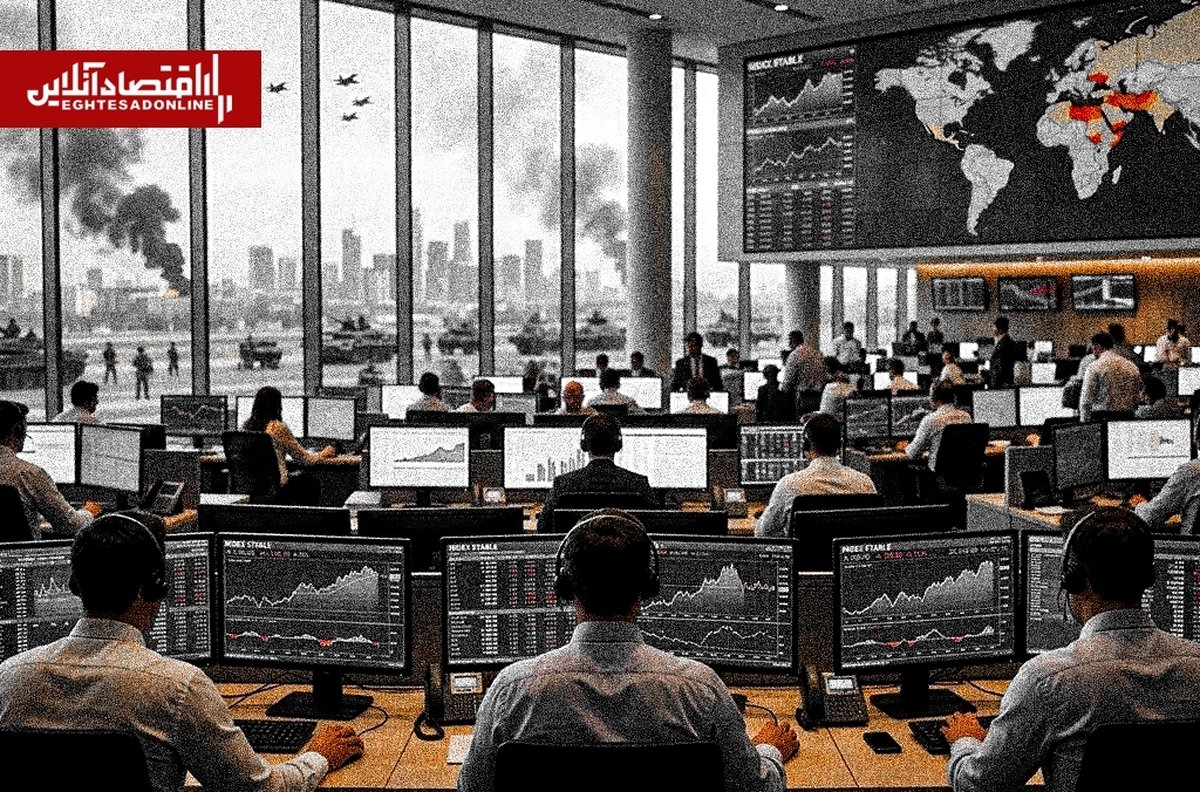
to report Online economy; The simultaneous drop of 7.4% of Brent oil to the level of $101 and the 1.2% growth of the Nasdaq has drawn a clear picture of the turning of expectations in the global markets; Where investors are starting to price the end of geopolitical risks before a political agreement is realized. While during the past weeks, tensions in the Middle East were the driving force behind the rise of energy and the cause of pressure on the stock markets, now the direction of the markets has changed only with the transmission of signals that the agreement is approaching. This phase change shows that the market trades on future scenarios rather than relying on current realities; A scenario that, if it comes to fruition, could redefine the arrangement of capital at the global level.
Leaps of futures
Investing also writes in this regard; The futures of American stock indices continued their upward trend on Wednesday; A growth that has been influenced by increasing hopes that Iran and the United States will come closer to an agreement to end the conflicts in the Middle East.
According to this report, the White House believes that the parties have reached an initial understanding in the form of a one-page memorandum of understanding; A document that is supposed to define the framework of the broader nuclear negotiations. American sources have announced that Washington expects Tehran to respond to key issues within the next 48 hours; An issue that shows that the negotiation process has entered a critical time phase.
The market anticipated the news of a possible agreement
Although an official agreement has not yet been announced, the closeness of the agreement was enough for the markets to react. In fact, this is the closest the two sides have come since the beginning of tensions in late February, and this has made the risk of war in the minds of investors somewhat dim.
According to the proposed scenario, Iran will commit to stop enrichment in exchange for the partial lifting of sanctions and the release of billions of dollars from blocked resources. Besides this, traffic restrictions in the Strait of Hormuz will also be lifted; A bottleneck whose role is vital in the global energy market. At the same time, Donald Trump has also announced the temporary suspension of the operation to reopen this strait and progress towards an agreement.
Why did Wall Street rise?
The US stock market reacted to this signal faster than any other market. Wall Street’s future indices were accompanied by a significant growth, while the US stock market also set new records on the previous day.
This growth can be analyzed from two angles; In the first place, the reduction of geopolitical risk, which usually increases risk appetite in the stock market, and secondly, the possible reduction of inflationary pressures caused by the drop in energy prices, which can open the hands of central banks for policy making.
oil crash; Direct reaction to the de-escalation scenario
On the other side, the oil market strongly reacted to these developments. The price of Brent oil decreased by 7.4% and reached the range of $101, and WTI oil fell by 7.9% to around $94. This drop, rather than a change in actual supply, is the result of a change in market expectations. Simply put, the market is pricing in the possibility that as tensions ease, oil supply disruptions will also ease.
The risk is not completely gone yet
Despite this drop, oil prices are still at higher levels than before the start of the conflicts; A matter that shows that the risks have not yet been completely eliminated. This issue has caused concerns about the continuation of inflationary pressures and the slowing down of global economic growth. In fact, the markets are currently in an “in-between” state; Neither confident enough to completely ignore the risks nor pessimistic enough to discard the agreement scenario; And this is the source of fluctuations that these days are tied to political news more than ever.