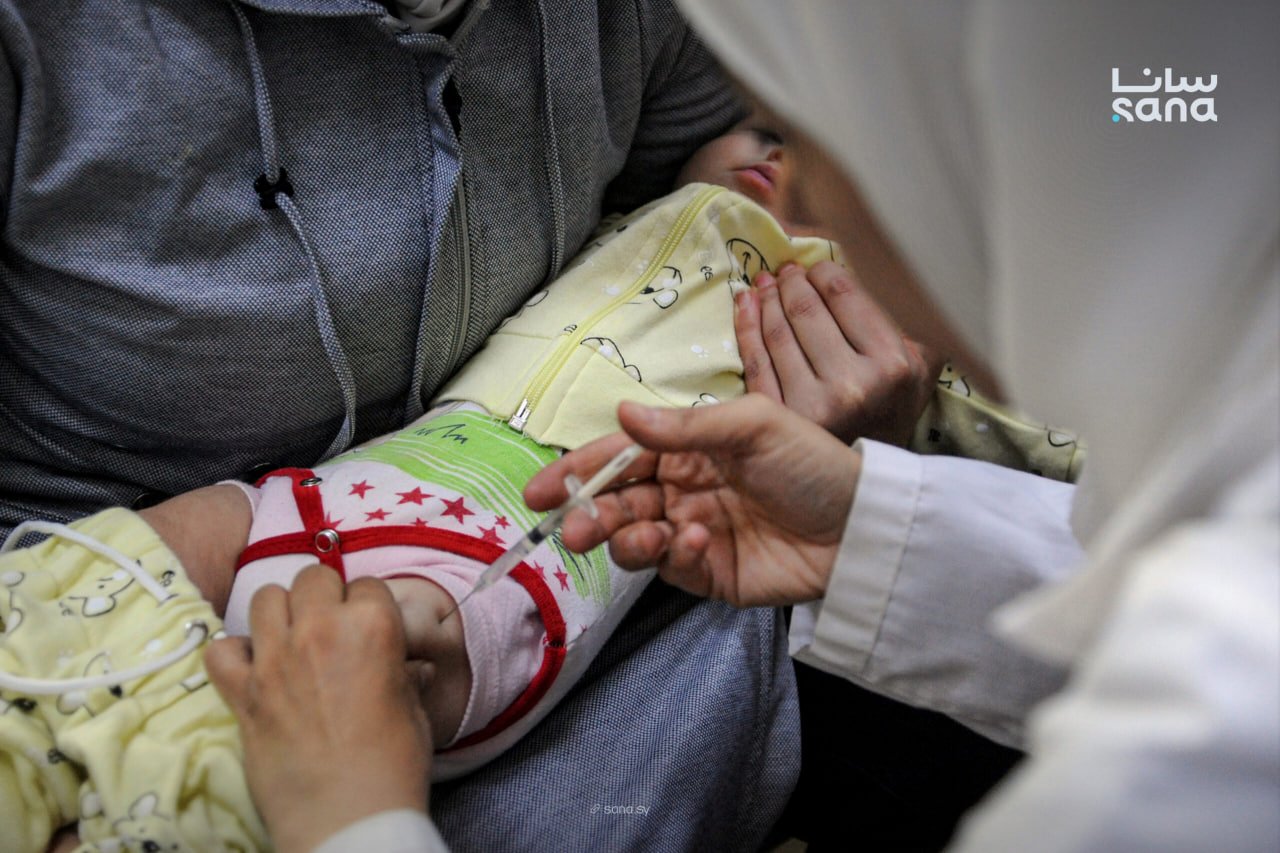
Damascus, May 1 (SANA) Vaccination coverage in Syria rose above 81% in 2025, as the Ministry of Health expanded nationwide immunization campaigns aimed at reaching children in both urban and remote areas, according to health officials.
Officials said around 3.2 million children under the age of five were targeted by the national immunization program in 2025, alongside approximately 699,000 children under one year of age, as part of routine and outreach vaccination efforts.
Dr. Turki Daher, director of the National Expanded Immunization Program at the Ministry of Health, said the program has delivered major public health gains since its launch in 1978, including the eradication of polio and neonatal tetanus and a reduction in infectious diseases such as measles. He added that these efforts have contributed to lower child morbidity and mortality rates across the country.
Daher said coverage had declined in previous years but has since improved following restoration efforts by the Ministry’s Primary Health Care Directorate. He noted that nationwide campaigns have focused on reaching remote communities, as well as tracking children who missed routine vaccinations up to the age of 12, raising coverage to 80–85% in 2025.
He added that mobile vaccination teams, health centers, and outreach sites continue to support access to vaccines, noting that campaigns in eastern provinces reached more than 750,000 children under five, with coverage exceeding 87% of the target group.
Daher said ongoing challenges include difficulties in accurately estimating population figures due to displacement and returns, shortages of trained staff, limited operational capacity, and unstable electricity supplies affecting cold-chain systems. He said the Ministry has responded by expanding training programs and increasing the use of solar energy in storage facilities and health centers.
Future plans include standardizing vaccination schedules, introducing electronic registration and tracking systems, and strengthening coordination with other health programs to improve access in remote areas.
Dr. Abdullah Okla, head of clinics at Red Crescent Hospital, stressed the importance of adhering to vaccination schedules, saying immunization remains the cornerstone of preventing infectious diseases. He said vaccines protect both individuals and contribute to “community immunity,” reducing the spread of disease.
The national immunization program expanded its reach in 2025 through 274 mobile teams, which conducted more than 40,000 vaccination sessions. In addition, 1,094 health centers carried out over 49,000 sessions across 107 health districts, alongside 78 outreach sites providing more than 1,500 sessions.
IZ/A