This guide will serve as a reference tool for health professionals in dental units.
Risks: The dental office represents a favorable place for the transmission of diseases. A national guide intended to improve dentists’ knowledge of integrated aseptic protocols, oral care safety and risks related to blood exposure accidents will soon be released.
The Ministry of Health and Social Protection will develop a national guide on integrated protocols for asepsis, oral care safety and risk management related to blood exposure accidents. This guide will serve as a reference tool for health professionals in dental units in terms of standardization of practices (asepsis, sterilization, risk management / Blood exposure accidents (AES), optimization of the architectural standards of the dental unit, knowledge of the different circuits of the patient and care team) elimination of contamination and cross infections.
It will improve the knowledge of health professionals in dental units on integrated aseptic protocols, oral care safety, risk management / AES as well as the patient circuit in a fluid dental ecosystem. In this context, the consultant will have to carry out an inventory of dental practices; identify priority risks; establish integrated practical and operational protocols for asepsis, oral care safety, and AES risk management. It should also clarify the typical architectural standards of a dental unit.
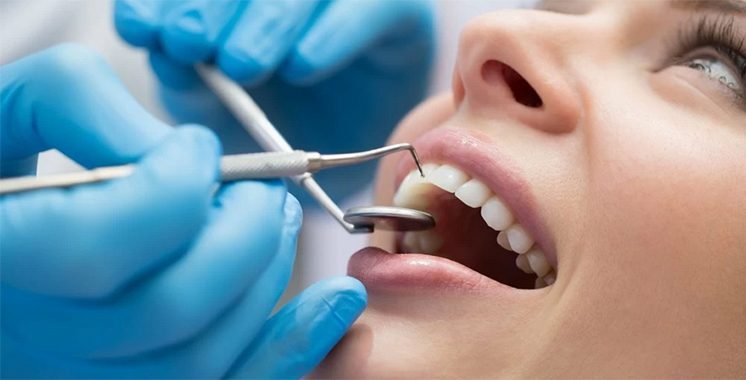
Note that the dental office is an environment with a high risk of infection due to handling and constant exposure to blood, saliva and aerosols loaded with debris and biological fluids, often generated by rotating instruments and by various oral care procedures. The dental office represents a favorable place for the transmission of diseases. Which inoculation can be direct (lesion) or indirect (surfaces and instruments not yet or insufficiently sterilized).
Therefore, mastery of asepsis protocols and rigorous management of risks and accidents of exposure to blood are legal and ethical obligations for cross-protection of the patient and the healthcare team from the main threats of the dental ecosystem including HIV, viral hepatitis (HV) B and C and respiratory infections. According to the national seroprevalence survey for viral hepatitis (ENSP HV) conducted by the Ministry of Health in 2019, Morocco is located among the countries with medium endemicity for HVB and HCV with respective prevalences of 0.7% and 0.5% and which reach 1% among adults aged over 40 years. The same survey also highlights a link, as a risk factor, between a history of medical and/or non-medical dental care and a high prevalence of viral hepatitis.