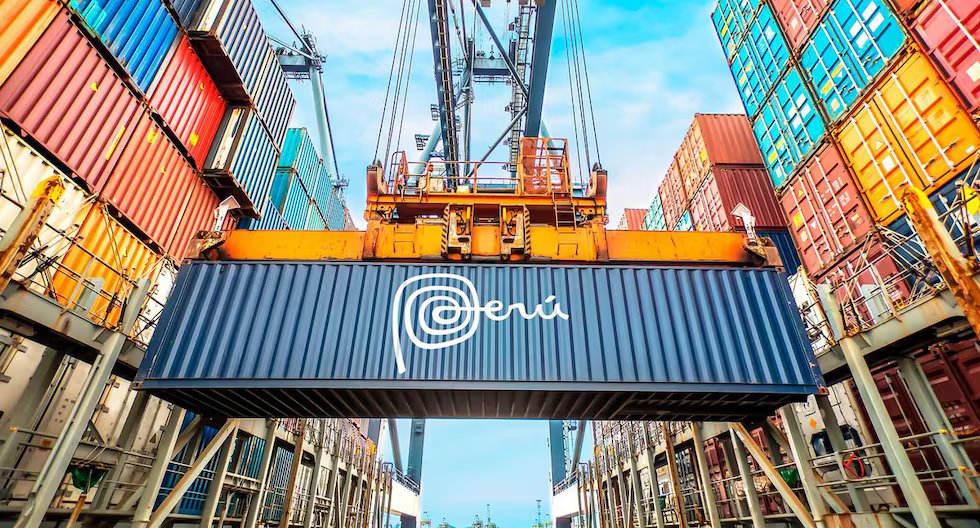
One of the most important economic sectors is the exporter, which in 2025 registered US$90,082 million and a growth of 21.2% compared to 2024, according to the Ministry of Foreign Trade and Tourism (Mincetur). Within this category, agro-exports reached US$15,013 million, added the Ministry of Agrarian Development and Irrigation (Midagri).
According to Edgar Vásquez, director of the Global Economy and Business Research Center of the Association of Exporters (Cien-Adex), Peruvian exports represent 25% of the gross domestic product (GDP). Of that total, 23 percentage points represent shipments to destinations that maintain FTA with Peru. 90% of shipments go to places with which we have commercial agreements and the percentage rises to 92% when it comes to non-traditional shipments, he added.
LOOK | Day1 Summit 2026: senators and deputies will debate the economic agenda of the new Congress
A large part of our shipments abroad are destined for places with which we have Free Trade Agreements (FTA) or other trade agreements.
Peru’s work to have 23 trade agreements has led us to be the eighth country with the most agreements, according to the World Trade Organization.
And Peru was ranked 12th among the countries with the largest export of fruits and vegetables worldwide, added Gabriel Amaro, president of the Association of Agricultural Producers Guilds of Peru (Agap). Likewise, it is a leader in the world export of blueberries and grapes.

The export sector, according to Adex, represents 25% of GDP. The country has 23 trade agreements.
For this year, Amaro estimated that agricultural exports would exceed US$16 billion, although the segment faces risks such as the election of the future government for the next five years, the possibility of an El Niño phenomenon and the rise in oil and fertilizer prices due to the conflict in the Middle East.
In turn, total exports in Peru would grow between 4.5% and 5%, Vásquez projected, considering that this is a challenging year due to the slowdown in the world economy and the war conflicts that have increased the cost of fuels and raw materials. Furthermore, this situation has affected foreign trade logistics.
In the electoral framework, among the proposals of Together for Peru, whose presidential candidate is Roberto Sánchez – former head of Mincetur – is the renegotiation of FTAs and other trade agreements “that affect national sovereignty or threaten the interests and quality of life of the majority of the country.”
For Vásquez, this may cause trading partners to adopt similar measures that harm Peru. He added that it must be observed how the impact that this proposal will have on an economic and labor level will be corrected.
“When you want to export, you have to be willing to import,” he noted.
In turn, Amaro considered that a renegotiation of the treaties could affect companies that send their products to destinations with trade agreements under a zero tariff, he noted.
“If you cancel the FTA, the first thing the countries are going to do is impose tariffs,” he indicated.
LOOK | Cornerstone expects to grow 12% in Peru and expands operations in Latin America
On the other hand, within the government plan of Together for Peru it is stated that agricultural policy should prioritize the production of healthy foods to supply the population.
In that sense, Amaro recalled that most of what is planted in the country is destined for domestic consumption. Furthermore, he recalled, losses are generated when there is overproduction. In this regard, he considered that public policies are required to support and provide sustainability to agricultural producers. This should not mean stopping agricultural exports.
“From their party they have said that they are not going to promote all agricultural exports, referring to blueberries and asparagus,” he said.
In that sense, as Vásquez maintained, the demand of the local market could not meet the entire quantity produced and exported to the world. This could be reflected in a loss of jobs and increase poverty levels, both experts said.
For Amaro, a point of concern is the so-called ‘second agrarian reform’ promoted by Sánchez, recalling that in the first reform – during the Juan Velasco regime – hectares were expropriated and distributed to farmers. This, although Sánchez has indicated in the digital program ‘Political Brutality’ that no expropriations will be carried out, but rather an industrialization of agriculture in which modernization is contemplated.
On the other hand, in the government plan of Fuerza Popular, whose candidate is Keiko Fujimori, the promotion of the commercial defense of Peruvian agriculture with anti-dumping measures and seasonal licenses is proposed.
According to Vásquez, this proposal needs to be known in more detail, but he recalled that these measures are applied for unfair competition in the market and under technical decisions.
He added that applying this under political direction could lead to non-compliance with international commitments. Amaro agreed with this, explaining that Indecopi is the entity that initiates technical studies to determine whether or not dumping exists in a certain product within the local market.
Another proposal from Fuerza Popular is the implementation of the Foreign Trade Single Window 2.0 in which artificial intelligence is applied and in which Sunat, customs, the Ministry of Transportation and Communications and Promperú operate.