SAN MARINO – The British documentary The Experiment, broadcast by Channel 4 on 21 October, brings the right of people with disabilities to independent living back to the center of the debate. The Attiva-Mente association is drawing attention to the topic, linking the reflections proposed by the program to the situation in San Marino and the delay in the implementation of policies that guarantee autonomy and freedom of choice.
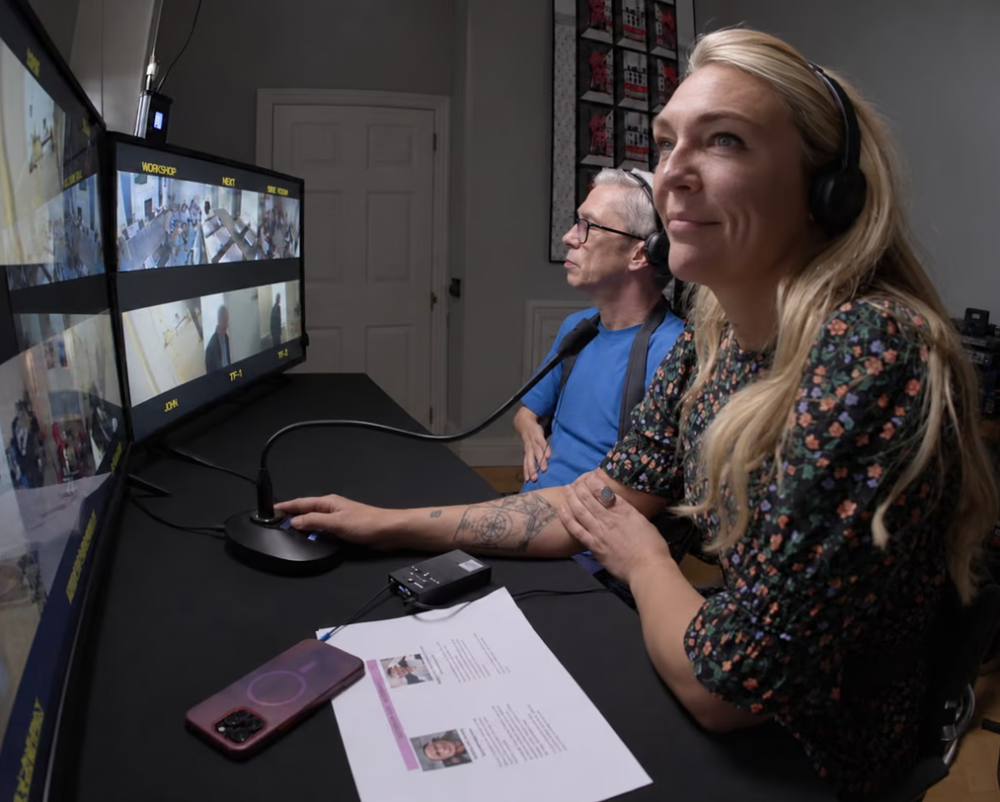
The documentary, hosted by Sophie Morgan and Mat Fraser, both with disabilities, proposes a social experiment to test how much it is possible to convince ordinary people to accept segregation when it is presented as a safe, efficient and economically advantageous solution.
At the center of the experiment is Segrilife, a fictitious residential facility visited by citizens unaware that they are participating in a television program. The environments reproduce conditions attributable to institutionalizing models: repetitive jobs, supervised collective dormitories and information materials focused on the costs of care. According to the reconstruction proposed by the documentary, some visitors end up considering those conditions acceptable, showing how much the language of protection and efficiency can influence the perception of rights.
The program also recalls Aktion T4, the Nazi program of extermination of people with disabilities, inviting us to reflect on the ideas that fueled the devaluation of human life. The historical reference, underlines the reflection of Attiva-Mente, does not imply an equivalence between that program and contemporary social policies, but draws attention to the risks linked to the belief that some people have less value because they need greater support.
The association highlights how paternalism can limit self-determination even when it arises from apparently benevolent intentions. Deciding for a person in the name of their well-being, without involving them in the choices that concern them, risks transforming assistance into a limitation of freedom.
The issue also directly concerns San Marino. Attiva-Mente recalls that in September 2022 a first Arengo request on independent living had led to the establishment of a working group, which according to the association would have met only once, with no subsequent known concrete developments. A second request, dedicated to the adoption of a law on personal assistance, was rejected by the Great and General Council last February. Also in this case, the association reports, there has been no news of a call for the announced institutional discussion.
Attiva-Mente also recalls the commitments previously made by a political force now part of the majority, which had included independent living in its program and presented a bill on the topic. Hence the request to move from commitments to the concrete implementation of measures that guarantee effectively exercisable rights.
The regulatory reference is article 19 of the UN Convention on the Rights of Persons with Disabilities, which recognizes the right to choose where and with whom to live and to access the supports necessary to participate in community life, without isolation or segregation.
According to the association’s reflection, public policies should focus on people’s will and the possibility of choosing their own life path, rather than exclusively privileging the costs and organizational needs of services. Even in San Marino, observes Attiva-Mente, the question remains open as to how much the available structures really respond to the needs of individual autonomy.
The final message is that discrimination does not necessarily manifest itself through explicit hostility or impositions. It can also take reassuring forms, supported by efficient procedures and declared intentions of protection. For this reason, the reflection concludes, the right to independent life requires that people with disabilities be protagonists in decisions that concern their existence.