An old men’s shirt doesn’t have to keep being a men’s shirt.
With scissors, a little imagination and a sewing machine, it can be given new life.
Maybe as a dress.
This is how Mie Kleinschmidt experimented already as a young person in Aalborg. On a creative redesign team, she learned to choose fabrics, sew and transform old clothes into something new. And the result didn’t just hang on a hanger. She and the other young people themselves wore the clothes they had created.
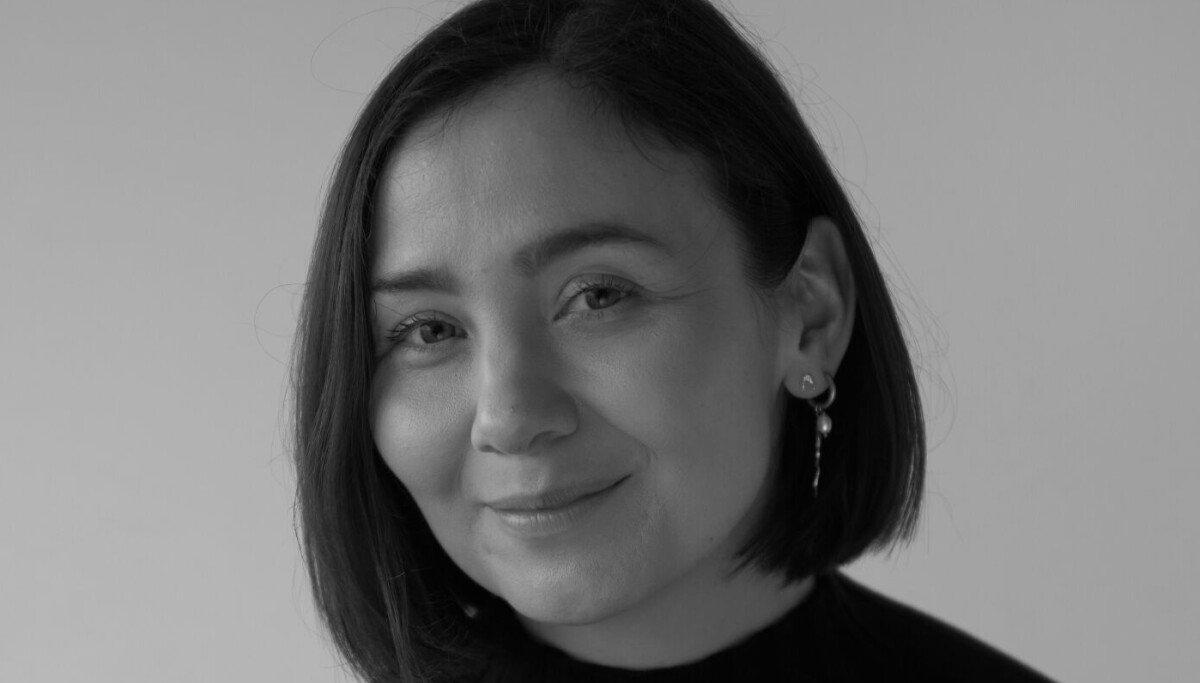
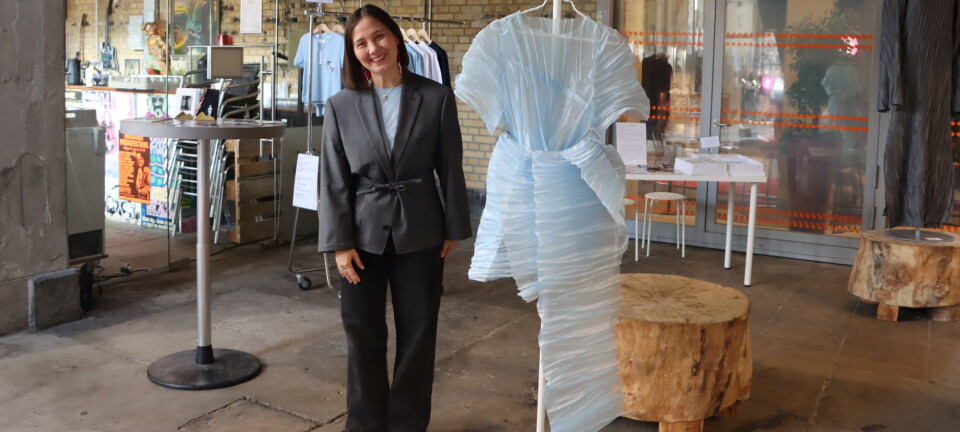
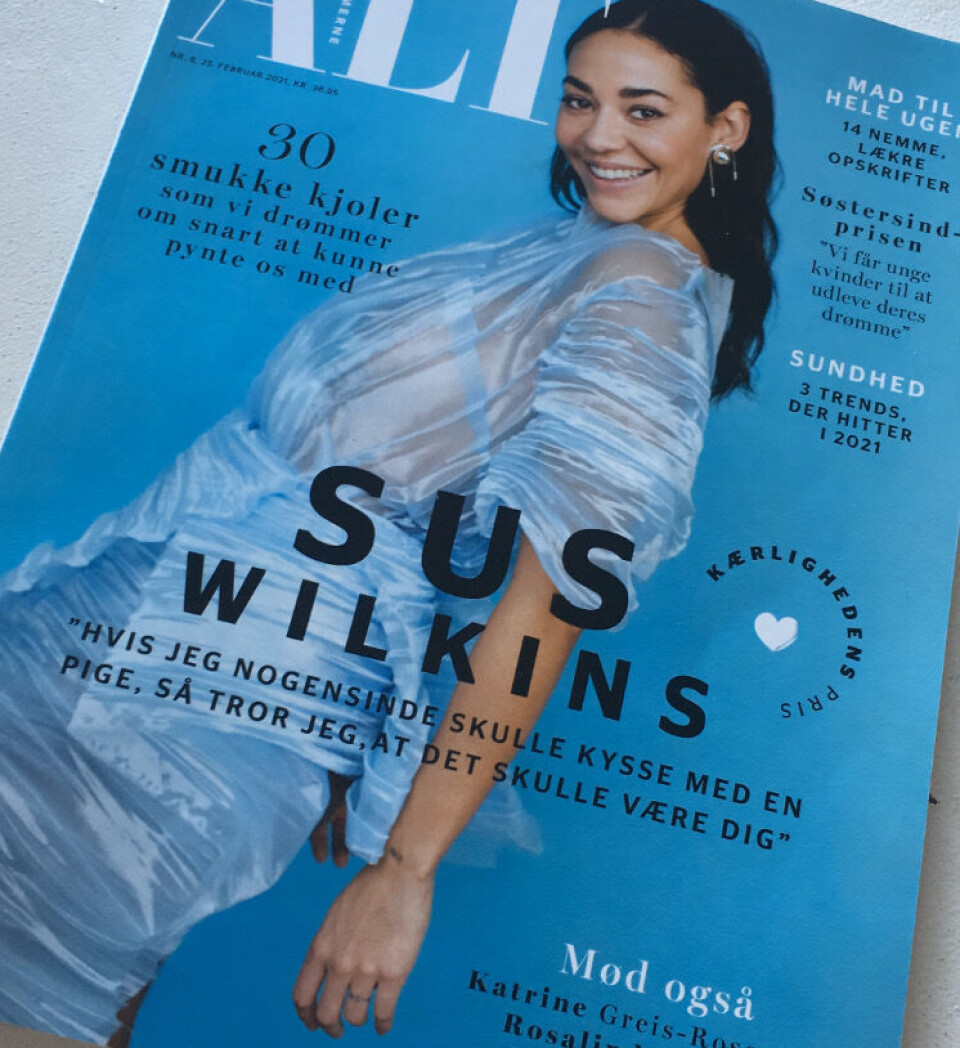
Today, Mie Kleinschmidt is a trained clothing designer from the Royal Academy in Copenhagen. She has worked in the fashion industry, including at Bitte Kai Rand, and seen her designs reach a larger audience. One of her dresses has graced the cover of Everything for the Ladies, and the musician Oh Land has worn her clothes.
But the interest began long before the design education.
As a child, she immersed herself in drawings and paintings. Inspired by fairy tales and fantasy characters, she invented her own stories, which she drew in small comic books. Later, flowers, plants and other motifs found their way onto the paper.
– I have always wanted to create something myself. As a child I drew and painted a lot, and later I started experimenting with fabric and clothes. It was exciting to discover that you could make something completely new from something that already existed.
The creativity would later lead her into the world of fashion, but also arouse a greater curiosity about her Greenlandic family history.
The fabric won over the jewellery
Actually, Mie had imagined becoming a goldsmith. Both her father and aunt had worked in the trade, and she was fascinated by the craft and the possibility of creating jewellery. But gradually the textiles attracted more.
In the 10th grade at post-secondary school, she chose design as her major, and the interest continued through her high school years in Aalborg. After matriculation, she started at the Scandinavian School of Design in Randers to prepare for the entrance exams.
The road ahead was not straightforward. She first applied to the Design School in Kolding without being accepted, but the following year she managed to get into the Royal Academy in Copenhagen.
Here she developed her interest in clothing and worked purposefully with materials, cuts and construction. She also learned that design is not only about creating something beautiful, but about the stories and values that the clothes can hold. It later became important for her work with Greenlandic motifs and materials.
Two cultures in the same family
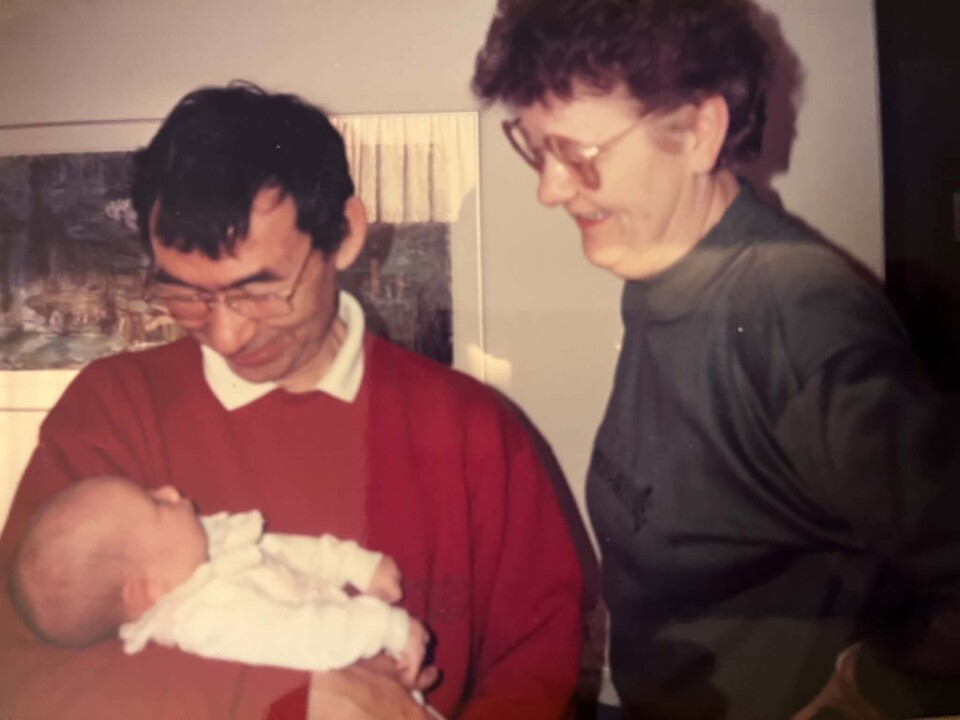
Mie Kleinschmidt was born and raised in Aalborg, but has both Danish and Greenlandic ancestry. Her grandmother came from Ilulissat, while her grandfather had roots in Nuuk.
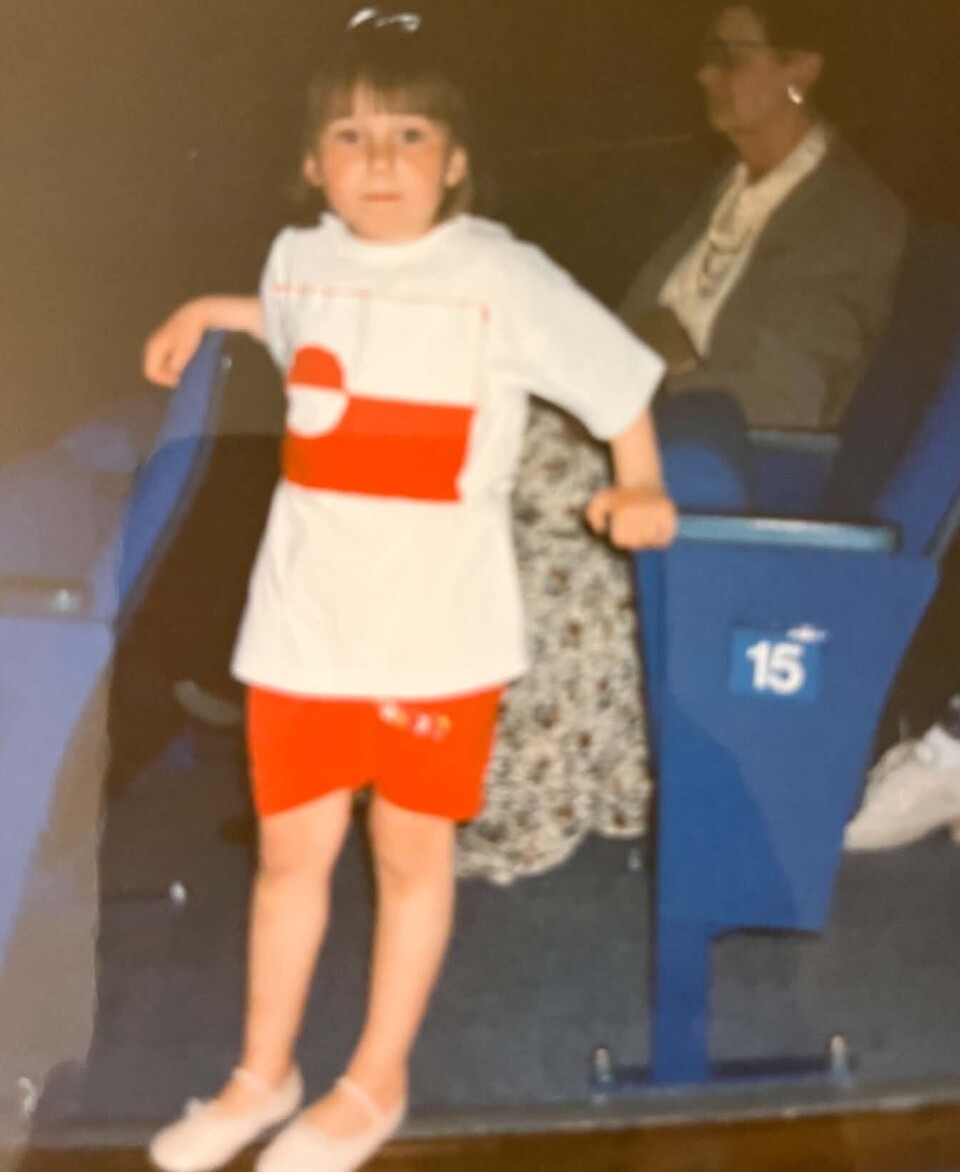
The Greenlandic has always been part of the family history, but not necessarily something that was easy to deal with.
She has experienced how family members in previous generations tried to put their Greenlandic background and language behind them. For some, it might feel easier to adapt to Danish society than to insist on belonging to two cultures. Her maternal grandfather, who worked as a teacher in Denmark, also experienced racism.
The experiences have given Mie reason to think about what it means to have roots in two countries.
– I feel attached to both Denmark and Greenland, but in different ways. Sometimes it can be hard to figure out where you belong when you carry both.
At the same time, she has become more aware of how the experiences of previous generations can shape one’s own identity.
– When some in my family have distanced themselves from the Greenlandic, it has made me think about what is lost when part of one’s background is not given space. It has made me want to learn more about my family history and understand the experiences that have shaped my family. I also want to find out what my Greenlandic roots mean to me and how I can feel more connected to that part of my background.
She knows that her relationship with Greenland is different from that of people who were born and raised in the country. She does not speak Greenlandic fluently, and her attachment to the country is largely shaped by her family’s history.
Therefore, she is also concerned with how she can be inspired by Greenlandic culture without claiming knowledge or experience that she does not have.
A tupilak with care
During the Master’s programme, her supervisor encouraged her to include her Greenlandic roots in the design. It made her delve into her family history and consider how she could use traditional Greenlandic motifs.
When she wanted to embroider a tupilak, she chose to collaborate with the artist Martin Brandt Hansen, with whom she had previously studied. He was responsible for the drawing, which she then interpreted in embroidery and gave her own textile expression.
The collaboration made her more comfortable working with the subject. At the same time, she experienced that his drawing gave the finished design a stronger expression.
Because even though she has Greenlandic roots, she is careful to reinterpret traditional cultural objects without knowing their history and meaning.
She points to the Danish designer Peter Jensen’s controversial use of Greenlandic kamik in 2009 as an example of how a new interpretation can be experienced as disrespectful.
But where is the line between inspiration and a change that goes too far? Mie has no clear answer to that.
– I think it is important to have respect for the Greenlandic traditions. I want to be inspired by the culture, but I’m also aware that I don’t know everything. That’s why I try to familiarize myself with things and be careful how I use them.
But respect does not mean that the traditions must stand still. Mie sees opportunities in giving Greenlandic symbols such as tupilaks and the ulo, the traditional women’s knife, a modern expression. In this way, cultural heritage can be both preserved and renewed.
At the same time, her vision extends beyond Greenland and Denmark.
– We must also be inspired by what is happening in the wider world. For me, it is important that the Greenlandic, the Danish and the international are valued equally.
For Mie, there is no contradiction between protecting the Greenlandic cultural heritage and drawing inspiration from outside. The crucial thing is to know and respect the traditions, while at the same time making room for new interpretations.
Still discovering
Mie Kleinschmidt has experienced several of the things that many young designers dream of. Her work has been featured in fashion magazines, worn by well-known musicians and presented at, among others, the Arctic Roots Festival in Aalborg. But she is still figuring out what direction her own design should take.
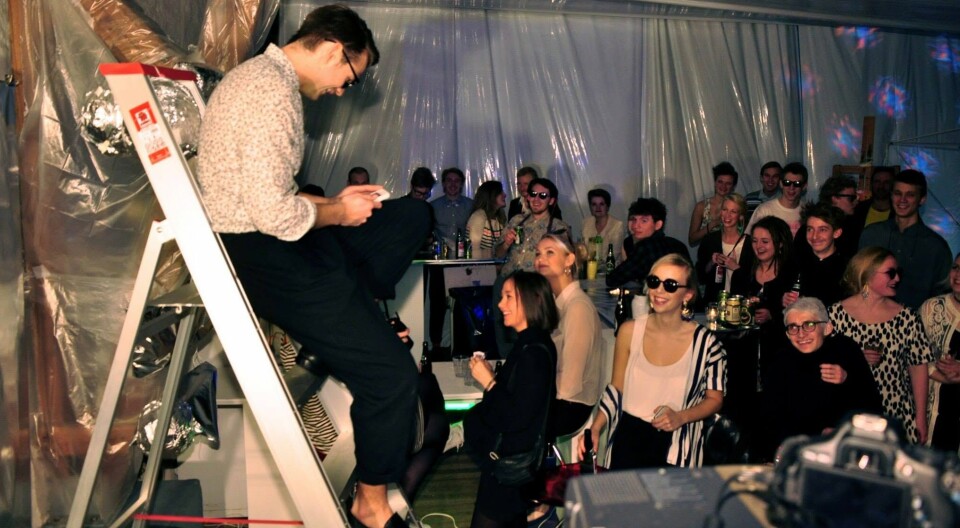
The work on Greenlandic culture is not finished either. She wants to immerse herself more in the traditions, materials and family history that she feels connected to, but still has a lot to learn about.
Perhaps there is a thread going back to childhood in Aalborg.
Back then, she drew her own adventures and turned old shirts into new dresses. Today, the materials and questions have become more complex, but the curiosity is the same.
She is still trying to create something new from what she has brought with her. And this time it is also the family’s history that she is sewing on.