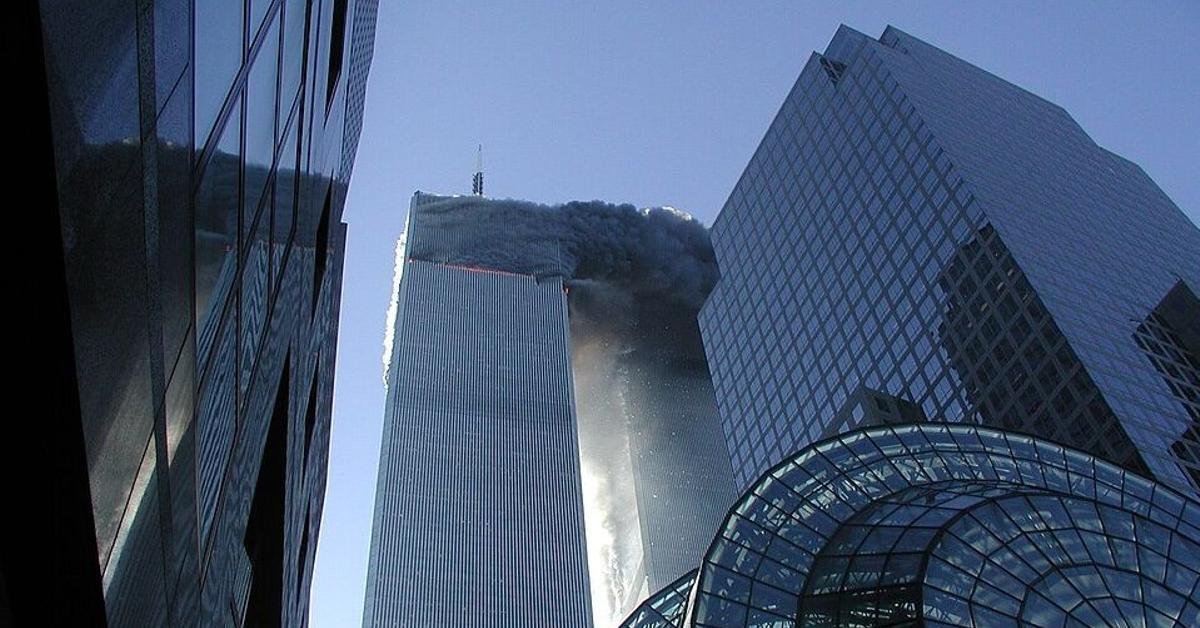

Madrid/This September 11, 25 years after the attacks that left almost 3,000 dead in the United States, the official Cuban press once again practiced one of its specialties, the “and me more.” The choreography, repeated ad nauseam, starts with condolences, then the “but” comes and, after a few paragraphs, Cuba is already fighting for first place among the greatest victims of terrorism since the times of Cain and Abel.
Prensa Latina remembered the Twin Towers, but immediately jumped to Salvador Allende, the Cuban diplomat Félix García Rodríguez, murdered in New York on September 11, 1980, and the blame of Washington. Granma He spoke of “the long shadow of terrorism against Cuba,” while Miguel Díaz-Canel took advantage of the date to describe US sanctions as “state terrorism.”
Bruno Rodríguez Parrilla provided the diplomatic version of the same exercise. The chancellor recalled the “tragic and regrettable terrorist acts” of 2001 and, in the following paragraph, turned his gaze to the Island. Cuba, he wrote, has been a “victim of terrorism for more than six decades” and maintains a “firm and invariable” rejection of all its forms. Months earlier he had gone even further by proclaiming that the country has “a clean record against terrorism, international organized crime and violence.” The phrase deserves framing.
In 1958, when the Revolution was not yet in power, there already existed within the July 26 Movement a structure called, without much concern for euphemisms, Action and Sabotage.
six years ago, Granma He had already written another headline without his cursor shaking. “Cuba, the country that has received the most terrorist attacks for the longest time.” They did not even use the typical “modesty aside” to present themselves as “one of the most” punished. No. They are the absolute champions, the gold medal of historical suffering. One expects the rest of the classification then, Afghanistan second, Iraq with bronze, perhaps Colombia fighting for an Olympic diploma. But the comparative study never appears. Not a single international statistic nor a table that allows us to verify the superlative. The final had already been arranged by the scriptwriters of the Central Committee.
The figures that Havana uses come from its own accounting and group under terrorism very different phenomena, from attacks and sabotage to armed incursions and episodes of military confrontation. Cuba has suffered real terrorism and its victims do not need exaggerations to exist. The difficult thing to maintain is that no other country has suffered from it more or for longer, especially when international bases have for decades placed Afghanistan, Iraq, Pakistan, Nigeria or Syria at magnitudes that make the competition organized by Granma.
But let’s accept for a moment Havana’s generous definition and apply it backwards as well. In 1958, when the Revolution was not yet in power, there already existed within the July 26 Movement a structure called, without much concern for euphemisms, Action and Sabotage. There were bombs, attacks and kidnappings. On June 26 of that year, Raúl Castro’s troops detained ten Americans and two Canadians from a mining company in Oriente. The next day they kidnapped another 24 US military personnel who were on leave outside the Guantanamo Naval Base. The operation ended up involving dozens of foreigners.
On July 13, 1994, state vessels pursued and rammed the tugboat 13 de Marzo in Havana Bay, in which dozens of people were trying to flee Cuba. 41 died, including ten children
There was also the so-called Night of the Hundred Bombs, in November 1957, when the clandestine apparatus of the July 26 Movement detonated numerous devices in Havana. Decades later, similar methods used against the new power would receive a much less romantic name.
The file then has a chapter written directly from the State. On July 13, 1994, state vessels pursued and rammed the tugboat in Havana Bay. March 13in which dozens of people tried to flee Cuba. 41 died, including ten children. The Inter-American Commission on Human Rights attributed responsibility to the Cuban State.
Less than two years later, on February 24, 1996, MiG fighters of the Cuban Air Force shot down two civilian planes belonging to Hermanos al Rescate. Carlos Costa, Armando Alejandre, Mario de la Peña and Pablo Morales died. The International Civil Aviation Organization concluded that the aircraft were shot down outside Cuban airspace. It is difficult to fit both episodes into the impeccable anti-terrorist biography that Bruno Rodríguez now claims.
Outside the Island, the record does not remain immaculate either. In May 1967, four Cuban soldiers landed near Machurucuto, in Venezuela, along with guerrillas who intended to reinforce the insurgency against a democratically elected government. Declassified documents from the United States described the episode as new evidence of Havana’s sponsorship of subversion. Fidel Castro, far from hiding his sympathy for those operations, publicly claimed the “revolutionary moral duty” to help the Latin American guerrillas.
Joanne Chesimard, known as Assata Shakur, lived in Cuba for decades. She was convicted of the murder of New Jersey police officer Werner Foerster and became the first woman included by the FBI on its list of most wanted terrorists.
Now let’s change the flags for a moment. Let’s imagine four US soldiers clandestinely landing on a Cuban beach with weapons and guerrillas ready to overthrow Fidel Castro. You don’t even need to write the headline Granma. We all know what the main word would have been.
Colombia offers another chapter. The M-19, which in 1980 took over the Embassy of the Dominican Republic in Bogotá and held numerous diplomats hostage for 61 days, had a documented relationship with Cuba. US intelligence reports estimated that nearly 200 members of the organization received training on the island before returning to Colombia. There are also documents that link Cuban officials with arms transfer operations destined for the group.
The dictionary was working wonders again. When the enemies of Havana kidnapped people, they were terrorists. When friendly guerrillas did it, they could be revolutionary combatants.
And then there is the shelter. For decades, Joanne Chesimard, known as Assata Shakur, lived in Cuba, convicted of the murder of New Jersey police officer Werner Foerster and becoming the first woman included by the FBI on its list of most wanted terrorists. Fidel Castro granted him asylum and he remained there until his death in Havana, in September 2025.
“If we dedicate ourselves to terrorism, we would certainly be efficient”
William Morales, an explosives manufacturer for the Puerto Rican FALN, also found refuge on the island. And other fugitives claimed in the United States for murders, kidnappings or political violence were sheltered for years by a Government that denounces any US protection of violent enemies of Castroism as complicity.
None of this makes the bombs against Cuban hotels, the blowing up of Cubana flight 455 – still not completely clarified – or the murder of Félix García imaginary. They were acts of terrorism and their victims deserve to be remembered without interested nuances. What is more difficult is to keep that “clean record” intact.
Perhaps that is why, among all the quotes that the Revolution has produced on the subject, none is as useful as one from Fidel Castro himself. He pronounced it on June 6, 1976, during an event for the anniversary of the Ministry of the Interior. “If we dedicated ourselves to terrorism, we would certainly be efficient.” Later he assured, with a mischievous smile, that the Revolution had never practiced it. And he added, “It doesn’t mean that we give up on it, we warn you!”