Havana/The province of Pinar del Río was disconnected from the national electrical system (SEN) this Tuesday due to the tripping of a high voltage line, according to the Electrical Union of Cuba (UNE) in its official profile. The incident occurred on an already difficult day for the system, with an expected impact of close to 2,000 megawatts (MW) during peak hours.
The brief state company announcementpublished at 1:21 p.m., indicated that “a shot was recorded on the 220 kV Pinar-Mariel line” that caused the disconnection, without adding more details.
Almost two hours beforeAt 11:44, the UNE had reported that the Antonio Guiteras thermoelectric plant in Matanzas had left the system “due to low vacuum in the condenser.” The plant is the largest generating unit in the country, but it has suffered years of deterioration, obsolescence and lack of maintenance, which is why it is difficult to remain stable in the system. According to this newspaper’s count, it has been disconnected more than 24 times this year.
The part of the UNE published before From these incidents I already anticipated a critical day. With four thermoelectric units in breakdown – 5 in Mariel, 1 in Santa Cruz, 2 in Felton and 3 in Renté – and another five in maintenance – 8 in Mariel, 3 in Santa Cruz, 5 and 6 in Nuevitas and 5 in Renté – the state company predicted an availability of 940 MW compared to a maximum demand of 2,900 MW. This meant an impact of 1,990 MW during peak hours. The figures did not include the departure of Guiteras or the new partial disconnection of the SEN.
Last Sunday, the provinces of Santiago de Cuba and Guantánamo they were disconnected of the SEN for the firing of the Cueto-Renté line. Five hours later UNE announced that it had the impact of these provinces has been restored.
The country has suffered more than six partial disconnections from the national electrical system so far this year.
The country has suffered more than six partial disconnections from the national electrical system so far this year. on saturday October 10the tripping of the 220 kV Nuevitas-Las Tunas line isolated five eastern provinces.
On August 27, another disturbance in the transmission lines once again separated the eastern provinces and removed the Felton, Nuevitas and Antonio Maceo thermoelectric plants, known as Renté, from the system. He March 4the unforeseen departure of the Antonio Guiteras thermoelectric plant, in Matanzas, caused another partial disconnection that affected more than half of the national territory, from Camagüey to Pinar del Río. He February 4a failure in the Holguín high-voltage network left four provinces in the eastern region isolated and caused the Felton plant to shut down.
Added to these partial disconnections are the eight total collapses that the national system has suffered in 2026: the most recent occurred on September 18, when the tripping of two transmission lines in the Matanzas area ended up completely disconnecting the national network.
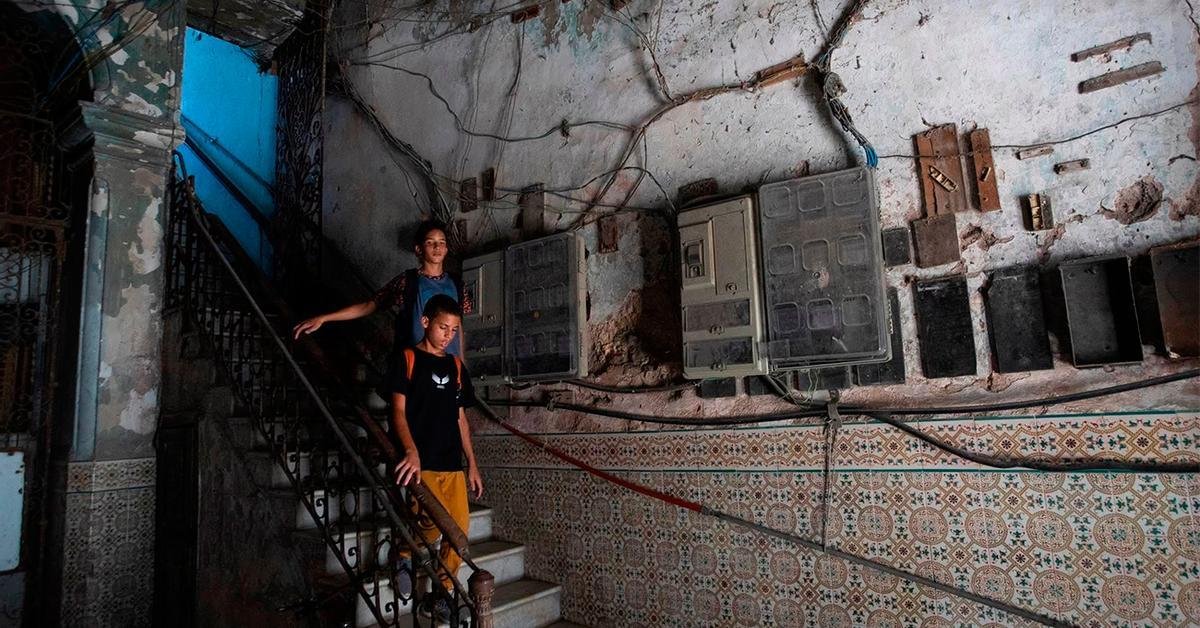
Successive drops in SEN occur in a system affected for years due to the aging of thermoelectric plants, the lack of fuel and the difficulties in carrying out maintenance and repairs.
Cuban authorities continue to attribute the crisis to the US oil blockade and the sanctions imposed by Washington against the main economic pillars of the regime. The pressure from the Trump Administration has aggravated a multifactorial energy crisis that has been dragging on for years without the Government having found fundamental solutions.
It is the citizens who continue to suffer daily the consequences of this crisis. The Government insists on calling on the population to “resist”, while the deterioration of living conditions deepens social unrest.