Jerusalem/Israelis vote this Tuesday in a general election presented as a kind of referendum on Prime Minister Benjamin Netanyahu, which many of the voters consulted by EFE in Jerusalem describe as the most decisive in the country’s history.
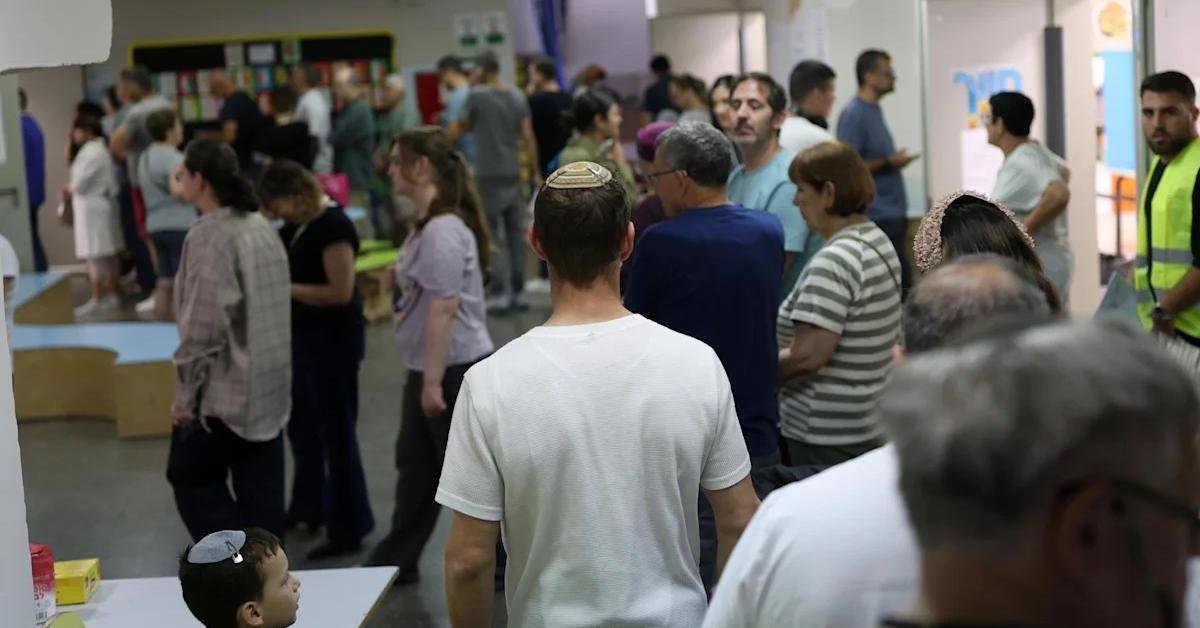
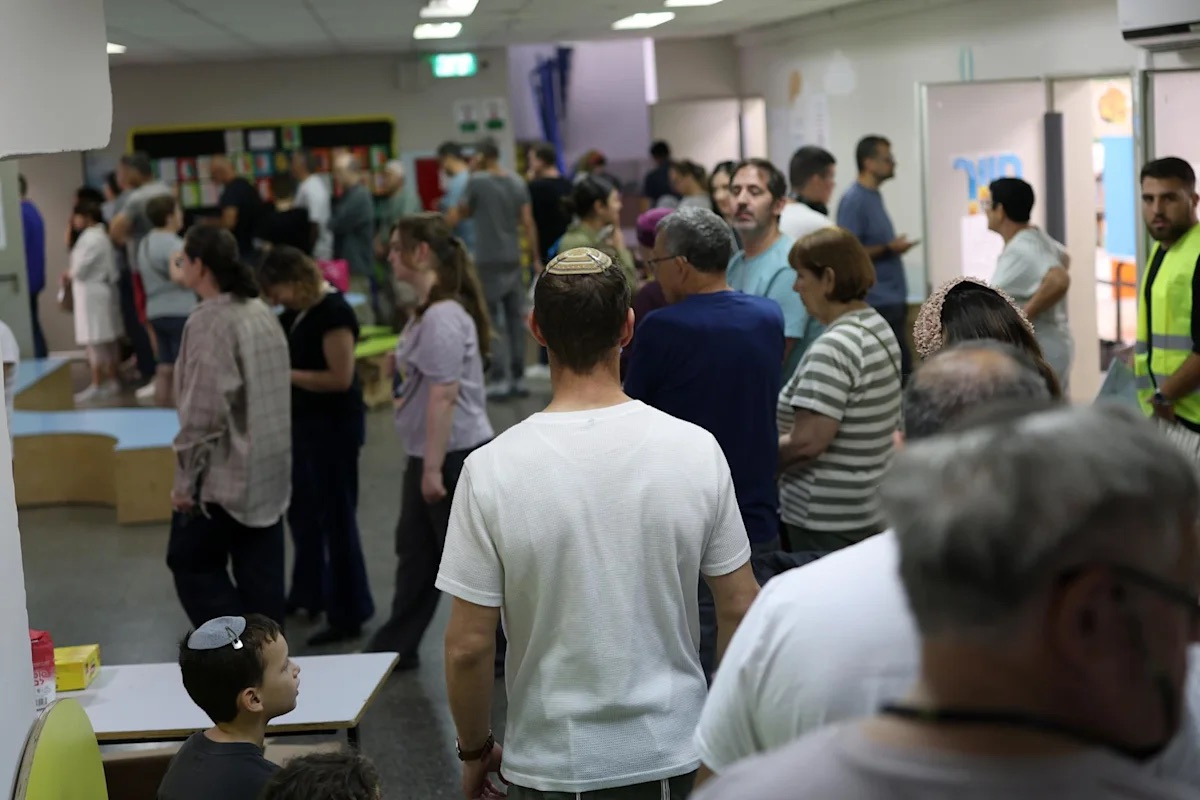
At a polling station in the Rehavia neighborhood, in the center of the city, the first to arrive at 7:00 local time were mainly older people.
Throughout the morning, young people arrived, some after going out the night before taking advantage of the fact that election day is a holiday, and also families, a reflection of the diversity of a neighborhood in which secular, religious and moderate Jews coexist.
In front of the school, the Juntos list of former Prime Minister Naftali Bénet, Yashar, former Chief of the General Staff Gadi Eisenkot, Netanyahu’s Likud and the religious ultra-nationalist Moshe Feiglin set up propaganda stands.
Israeli President Isaac Herzog also stopped by the school and gave a speech about the importance of voting
Israeli President Isaac Herzog also stopped by the school and gave a speech about the importance of voting. He will be the one who, after consulting the parties once the official results are published, will commission the candidate with the best chance of gathering a majority in the Knesset (Parliament) to form a Government.
“It is my duty as a citizen to vote, and I am very happy to have the opportunity to do so,” Tito, 82, one of the first to cast his ballot, tells EFE.
Although he admits that in each call he repeats that it is the most important, he believes that this time it is different: “These 2026 elections are crucial for the State of Israel.”
Asaf, 55, got up early because he had to work. “These are the most crucial elections we have ever had. The existence of the State of Israel is at stake. I think it is our last chance,” he says.
“If Israel continues to be governed by this group of fanatics, for whom democracy is not their supreme value, they will lead Israel into a black abyss,” he warns. In his opinion, the country needs to “end the wars” and “rehabilitate itself”, and if everything remains the same, “Israel will cease to exist in the not too distant future.”
Amitay, 44 years old and a resident of Jerusalem, recognizes that “it is a cliché in Israel that each election is the most crucial,” but he believes that this time it is “after what we have experienced: the massacre of October 7 and the way in which they attack us from all over the world.”
“We were always a nation that aspired to peace, and we should be that again. Of course, taking care of our security needs”
“We were always a nation that aspired to peace, and we should be that again. Of course, taking care of our security needs: many people in this area do not love us, and that is fine, but we have to defend ourselves and find a way to live in peace with them,” he maintains.
Next to the propaganda stands, Stav, wearing a T-shirt from The Democrats, Yair Golan’s center-left party, begins to loudly sing ‘Shir la shalom’ (Song for Peace), the anthem of the Israeli pacifist movement since 1969 that Prime Minister Isaac Rabin sang at a rally in Tel Aviv in 1995, minutes before being assassinated by a Jewish far-right.
“Three years of war. We need peace. We are tired of this,” he tells EFE. For him, Golan is “the only one who is not afraid” and “says clearly that we need peace, negotiations, talking to our enemies.”
This Monday, the arrivals hall at Ben Gurion Airport was an arena of political debate, while Israelis residing outside the country landed with a single objective: to vote in elections in which the law does not allow them to do so from abroad.
In front of the customs gate, a man in a kippah argues loudly with a woman into the microphone of an Israeli television station. “Also go to Tel Aviv, record, see how they don’t enlist,” he snaps. “That’s not true. You have no idea,” she retorts.
The fight revolved around the military recruitment of ultra-Orthodox Jews, one of the most open wounds in Israeli society and one of the axes of the campaign, and it escalated while the curious took out their cell phones to record it.
A few meters away, oblivious to the discussion, a choir of middle-aged women in blue T-shirts welcomed each wave of passengers that crossed the door with “Hevenu shalom alejem” (“We have brought you peace”), a popular Hebrew song of welcome, among balloons with the Israeli flag.
AID Coalition Executive Director Batell Blaish-Sultanik estimates that about 67,000 Israelis will fly to the country to vote, up from the 53,000 initially estimated.
They were volunteers for Fly&Vote, an initiative of the American organization AID Coalition, born in the heat of the 2023 protests against Prime Minister Benjamin Netanyahu’s judicial reform. According to the country’s Central Statistics Office, of the millions of Israelis called to the polls, there are 810,000 residents abroad who will only be able to vote if they travel to the country.
AID Coalition executive director Batell Blaish-Sultanik estimates that about 67,000 Israelis will fly to the country to vote, up from the 53,000 initially estimated. According to 84% of Israelis living abroad that the organization has surveyed, these are “the most decisive elections in Israel’s history.”
Fly&Vote, with dozens of volunteers around the world, has informed voters about who they can vote for and with what documentation and, when the TAP airline canceled a flight from Lisbon, it chartered a charter, Blaish-Sultanik told EFE. “It is a non-partisan initiative. We do not support any side, we support the right to vote (…) We do not ask who you vote for and we do not pay for the participants’ travel,” he insisted, before emphasizing the anonymous nature of his donors.
There is no data on who returning Israelis will vote for, but the initiative arouses suspicion on the right: Netanyahu’s Likud appealed to the Central Election Commission in September, alleging that the initiative contravened electoral law.
More than 7.3 million Israelis are called to the polls to elect the 120 deputies of the Knesset, in elections in which, according to the latest polls, neither Netanyahu’s bloc nor the opposition would reach an absolute majority of 61 seats. Schools close at 10:00 p.m. local time, when television stations will publish the first exit polls.