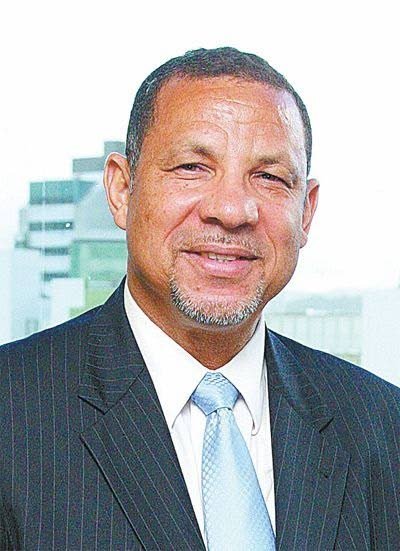
Mariano Browne
Everyone wants to win the lottery, but very few will, as the odds are stacked in favour of whoever controls the lottery. Therefore, the lottery is a viable business model only for the lottery authority and not for the millions of people who play the game. This is the main reason national governments control lottery licences: to ensure the system is fair and that a fair share of monopoly proceeds is used for national benefit.
The analogy does not fit perfectly, but there are some similarities with the energy sector. Whilst Trinidad and Tobago has a long history in the energy sector, and the Government may own the mineral rights to what lies below the surface, we depend on the multinationals to do the heavy lifting, just as with the lottery system. The heavy lifting is the seismic work, the exploration and subsequent development expenditure, production, sales and marketing.
The State shares in the process by charging fees, royalties or production-sharing rights and taxing the profits of the multinationals. The State also tries to ensure that the country benefits by having its nationals understudy foreign professionals to build national capacity and capability. This is why many countries implement work permit rules and local content policies. Getting tax revenue is good, but it is far better to be able to do it on your own, like the proverb: “Give a man a fish and you feed him for a day; teach a man to fish, and you feed him for a lifetime”.
The difficulty is that work permit and local content rules are only as good as how well they are implemented. Multinational corporations have well-developed coping mechanisms to circumvent or blunt these rules and limit the impact of national tax policies. Which T&T Finance Minister has not complained of profit shifting or transfer pricing, thus limiting the tax take? The objectives of the multinational and the State are at variance. The multinational wants to maximise shareholder value, and those shareholders are not nationals. The State wants to extract as much value as possible so that it can finance national development.
Solving these problems is both difficult and expensive, requiring contract renegotiation and specialised technical capabilities. These issues cannot be addressed in this article.
As currently structured, the energy sector (petrochemicals and natural gas production) accounts for a low of 30 per cent to a high of 40 per cent of GDP and at least 80 per cent of the foreign earnings. Given the energy sector’s contribution to GDP, other sectors cannot realistically increase output fast enough over the next 18 months to offset its weakness.
Diversifying away from this dependence is very difficult and requires a long adjustment process. It cannot be done in one or two electoral terms (5-10 years) and requires at least 25 years to achieve meaningful change. China’s development path is an example of what is required and of the timeframe. The more relevant example is Singapore. Many will argue that cultural differences prevent us from following those examples. Even if cultures differ, making a country more self-reliant and financially sustainable requires national-level change.
The key issue is that no government, however well-intentioned, has the resources to provide everyone with a good standard of living or a proverbial soft landing. Government expenditure is weighted to redistribution. Subsidies and transfers currently account for more than 50 per cent of government expenditure. This cannot continue indefinitely.
Government revenue comes from taxation, whether of income or of assets. If national income falls, then every citizen is affected. GORTT has been continuously running deficits. Deficits mean borrowed money, a rising national debt that is unsustainable, and ultimately IMF-funded programmes. Deficits mean spending more than you earn and running down your savings, either by withdrawals from the Heritage and Stabilisation Fund or by depleting your foreign reserves. There is no quick fix.
National gas production has been falling, and whilst new fields have been coming on stream, these are filling the gaps left by declining production in other fields. The 2026 Budget Speech in October 2025 projected that natural gas production would increase to 3.2 billion cubic feet per day. When last checked on July 15, the Ministry of Energy had published no 2026 natural gas production data. The closure of the Methanex and Nutrien plants and the short-term contract awarded to Proman would indicate that nothing has changed and may have got worse.
T&T, through NGC, only owns 10 per cent of Atlantic LNG (ALNG). For the avoidance of all doubt, bpTT and Shell, as majority owners, are committed to maintaining ALNG’s production. Their priority is keeping ALNG supplied with gas, with the residue to NGC to service other sectors. The only material change on the horizon is Manatee Field. This is projected to deliver a peak output of approximately 604 million standard cubic feet per day to supply the domestic market and backfill the Atlantic LNG facility when it comes on stream in 2027 (second quarter?).
As a result, the current Government, like its predecessor, has made withdrawals from the HSF, delayed VAT refunds and payments to creditors, including the backpay due to the public sector unions and is waiting for a rebound in natural gas production. That depends on multinational exploration and access to Venezuela’s gas fields.
Mariano Browne is the chief executive officer of the UWI Arthur Lok Jack Global School of Business.