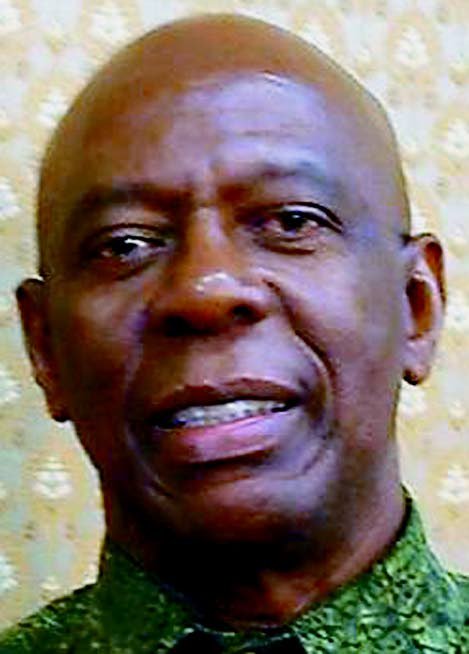
Dr Winford James
Max Albert and I continue our discussions on the Tobago autonomy question.
For almost three decades, Tobago has been required to justify its share of the national budget. Perhaps it is now time for the Republic to justify the formula itself. Since the fiscal arrangements associated with Act No 40 of 1996, Tobago’s allocation has generally been discussed within the familiar range of approximately 4.03 to 6.9 per cent of the national budget. Yet one obvious question has remained unanswered: How was that percentage determined?
More importantly, has Tobago’s contribution to the Republic been comprehensively measured and periodically reassessed over the past three decades to justify the continued application of that formula? If not, upon what empirical foundation has Tobago’s annual allocation rested?
It is rather like declaring a shareholder’s dividend before examining the company’s accounts and valuing the shareholder’s equity. No responsible board would proceed in that manner. Why should a Republic?
The deeper issue is not simply whether Tobago receives too little. It is that the Republic has never publicly demonstrated a comprehensive and regularly updated methodology for measuring what Trinidad contributes and what Tobago contributes to the national estate.
Tobago is assigned a percentage. And Trinidad is treated as the invisible remainder. If Tobago begins at 4.03 per cent, are we to simply assume Trinidad contributes the remaining 95.97 per cent?
Where is the valuation? Where is the calculation? Where is the evidence?
For almost 30 years, Tobago has debated whether 4.03 per cent is sufficient. Perhaps the more fundamental question is this: How was 100 per cent calculated? That question cannot be answered by annual production, taxation, or population alone. A twenty-first-century Republic should measure a far broader range of assets. We therefore propose what may be called a National Contribution Framework.
As an illustration, such a framework might assess the national estate using broad weighting categories such as:
• Current economic production and taxation — 30 per cent
• Maritime jurisdiction and strategic geography — 20 per cent
• Natural and marine capital — 15 per cent
• Proven and prospective resource value — 12 per cent
• Environmental services and blue-carbon assets — 8 per cent
• Human capital and diaspora — 8 per cent
• Tourism and cultural capital — 7 per cent
Together, these categories would represent 100 per cent of the national estate.
These percentages are illustrative, not sacred. Their purpose is to demonstrate that a fair valuation must be comprehensive. The precise weighting should be determined by a National Valuation Office comprising economists, statisticians, accountants, marine and environmental scientists, geographers, surveyors, constitutional scholars and public-finance experts from both islands. Its work should be transparent, published and periodically updated.
That body should apply identical standards to Trinidad and to Tobago. It should neither inflate Tobago’s contribution nor diminish Trinidad’s.
If the evidence confirms the existing formula, that formula will gain legitimacy because it has finally been tested. If the evidence shows that Tobago has been materially undervalued, then fiscal and constitutional reform can proceed upon fact rather than on political assertion.
The task would then be to determine, using objective evidence and identical methodology, what proportion of each category is attributable to Trinidad and what proportion is attributable to Tobago.
No serious observer disputes Trinidad’s immense contribution through petroleum, natural gas, petrochemicals, manufacturing, financial services, ports, and industrial infrastructure. That contribution is substantial and deserves recognition. But Tobago’s contribution must finally be measured with equal seriousness.
Not merely its visible economy, its maritime jurisdiction, its fisheries, its biodiversity, its coral reefs and blue-carbon ecosystems, its strategic location, its tourism, its human capital, its future offshore opportunities and its contribution to the Republic’s wider maritime reach.
If we were to apply such a framework, a preliminary working hypothesis might place Tobago’s contribution materially above the familiar 4.03 per cent, and a conservative assessment might suggest approximately 15 per cent. A central working hypothesis might approach 19 per cent. A higher figure would require additional evidence, particularly regarding the valuation of maritime jurisdiction, offshore resources, and future blue-economy opportunities.
These are not official findings. They are illustrations designed to demonstrate what a modern valuation exercise might reveal. As we posited in the previous column, the Republic cannot nationalise Tobago’s value but localise Tobago’s need. That would be a scandalous way of proceeding.
If Tobago’s maritime geography, natural assets, environmental services, and future opportunities form part of the national estate, then those contributions must carry meaningful weight when the fiscal relationship between the islands is determined.
The real scandal is not that Tobago has proved it contributes, say, 20 per cent, but that after almost 30 years, the Republic still cannot scientifically demonstrate that Tobago contributes only 4.03 per cent.
We in Tobago—and indeed the Republic as a whole—should not continue indefinitely to accept a fiscal formula that has never been shown to rest upon a modern, comprehensive and regularly updated valuation of both islands, particularly where that formula may constrain Tobago’s growth and development.
Before debating what Tobago should receive, let us first determine what both islands truly bring. Before preserving 4.03 per cent, let the Republic explain 100 per cent. Only then can constitutional reform rest upon evidence rather than assumption.
To be continued…
Dr Winford James is a retired UWI lecturer who has been analysing issues in education, language, development and politics in T&T and the wider Caribbean on radio and TV since the 1970s. He has also written thousands of columns for all major newspapers in the country.