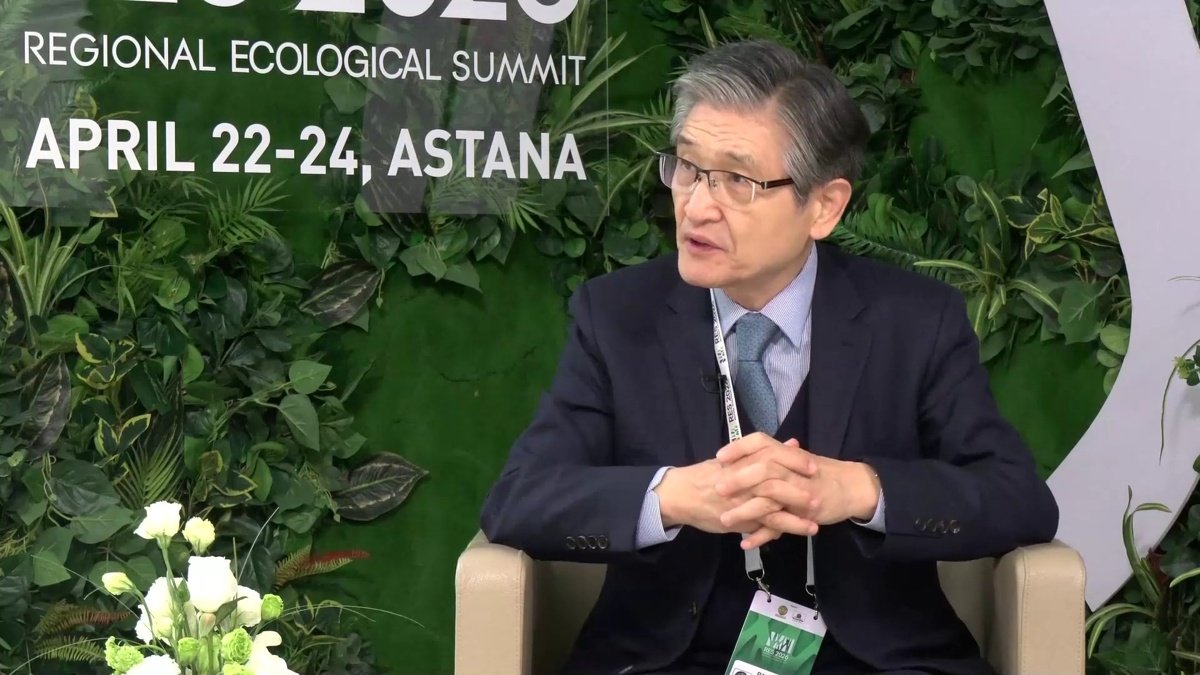
The summit in the capital of Kazakhstan became, according to participants, a historical event for the entire region. For the first time at this level, the countries of Central Asia are discussing joint actions in the field of ecology and climate.
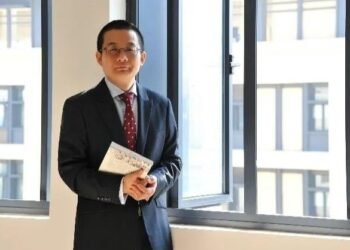
— I have very high expectations from this summit, because for the first time in the history of Central Asia, heads of state are coming together to agree on joint measures in the field of ecology and climate. This is critical as the impacts of climate change become more severe. This is truly a historic moment, and I highly appreciate the leadership of the government of Kazakhstan,” notes Rae Kwon Chung.
Special attention in the conversation was paid to the concept of “green growth”, developed by the speaker himself as part of his work at the UN Economic and Social Commission for Asia and the Pacific.
— I started promoting the idea of green economic development back in 2005. The message is that the climate crisis can be turned into an opportunity. It all depends on what policy we choose. A crisis always carries with it the potential for new solutions—economic development and job creation,” the expert notes.
According to him, the widespread belief that the environment slows down economic growth is erroneous.
“Many people believe that the climate agenda is a burden on the economy. But in fact, these are new opportunities for investment, developing markets and creating new industries. In traditional sectors, such as the textile industry, it is already difficult to find growth opportunities, while environmental technologies open up new prospects, he emphasizes.
The expert also focused on the role of the state in launching such processes. At the same time, he emphasizes that government efforts alone are not enough—the involvement of business and society is necessary.
— A green economy is impossible without the participation of consumers. If people don’t choose environmentally friendly products, the system won’t work. Therefore, it is important for the state, business and citizens to act together. Everyone must take responsibility and not wait for decisions only from the government,” the speaker sums up.
Limits of climate negotiations and the role of society
Despite many years of international efforts, the existing format of climate negotiations does not produce the expected effect in reducing emissions. The expert notes that a system built around states and formal obligations faces a number of systemic limitations.
— I have been involved in climate negotiations since the 1990s and have been working in this area for more than 30 years. During this time, it became clear that there were serious limitations to an approach based only on government commitments. States agree on goals, but these goals often remain at the document level – people simply do not know about them, notes Rae Kwon Chung.
According to him, the annual conferences under the UN Framework Convention on Climate Change mainly focus on three areas – goal setting, financial support and technology transfer. However, this is not enough to truly reduce emissions.
“We continue to discuss goals, financing and technologies, but this does not lead to the necessary reduction in emissions. Carbon dioxide levels in the atmosphere remain high. This means that the current model needs to be revised, the expert emphasizes.

He calls one of the key problems the lack of mechanisms for involving business and citizens in the climate agenda.
“Today we do not have a full-fledged system that would allow business and society to actively participate in achieving climate goals. Without this, it is impossible to achieve real change. It is necessary to create such mechanisms so that not only states, but also companies and citizens become part of the solution, he says.
The expert pays special attention to the issue of the so-called “price signal” – an economic mechanism that influences the behavior of the market and consumers.
— Nowadays, environmentally harmful resources often remain cheaper, and this shapes appropriate behavior. Unless we change the price signal, people and businesses will continue to choose more affordable but less environmentally friendly solutions. Therefore, it is important to implement policies that gradually change economic motivation without sharp pressure on business and society,” notes Rae Kwon Chung.
In his opinion, there are various tools to make this transition softer and more manageable, but they are not yet used enough in practice.
Demand for green solutions and willingness to pay more
During the summit, the expert also presented his own proposals regarding practical mechanisms for the transition to a green economy. According to him, the key factor is not only government policy, but also changes in consumer behavior.
“I want to emphasize: we need step-by-step approaches and changes in price signals, and not just setting goals. At the same time, it is important to understand that some consumers are already willing to pay more for environmentally friendly products. This creates real opportunities for businesses to develop such solutions and make money on it,” notes Rae Kwon Chung.
He explains that this is not about a complete transition of all consumers, but about the formation of a market segment that is ready to support environmentally friendly initiatives.
— Not all, but approximately 5–10% of consumers are willing to pay more for “green” products. This is already enough to launch the market. It is necessary to give them this opportunity – to create a price difference between traditional and environmentally friendly energy and goods,” says the expert.
According to him, the technologies for the transition already exist, and the main barrier today is not due to their absence, but to market demand.
— Many people ask what new technologies are needed for a green economy. In fact, they already exist. The problem is that the market and consumers are not yet fully ready to accept them. But it is the change in consumer behavior that opens up new opportunities for climate solutions, he emphasizes.
Answering the question about the applicability of such approaches in Kazakhstan, the expert noted the growing environmental awareness among young people.
— I often work with students in Kazakhstan and see that many of them are ready to choose environmentally friendly products, even if they are more expensive. They understand that this is an investment in their future. This is an important signal for business and the state – such demand is already forming,” notes Rae Kwon Chung.
He added that creating different price categories for traditional and green energy could be one of the tools to stimulate the transition.