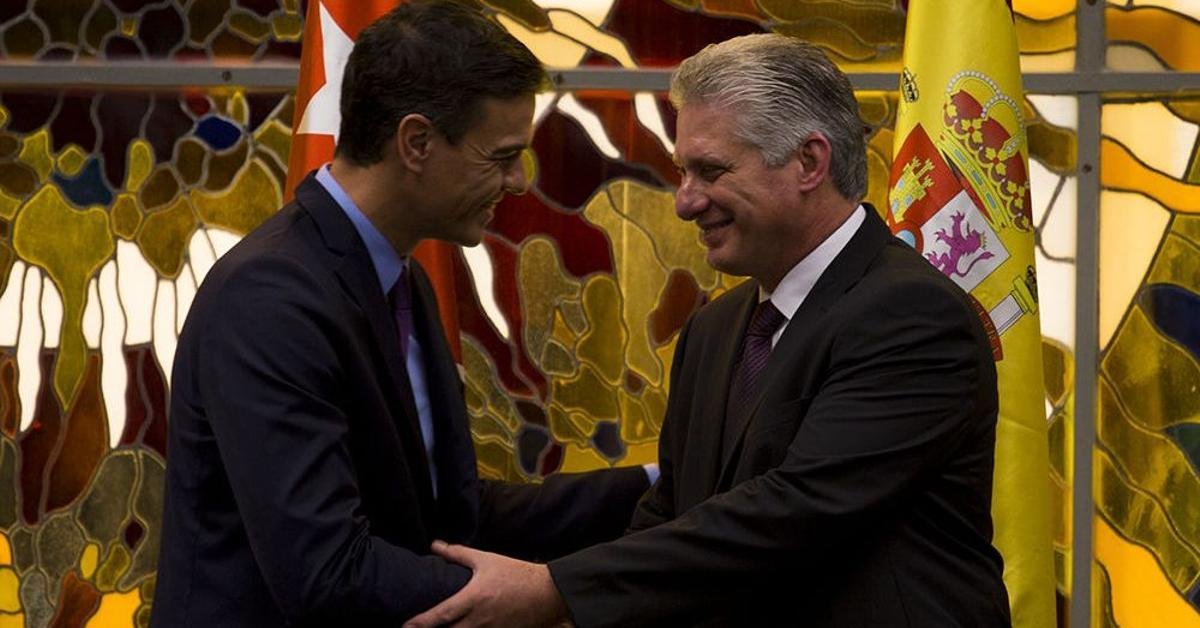
Madrid/Spain has forgiven or converted into cooperation programs nearly 90% of Cuba’s debt over the last decade, while more than 150 Spanish companies remain unable to collect hundreds of millions of euros held on the island, according to a report published this week.
“The worse the political situation, the more money the regime receives,” denounces the Juan de Mariana Institute. The report indicates that European Union financing for Cuba went from around 50 million euros in the 2014-2020 period to 125 million for the 2021-2027 cycle, despite the increase in political prisoners, the repression against dissent and the growing alignment of Havana with Russia. Its authors also question the lack of effective mechanisms to know the final destination of resources that are executed in a country where institutions, social organizations and a good part of the economy remain under the control of the State.
The authors of the report affirm that the “effective economic cost” for Spain is close to 4,994 million euros. To reach that amount, they calculate how much Cuba would have had to pay if it had been financed for ten years in international markets with an annual compound interest of 8%. This exercise increases the 2,444 million recognized in 2016 to 5,280 million in 2026. From that amount subtract the 286 million that, according to the report, still remain pending payment.
While the Cuban State receives cuts and postponements, Spanish companies face a very different situation
One of the central aspects of the document is the asymmetry between the treatment received by the Cuban State and that suffered by Spanish companies. The starting point is the bilateral agreement signed in 2016, after the Paris Club agreed to restructure the Cuban debt after almost three decades of non-payments. Spain then recognized obligations for 2,444 million euros and directly forgave 1,492 million, close to 60%. For the remaining 952 million, it established a repayment schedule of 18 years.
However, Havana once again missed the deadlines. Madrid responded in 2021 with a new extension and, in July 2025, launched a debt conversion program of up to 375 million euros. Instead of returning that amount, Cuba can allocate it to projects agreed upon by both governments in sectors such as water, energy and food security.
To this operation was added in September 2025 another restructuring of credits from the Fund for the Internationalization of the Company, valued by the report at 291 million euros. The document concludes that, by adding the 2016 forgiveness, the debt conversion and this new addendum, Cuba would have received a nominal relief of 2,158 million, reducing its obligations with Spain to about 286 million.
While the Cuban State receives cuts and postponements, Spanish companies face a very different situation. The latest report from the Economic and Commercial Office of Spain in Havana placed the defaults declared by companies at 255.9 million euros.
Why is Havana’s history of non-compliance leading to new public concessions, while Spanish companies that sold food, medicine, equipment and services to Cuba are still waiting to get paid?
The actual exposure could reach 330 million if we include 39.5 million in retained dividends, 23.6 million from commercial operations and 11.3 million deposited in accounts whose funds cannot be transferred outside of Cuba. The survey was sent to 930 companies, but only 182 responded, so the total volume could be higher.
Some of the affected firms have entered bankruptcy. In other cases, the amount owed by Cuban entities exceeds their entire annual turnover. A good part of the liabilities were generated between 2017 and 2019, without institutional claims having allowed the money to be recovered.
The companies have asked that a part of the debt conversion program be used to pay them, but the Spanish Government maintains that it cannot compensate with public resources for losses derived from private contracts. The Executive assures that it demands payments from the Cuban authorities, although it has destined the first operation of the program to purchase food produced by cooperatives on the Island.
The report also points out the lack of transparency of the agreements. According to the document, a Supreme Court ruling issued in May 2026 forced the Ministry of Economy to reveal information about forgiven, deferred or collected funds that the Executive had considered reserved.
The study raises a difficult question for Madrid: why is Havana’s history of non-compliance leading to new public concessions, while Spanish companies that sold food, medicine, equipment and services to Cuba are still waiting to get paid?